Feature
Rotary-wing programmes spool up
Helicopters are heading in new directions and technologies should revolutionise their role worldwide. Gordon Arthur reports.
Main image: An NH90 TTH of the Royal New Zealand Air Force. Credit: Gordon Arthur
Cover Story
Eye in the sky
As the first line of threat detection, airborne early warning is a must-have capability for the world’s militaries. Gordon Arthur reports.
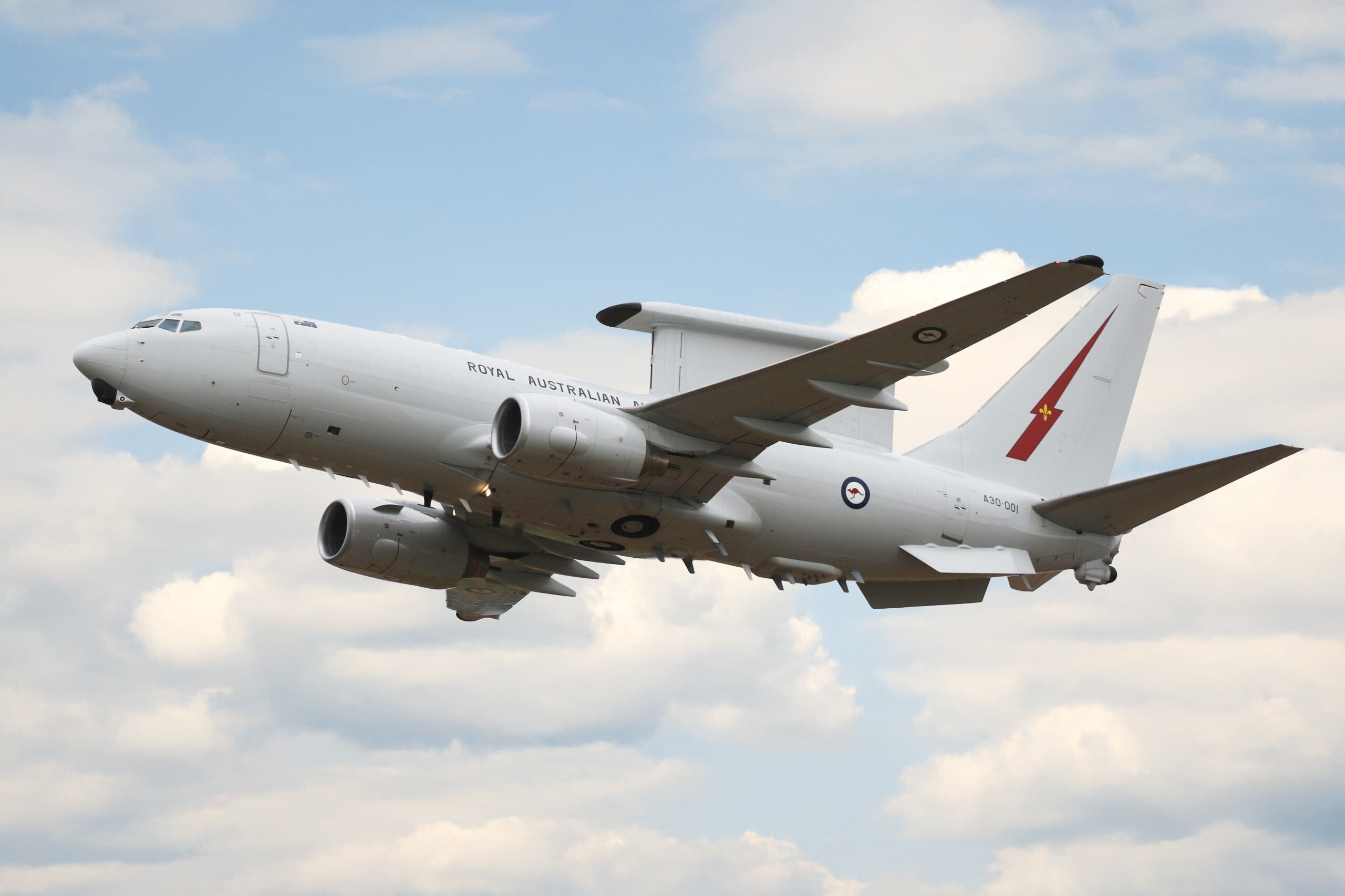
Australia was the first country to adopt the E-7A Wedgetail. Credit: Gordon Arthur
Astaple of military operations over the decades has cemented to role that helicopters plan in all aspects of operations, from logistics to transport, strike to surveillance.
However, advances in autonomy, avionics, and digitisation look set to push the horizon far beyond what was thought possible in previous generations. In particular, one of those new directions is the incorporation of manned-unmanned teaming (MUM-T) technologies.
Leading European manufacturer Airbus Helicopters told Global Defence Technology that MUM-T, also known as crewed-uncrewed teaming, would be the “upcoming revolution” for military helicopters.
In this concept, uncrewed aerial vehicles (UAV) will be used for so-called ‘dull, dirty and dangerous’ missions, while crewed helicopters will continue to play a vital part in high-value missions like troop transport and attack.
Emmanuel Huberdeau, external communications manager at Airbus Helicopters, noted: “UAVs can be used as a force multiplier for helicopters working, for example, as remote sensors or effectors. With HTeaming, Airbus is offering a modular and platform-agnostic system with an easy-to-use interface to reduce crew workload.”
The HTeaming system comprises a modem, tablet, four antennas and software.
To give an example, Singapore’s air force is running a project to fully control Flexrotor UAVs from its H225Ms. Ng Chad-Son, chief executive of Singapore’s Defence Science and Technology Agency, said: “Crewed-uncrewed teaming offers great potential to support more effective air operations in complex environments. Working with Airbus Helicopters, we’ll be able to combine our engineering expertise to unlock new possibilities in helicopter-drone integration.”
More than 140 armed forces utilise Airbus helicopters, making it one of the world’s largest suppliers. Huberdeau said the H145M, H225M and NH90 are the most popular, with the German Army recently ordering 62 H145Ms. Another type coming on stream is the H160M, with the first prototype starting flight tests in mid-July; France has already committed to 169 H160Ms.
While the NH90 is expensive to operate, more than 525 have been delivered to 18 operators to date. Australia controversially abandoned its MRH90 fleet, but Squadron Leader Lachie Johnson from the Royal New Zealand Air Force told Global Defence Technology that the NH90 “serves New Zealand very well, particularly in the domestic sense where it’s so well prepared to fly in the elements. It’s a safe helicopter that we have a high level of confidence in.”
Meanwhile, Airbus Helicopters and Leonardo recently announced a study to define the long-term evolution of the NH90 Block 2. The upgrade will include modular avionics, greater configuration commonality, improved maintenance and performance, as well as new capabilities in the field of collaborative combat, connectivity and crewed-uncrewed teaming.
Looking further into the future, Huberdeau noted Airbus is part of Nato’s New-Generation Rotorcraft (NGRC) project, whose goal is to develop a new medium multirole helicopter.
“Studies are being conducted on key technologies for the NGRC via the EU Next-Generation Rotorcraft Technologies project funded by the European Union, led by Leonardo and Airbus,” Huberdeau said.
In July 2024, Airbus was appointed to lead this NGRC concept study, whilst Leonardo and Sikorsky received separate contracts as requirements firm up. NATO wants the new medium helicopter ready in the 2035-40 timeframe.
The DroneGun Mk4 is a handheld countermeasure against uncrewed aerial systems. Credit: DroneShield
Future vulnerabilities
Helicopter susceptibilities have been highlighted in the Russia-Ukraine war. For instance, in the first twelve months of conflict, 42 Russian helicopters were shot down and 17 destroyed on the ground. Yet in the second year, just 19 were shot down.

Russia has learned how to use its helicopters not just better, but far more effectively.
Lt Col Emiliano Pellegrini, Nato
Lieutenant Colonel Emiliano Pellegrini, an Italian member of Nato’s Joint Air Power Competence Centre, explained this was because “Russia has learned how to use its helicopters not just better, but far more effectively”. Primarily this involves using longer-range precision munitions.
Airbus also believes long-range guided missiles will expand helicopter capabilities. Huberdeau shared: “Teaming with UAVs, other aircraft or troops on the ground, helicopters are able to shoot their missiles from longer range, reducing exposure to the high density of threats encountered over combat zones.
“This opens new horizons for armed, non-specialised helicopters to be used as mobile and versatile firing platforms.”
Bell’s rotary legacy
Turning to the US’ Bell, a company spokesperson related how, “In military aviation annals, few helicopters possess the ubiquitous presence and enduring legacy of the Bell 412. We see countries such as the Philippines and Indonesia where the Bell 412 continues to be the main combat utility helicopter of choice.”
Bell is also enjoying success with its 505, recently concluding delivery of 40 units to South Korea’s army and navy for training. Bell is also offering the 505 for the US Army’s Flight School Next programme.
However, Bell’s blue-ribbon project is the MV-75 Future Long Range Assault Aircraft (FLRAA), previously called the V-280 Valor. Like its larger V-22 Osprey sibling, the MV-75 is a tiltrotor. The US Army selected the MV-75 in December 2022, ahead of Sikorsky’s Defiant X.

Bell continues to develop the tiltrotor MV-75 Future Long Range Assault Aircraft. Credit: Bell
Providing an update, Bell said the programme achieved Milestone B in 2024, entering the engineering and manufacturing development phase. The company’s top priority is set at “accelerating delivery of MV-75 capability to the warfighter”, with the US Army keen to see it in service before 2030.
Bell believes the MV-75 will prove revolutionary, stating: “The MV-75 FLRAA delivers groundbreaking capabilities in speed and reach... The MV-75 is a next-generation aircraft that outpaces traditional rotorcraft, flying farther and faster.”
The aircraft possesses a 520km/h cruise speed and effective combat range of nearly 1,500km.
The MV-75 should have appeal beyond the US too, with one official stating that the company was “already beginning to see significant international interest” in the MV-75 FLRAA capability.
The UK and Netherlands have both signed Future Vertical Lift project agreements with the US Army, plus several countries have signed letters of interest.
What else does Bell see in the future? Company officials stated that trends are likely to double down on technology improvements, potentially with the MV-75 FLRAA incorporating a modular open-systems approach, relying on simplified designs to increase lifecycle affordability and sustainment.
Boeing: combat certified
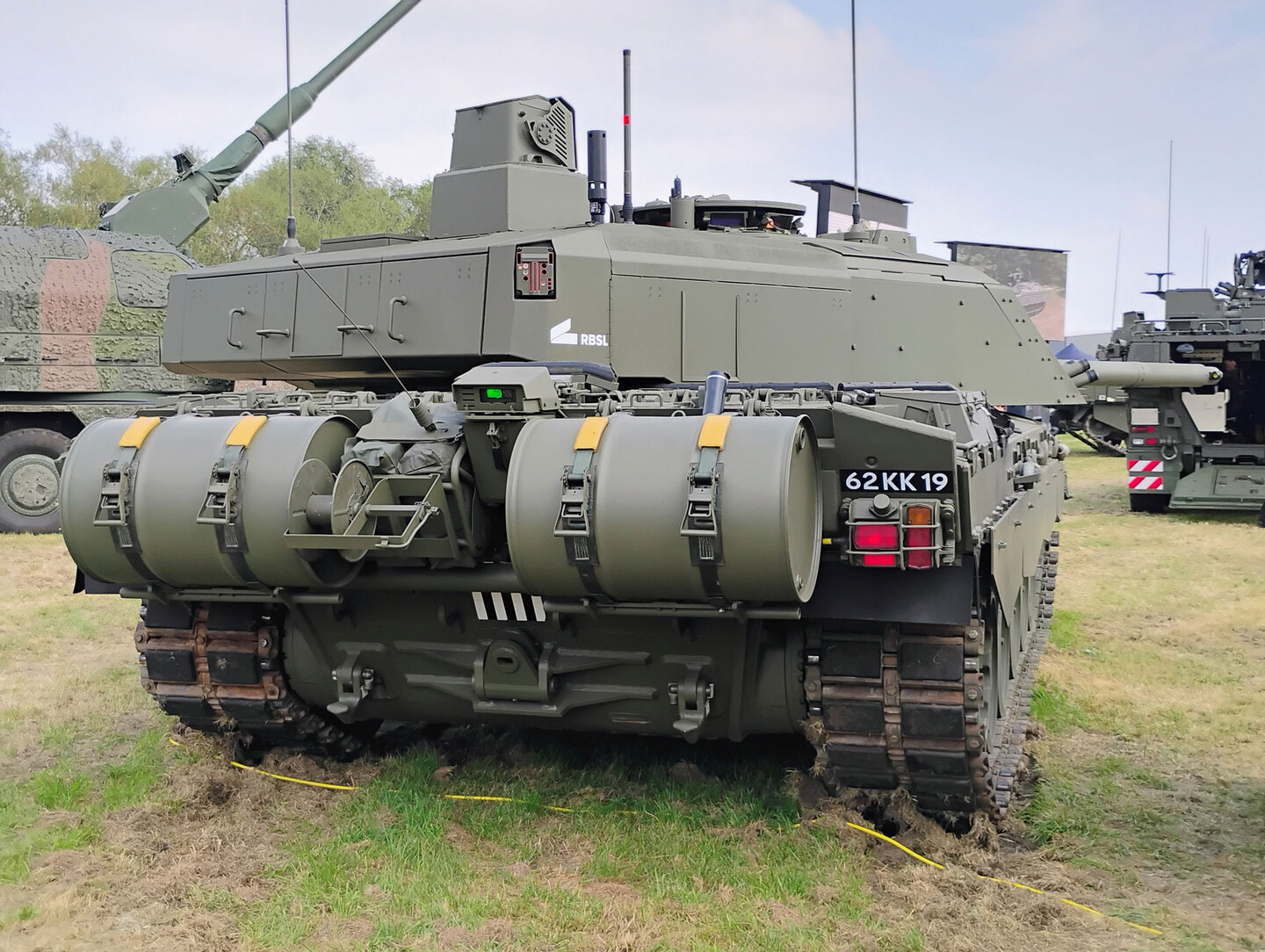
An important Boeing platform is the Chinook, its latest incarnation being the CH-47F Block II. Boeing is also well known for its Apache attack helicopter, where more than 1,300 aircraft have accumulated 5.2 million flight hours (1.3 million in combat).
Interestingly, South Korea is backtracking on plans for a second batch of 36 AH-64Es.
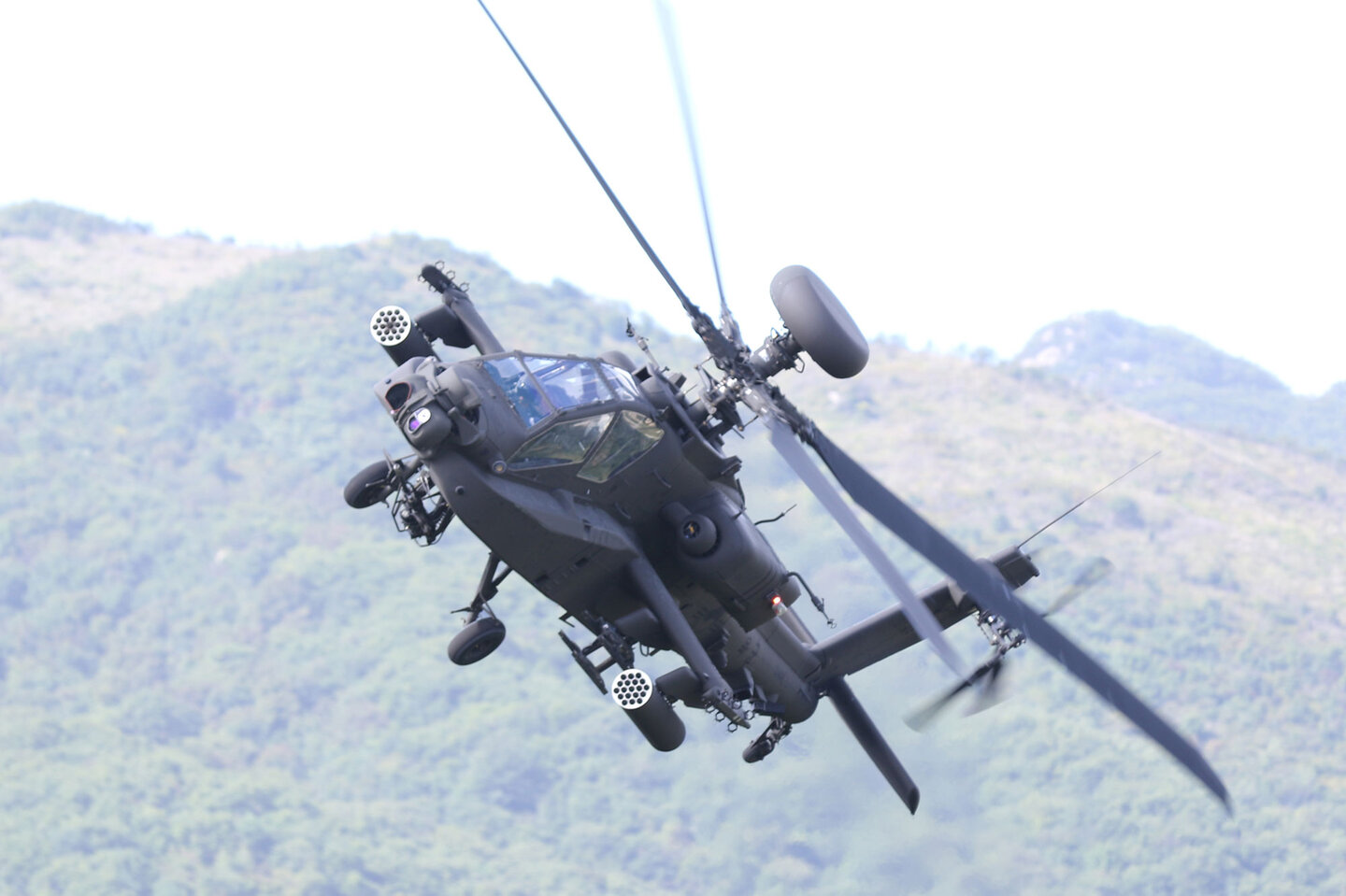
South Korea has reversed plans for a second AH-64E batch. Credit: Gordon Arthur
Yu Yong-weon, of the National Assembly’s defence committee, cited the rationale in July: “Drones and smart systems are redefining modern battlefields. Rather than clinging to expensive legacy platforms, we must invest in capabilities that reflect the future of warfare.”
However, cost is likely a chief factor, since prices had spiked 66% compared to South Korea’s first Apache order in 2013.
Drones and smart systems are redefining modern battlefields.
Yu Yong-weon, South Korean National Assembly’s defence committee
Addressing the issue of attack helicopter relevance, Naomi Smith, director, Sustainment Operations for Boeing Defence Australia, argued: “While uncrewed systems continue to advance, no drone can do what an Apache can do. Combined with its unparalleled sensing, targeting, networking, munitions and weapons capabilities, the Apache enables crewed-uncrewed teaming across joint forces and all domains.”
The Australian Army is awaiting the first four of its 29 AH-64Es this year. Brigadier Steve Cleggett, director general of Army Aviation Systems, posited that it is not a case of either/or, since crewed and uncrewed aircraft are complementary. “It’s really important that you have both of those options on the table, and really important as well we don’t just look at a single conflict.
“There’s a range of different conflicts that have different requirements, and so you have to use the right tool for the right job.”
Leonardo: aviation architect
Elsewhere, European OEM Leonardo told Global Defence Technology it is witnessing growing demand for AW119T, AW169M, AW139M and AW149 helicopters. The AW119T, for instance, forms the basis of the US Navy’s 130-strong TH-73A training fleet.
Worthy of mention is the AW249 attack helicopter, which a Leonardo spokesperson described as “the only Western clean-sheet combat helicopter design” currently available.
The company said that the AW249 programme development for the Italian Army was “progressing well”, with platform and system testing ongoing. A total of 17 aircraft will have been built by 2029.
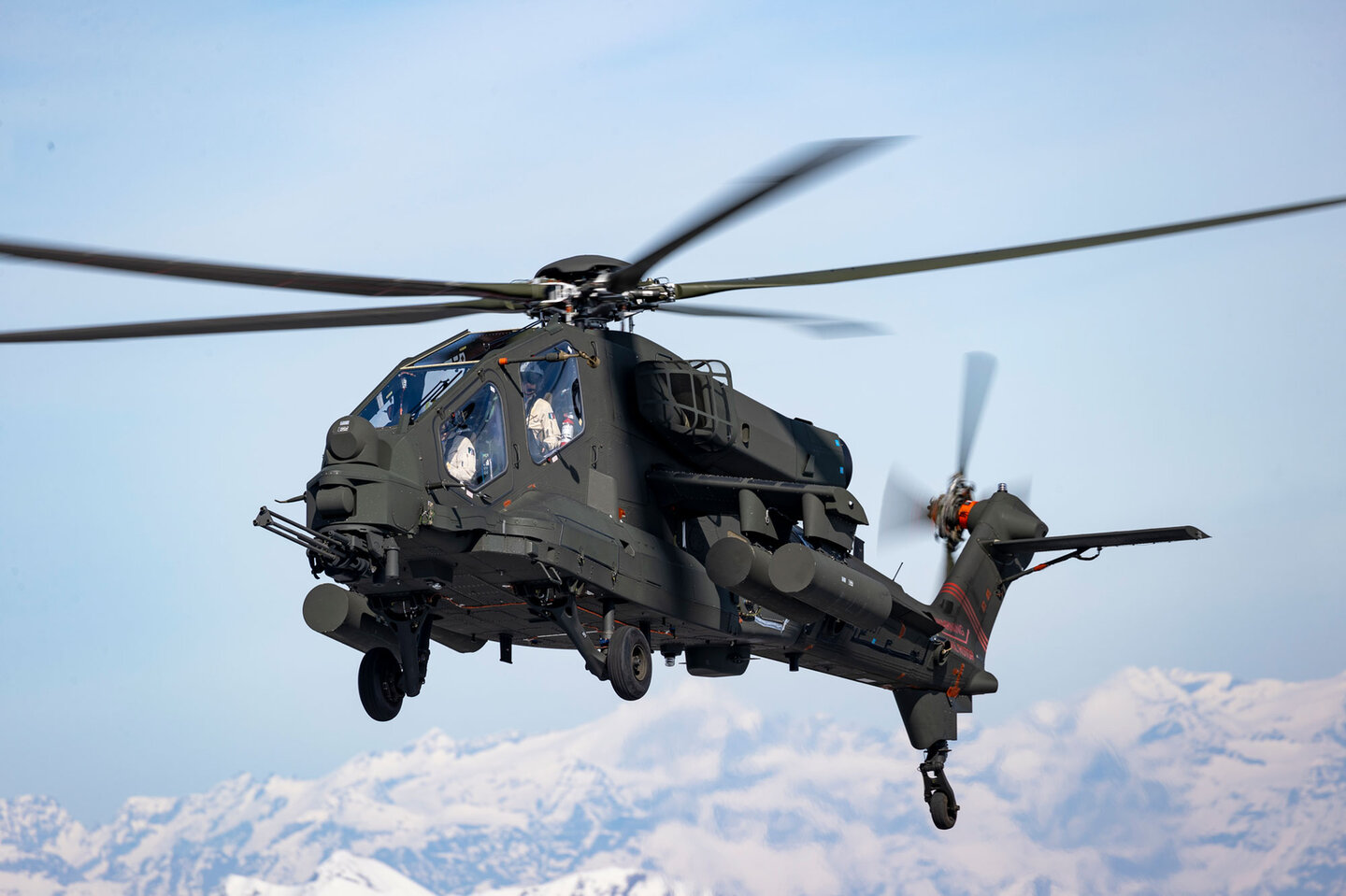
The AW249 attack helicopter during a test flight in Italy. Credit: Leonardo
The AW249 employs open architecture, and at the core “is its ability to be fully integrated and interoperable in the modern multi-domain battlefield. Therefore, the AW249 best leverages advanced crewed-uncrewed teaming opportunities.”
Looking ahead, Leonardo said that it believes that conventional helicopters will play a crucial role “for a very long time”, with trends such as a desire for greater digitisation, connectivity, automation, interoperability and open architecture/growth potential shaping future developments.
However, the company also considers that “fast rotorcraft architectures” will enable industry and operators to overcome the inherent limits of conventional rotorcraft.
Leonardo is therefore “focusing on tiltrotor technologies which allow a unique combination of high speed, altitude and range”, although clear requirements from operators were needed before such new programmes can further develop.
Sikorsky: ever-ready
Sikorsky is best known for its Black Hawk and Seahawk platforms, and the company claims an operational readiness rate of 92% in combat conditions. More than 4,000 Black Hawks across 36 countries have accumulated 15 million flight hours to date.
Sikorsky also manufactures the CH-53K King Stallion heavy-lift helicopter, as used by the USMC, and able to lift double the payload of the preceding CH-53E.
Sikorsky is helping modernise the US Army’s Black Hawk fleet with upgraded engines, modular open systems approach, launched effects and autonomy. “These innovations will deliver critical capabilities such as increased mission reliability, crewed-uncrewed teaming, advanced networked reconnaissance and cutting-edge digitisation that division commanders require to counter near-peer threats both now and in the future,” a company spokesperson shared.
Continuing, the company told Global Defence Technology of its intention to become a leader in hybrid-electric vertical take-off and landing technology, having begun the design and build of a 9,000lb-weight-class hybrid-electric VTOL demonstrator aircraft called the HEX (HE for hybrid-electric, and X for experimental). The system will serve as a flying testbed to evaluate large aircraft designs, novel propulsion systems, and control architectures for sustained hover and ranges greater than 500 nautical miles.

A newly delivered UH-60M Black Hawk of the Australian Army. Credit: Gordon Arthur
In 2023, Sikorsky announced this HEX collaboration with GE Aerospace. “The purpose of the HEX programme is to build and test a tiltwing-configured UAV with a fuselage capable of carrying cargo or passengers,” it disclosed. The company said such designs fly faster with high reliability, plus they are quicker and cheaper to build.
The company explained: “Enabling technologies for this family of VTOL systems include fly-by-wire/autonomy and hybrid-electric propulsion. A third key differentiator, an articulated rotor system, will give UAV configurations the benefit of high manoeuvrability similar to traditional helicopters.”
A UAV of rotor blown wing configuration – essentially a flying wing that takes off/lands on its tail and cruises horizontally like an aircraft – was successfully demonstrated in January 2025.
The OEM also stressed the importance of scalability. “Just as traditional helicopters can be grown in size (in part because of their articulated rotors), so too Sikorsky will be able to scale its new UAV designs from table-top length to that of a Black Hawk helicopter.”
Sikorsky detailed growing opportunities worldwide for X2-type aircraft too. It flew an X2 high-speed compound helicopter with coaxial rotors from 2008-11. “We’re actively participating in many aspects of the Nato NGRC initiative, focused on replacing more than 900 medium multirole helicopters that’ll reach the end of their lifecycle in 2035-40.
“X2 aircraft will bring to bear the strengths of Lockheed Martin such as digital thread, advanced manufacturing, sustainment, training and weapon and mission system development.”
As illustrated by the above survey, the traditional helicopter is undergoing a renaissance. From autonomy, MUM-T, networking, longer-range precision weapons, hybrid propulsion to new design configurations, tomorrow’s helicopters promise greater capability and versatility.
To modernise the platform, via an April request for information, the USAF is canvassing the inclusion of a new radar, electronic warfare equipment and enhanced
communications to create an “Advanced E-7”. Two such examples are sought within seven years, after which other E-7s could be retrofitted with the modifications.
As for the UK, three 737NG aircraft are currently undergoing modification in Birmingham, the first completing its maiden flight in September 2024.
Global Defence Technology asked Boeing what makes the E-7 stand out, and a spokesperson listing three points. First is its allied interoperability. “With the aircraft in service or on contract with Australia, South Korea, Türkiye, the UK and USA – and selected by Nato – its unmatched interoperability benefits a growing global user community for integration in future allied and coalition operations.”
The US is by far the largest spend on nuclear submarines. Credit: US Navy
Country | 2024 | 2025 | 2026 | 2027 | 2028 | 2029 | 2030 | 2031 | 2032 | 2033 | 2034 |
Australia | 3,582 | 3,586 | 3,590 | 3,594 | 3,613 | 3,622 | 6,183 | 6,207 | 6,216 | 6,239 | 6,380 |
China | 2,607 | 2,802 | 3,040 | 3,081 | 3,174 | 3,291 | 3,396 | 3,603 | 3,664 | 3,710 | 4,316 |
India | 2,320 | 2,533 | 3,675 | 2,457 | 2,526 | 2,639 | 2,741 | 2,873 | 2,958 | 3,350 | 3,560 |
Russia | 2,701 | 2,893 | 2,973 | 3,334 | 3,458 | 3,106 | 3,235 | 3,405 | 2,958 | 3,487 | 3,942 |
US | 16,957 | 18,037 | 18,522 | 18,607 | 18,137 | 18,898 | 18,898 | 19,643 | 19,876 | 22,592 | 23,730 |
Lisa Sheridan, an International Field Services and Training Systems programme manager at Boeing Defence Australia, said: “Ordinarily, when a C-17 is away from a main operating base, operators don’t have access to Boeing specialist maintenance crews, grounding the aircraft for days longer than required.
“ATOM can operate in areas of limited or poor network coverage and could significantly reduce aircraft downtime by quickly and easily connecting operators with Boeing experts anywhere in the world, who can safely guide them through complex maintenance tasks.”
Boeing also uses AR devices in-house to cut costs and improve plane construction times, with engineers at Boeing Research & Technology using HoloLens headsets to build aircraft more quickly.
The headsets allow workers to avoid adverse effects like motion sickness during plane construct, enabling a Boeing factory to produce a new aircraft every 16 hours.
Elsewhere, the US Marine Corps is using AR devices to modernise its aircraft maintenance duties, including to spot wear and tear from jets’ combat landings on aircraft carriers. The landings can cause fatigue in aircraft parts over its lifetime, particularly if the part is used beyond the designers’ original design life.

Caption. Credit:

Phillip Day. Credit: Scotgold Resources
Total annual production
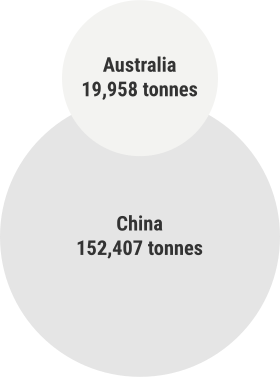
Australia could be one of the main beneficiaries of this dramatic increase in demand, where private companies and local governments alike are eager to expand the country’s nascent rare earths production. In 2021, Australia produced the fourth-most rare earths in the world. It’s total annual production of 19,958 tonnes remains significantly less than the mammoth 152,407 tonnes produced by China, but a dramatic improvement over the 1,995 tonnes produced domestically in 2011.
The dominance of China in the rare earths space has also encouraged other countries, notably the US, to look further afield for rare earth deposits to diversify their supply of the increasingly vital minerals. With the US eager to ringfence rare earth production within its allies as part of the Inflation Reduction Act, including potentially allowing the Department of Defense to invest in Australian rare earths, there could be an unexpected windfall for Australian rare earths producers.
