Cover Story
Spanning the Gulf: GCC fighter focus
The GCC’s combat air fleets offer a mix of US and European platforms, but are alternatives on the horizon? Richard Thomas reports.
Main image: The UAE received its first Rafale fighter in 2025. Credit: Dassault Aviation
Cover Story
Eye in the sky
As the first line of threat detection, airborne early warning is a must-have capability for the world’s militaries. Gordon Arthur reports.
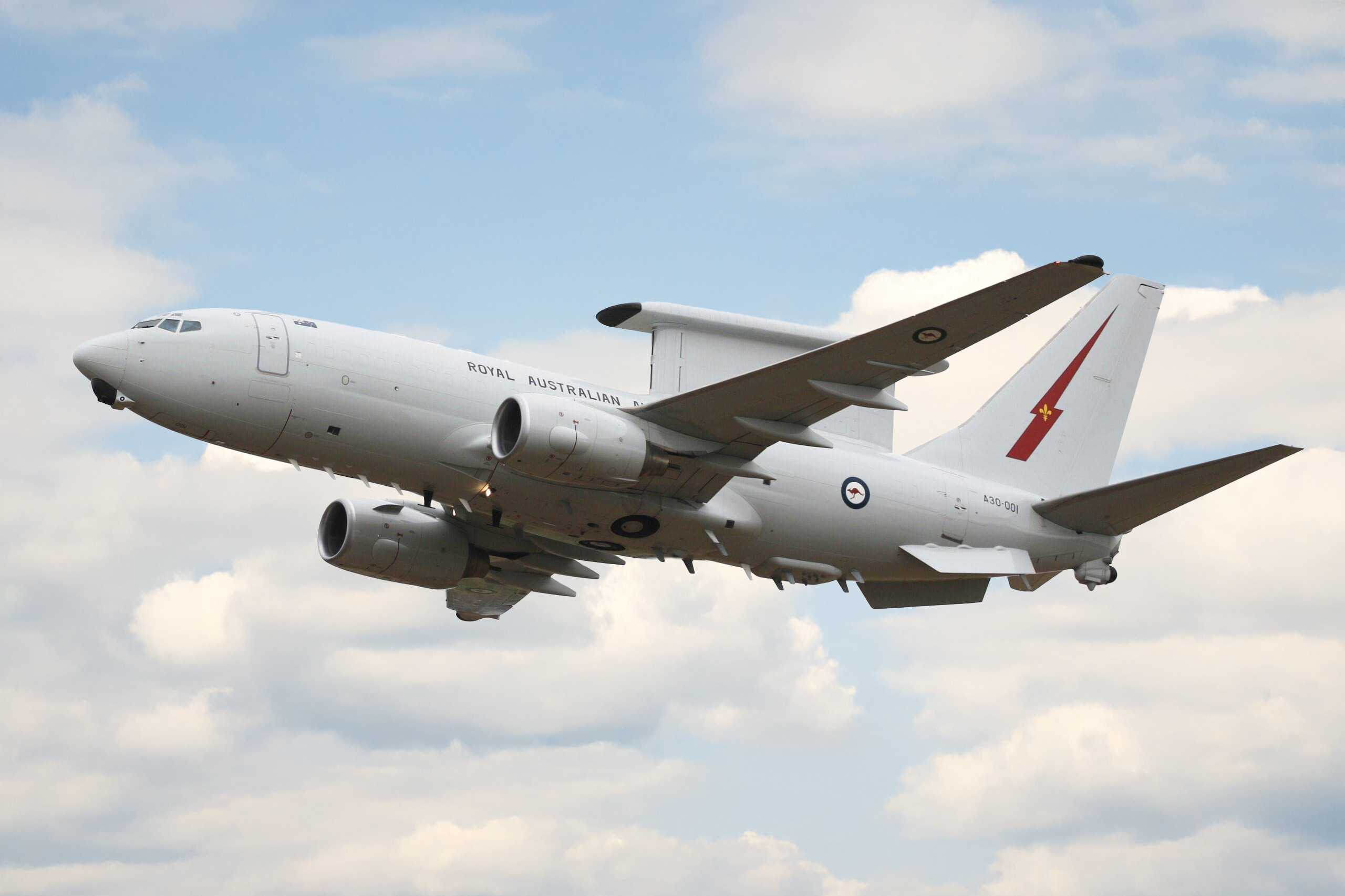
Australia was the first country to adopt the E-7A Wedgetail. Credit: Gordon Arthur
At the tip of the combat spear, air dominance and multirole fighter aircraft offer unrivalled options to secure national interests, be they defence of the airspace through to kinetic ground effect.
The worldwide demand for combat aircraft is significant, representing 74.7% of the total global market for fixed-wing fighter aircraft, according to analysis conducted by GlobalData, followed some distance behind by military transporters. Effectively, fighters dominate the fixed-wing market in terms of visibility and total spend by a significant margin.
Looking at the fixed-wing market in total, the sector was valued at $87.2bn in 2025 and expected to reach $139.9bn by 2035, cumulatively valuing $1.3trn over the forecast period. The scale of the combat air segment, which corresponds to nearly 75% of the market, exceeds $60bn.
Despite being one of the smaller regional markets for fixed-wing aviation at between 8-9% of the global total, international defence companies looking to gain traction in the Middle East do not have to contend with domestic rivals, with no indigenous combat air manufacturers.
To this end, advanced defence economies have long sought to secure lucrative deals to sell their fighters into overseas markets. Among the most vibrant of these are those of the six Gulf Cooperation Council (GCC) members; Bahrain, Kuwait, Oman, Qatar, Saudi Arabia, and the UAE.
According to GlobalData, by 2035 the total combat air business area for GCC countries will be just short of $9.8bn, with Saudi Arabia, the UAE, and Qatar as the three leading markets.
Explore the region’s air power, select a jet to learn more:

Combat air: Bahrain
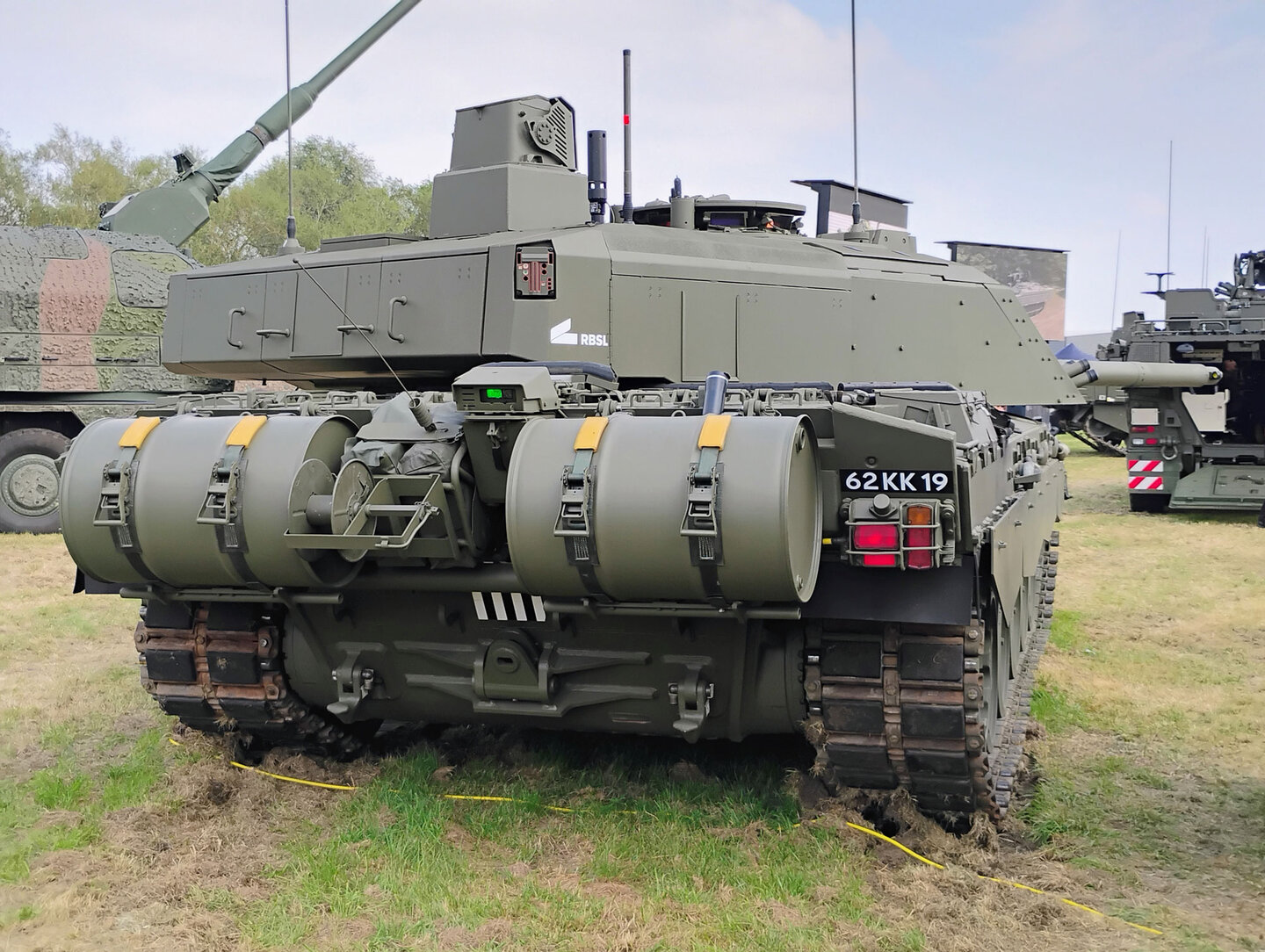
Central to the £800m (~$1bn) contract awarded by the UK Ministry of Defence in 2021 to Rheinmetall BAE Systems Land – a joint venture (JV) between Rheinmetall and BAE Systems – will be the fitting of the German company’s L55A1 120mm smoothbore gun in a new turret.
Additional upgrades include an upgraded engine with new cooling system and hydrogas suspension, a new suite of thermal cameras and sights, a secretive new modular armour, and an automated target detection and tracking system.
Global Defence Technology explores the range of suppliers, both UK and overseas, that are playing a part in the development of the British Army’s future, if decidedly small, MBT force.
To modernise the platform, via an April request for information, the USAF is canvassing the inclusion of a new radar, electronic warfare equipment and enhanced
communications to create an “Advanced E-7”. Two such examples are sought within seven years, after which other E-7s could be retrofitted with the modifications.
As for the UK, three 737NG aircraft are currently undergoing modification in Birmingham, the first completing its maiden flight in September 2024.
Global Defence Technology asked Boeing what makes the E-7 stand out, and a spokesperson listing three points. First is its allied interoperability. “With the aircraft in service or on contract with Australia, South Korea, Türkiye, the UK and USA – and selected by Nato – its unmatched interoperability benefits a growing global user community for integration in future allied and coalition operations.”

The E-7 platform is less expensive to operate compared to platforms based on small business jets.
Boeing spokesperson
The US is by far the largest spend on nuclear submarines. Credit: US Navy
Country | 2024 | 2025 | 2026 | 2027 | 2028 | 2029 | 2030 | 2031 | 2032 | 2033 | 2034 |
Australia | 3,582 | 3,586 | 3,590 | 3,594 | 3,613 | 3,622 | 6,183 | 6,207 | 6,216 | 6,239 | 6,380 |
China | 2,607 | 2,802 | 3,040 | 3,081 | 3,174 | 3,291 | 3,396 | 3,603 | 3,664 | 3,710 | 4,316 |
India | 2,320 | 2,533 | 3,675 | 2,457 | 2,526 | 2,639 | 2,741 | 2,873 | 2,958 | 3,350 | 3,560 |
Russia | 2,701 | 2,893 | 2,973 | 3,334 | 3,458 | 3,106 | 3,235 | 3,405 | 2,958 | 3,487 | 3,942 |
US | 16,957 | 18,037 | 18,522 | 18,607 | 18,137 | 18,898 | 18,898 | 19,643 | 19,876 | 22,592 | 23,730 |
Lisa Sheridan, an International Field Services and Training Systems programme manager at Boeing Defence Australia, said: “Ordinarily, when a C-17 is away from a main operating base, operators don’t have access to Boeing specialist maintenance crews, grounding the aircraft for days longer than required.
“ATOM can operate in areas of limited or poor network coverage and could significantly reduce aircraft downtime by quickly and easily connecting operators with Boeing experts anywhere in the world, who can safely guide them through complex maintenance tasks.”
Boeing also uses AR devices in-house to cut costs and improve plane construction times, with engineers at Boeing Research & Technology using HoloLens headsets to build aircraft more quickly.
The headsets allow workers to avoid adverse effects like motion sickness during plane construct, enabling a Boeing factory to produce a new aircraft every 16 hours.
Elsewhere, the US Marine Corps is using AR devices to modernise its aircraft maintenance duties, including to spot wear and tear from jets’ combat landings on aircraft carriers. The landings can cause fatigue in aircraft parts over its lifetime, particularly if the part is used beyond the designers’ original design life.

Caption. Credit:

Phillip Day. Credit: Scotgold Resources
Total annual production
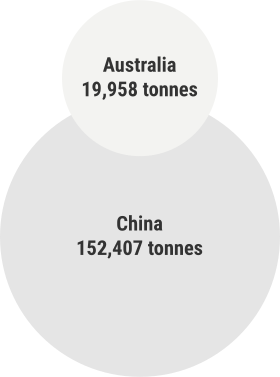
Australia could be one of the main beneficiaries of this dramatic increase in demand, where private companies and local governments alike are eager to expand the country’s nascent rare earths production. In 2021, Australia produced the fourth-most rare earths in the world. It’s total annual production of 19,958 tonnes remains significantly less than the mammoth 152,407 tonnes produced by China, but a dramatic improvement over the 1,995 tonnes produced domestically in 2011.
The dominance of China in the rare earths space has also encouraged other countries, notably the US, to look further afield for rare earth deposits to diversify their supply of the increasingly vital minerals. With the US eager to ringfence rare earth production within its allies as part of the Inflation Reduction Act, including potentially allowing the Department of Defense to invest in Australian rare earths, there could be an unexpected windfall for Australian rare earths producers.

Combat air: Bahrain
Bahrain’s air force is small but strategically significant, focused on air defence, homeland protection, and interoperability with Gulf and Western partners. Recent procurement and modernisation efforts emphasise replacing ageing platforms with capable multirole fighters, improving sustainment, and acquiring enablers to support such platforms.
The core of Bahrain’s combat air fleet consists of US-origin F-16s, with F-16C/Ds initially delivered in the 1990s, with Manama subsequently ordering 16 new-build F-16V (Viper) aircraft in 2018 to replace older examples and modernise capabilities. Deliveries of the F-16V are ongoing, with the first airframe arriving in 2023.
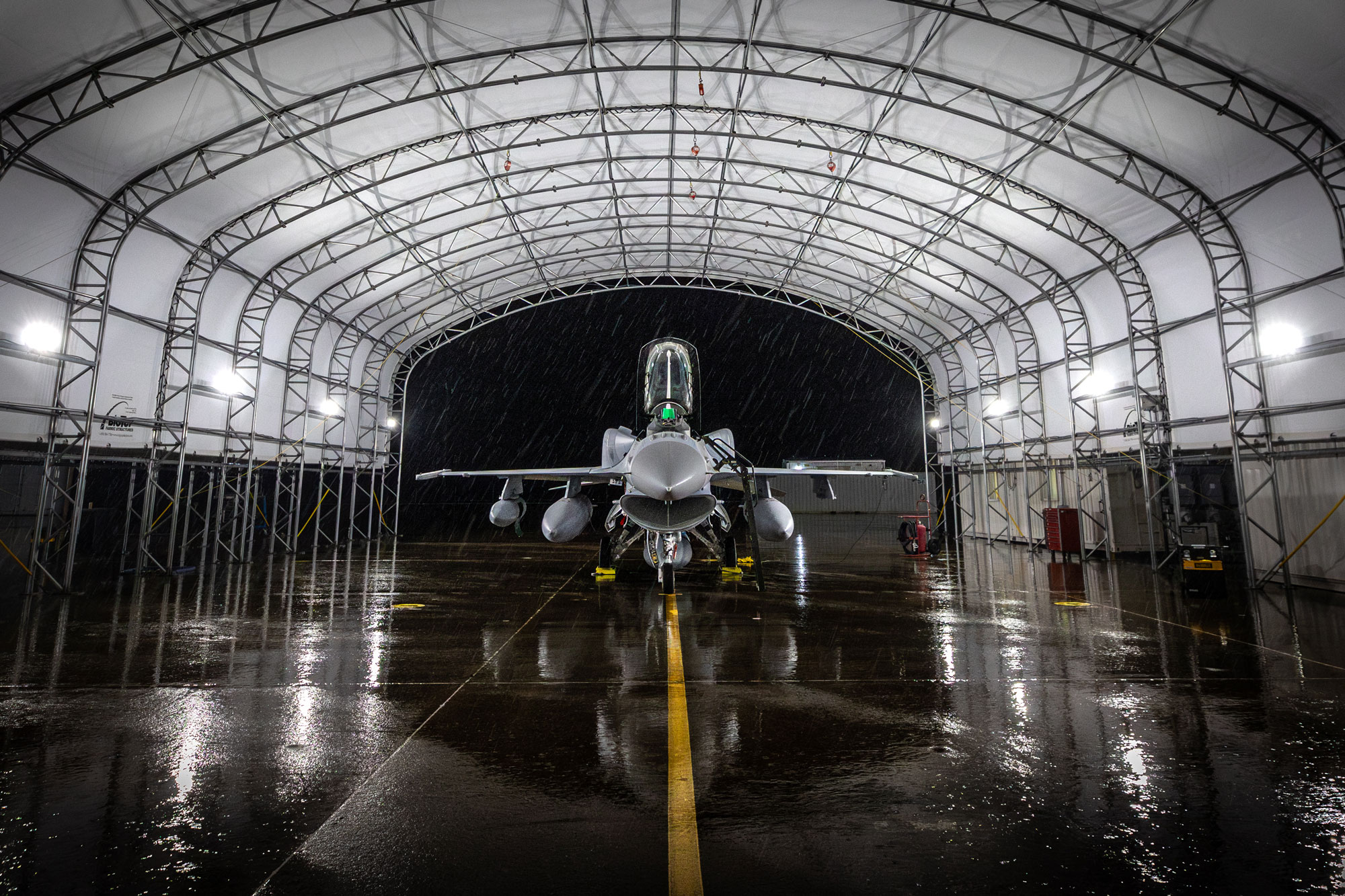
The first Bahraini F-16V ahead of its ferry in 2023. Credit: Lockheed Martin
The Viper configuration brings an AESA radar, upgraded mission computer, and modern avionics, enhancing air-to-air and precision strike performance. The country is also replacing its old 1980s era F-5E/F fighters, which are now primarily used as training platforms.
As with most countries, Bahrain's defence expenditure has historically been driven by the need to modernise its armed forces, with analysis indicating an average budget allocation of $1.44bn per annum in the first half of the 2020s. However, the acquisition of platforms such as the F-16V fleet and ground-based missile defence systems is expected to see an increase in spending to over $1.7bn in 2029.
The prospects for fifth-or future-generation combat air acquisitions are unlikely, owing to the small budget available to Bahrain, which precludes the ability to operate multi-platform fleets. Given this, Bahrain’s focus will remain on maximising the potential of its F-16V aircraft.
| Current / Possible future | Platform |
|---|---|
| Current | F-5 E/F (~ 12 aircraft) |
| F-16C Block 40 (16 × aircraft) | |
| F-16D Block 40 (4 × aircraft) | |
| F-16V Block 70/72 (16 × ordered) | |
| Possible future | In-service modernisation |
Source: GlobalData
Combat air: Kuwait
For the geographic footprint of the country, Kuwait’s air force is sizeable, with a mix of air-to-air and multirole capabilities. Kuwait is embarking on a modernisation programme to replace older platforms with updated aircraft.
Chief among this is an ongoing programme to replace its existing 1990s era F/A-18C/D Hornet fleet with the more modern E/F Super Hornets, agreeing a $1.5bn deal 2018 for 28 aircraft. The US is providing a training package for Kuwait to prepare for the induction of the E/F fleet, with the aircraft having already been delivered by manufacturer Northrop Grumman to the US military pending final handover.
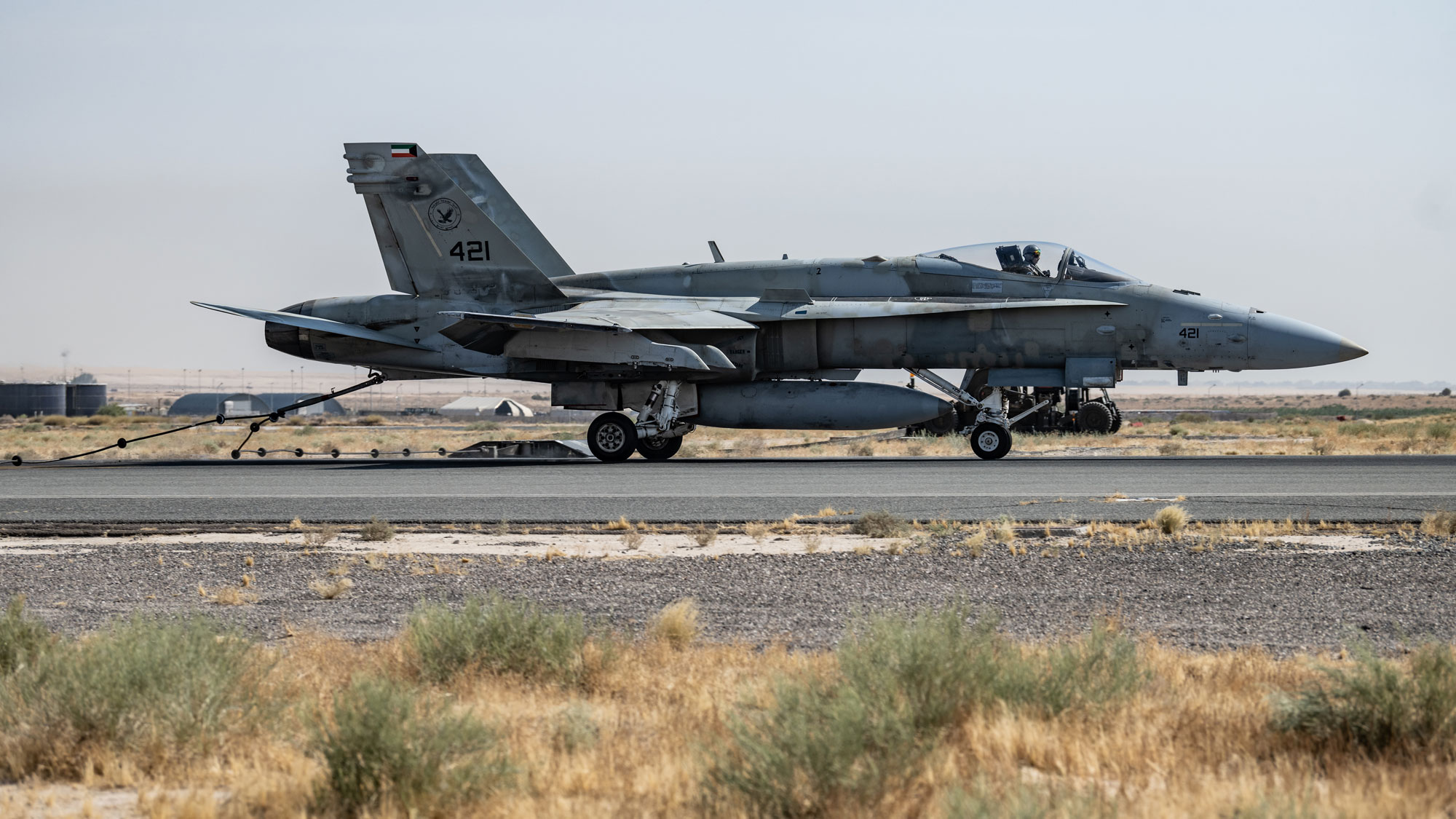
Kuwait operates the F/A-18 Super Hornet fighter. Credit: USAF
Kuwait also operates a fleet of Eurofighter Typhoons of the advanced Tranche 3A standard, delivered in the early 2020s, which includes the Captor-E AESA radar, offering improved air-to-ground sensor and strike capability.
The country’s near-term focus is on sustaining and integrating the Super Hornet fleet, enhancing logistics and pilot training, and selectively upgrading sensors and weapons. Longer-term decisions on acquiring additional fighters or transitioning to fifth-generation capabilities will depend on budget priorities and regional threats.
In terms of defence spending, in 2024 the Kuwaiti government allocated $6.1bn to its defence budget and forecast to reach $7.5bn in 2029. Within this, the acquisition budget is thought likely to increase as a proportion, due in part to combat air requirements.
| Current / Possible future | Platform |
|---|---|
| Current | F/A-18C (31 × aircraft) |
| F/A-18D (8 × aircraft) | |
| Eurofighter Typhoon (28 × ordered) | |
| Possible future | In-service modernisation |
Source: GlobalData
Combat air: Oman
As of 2025, the Sultanate of Oman maintains a modest but modern combat air fleet focused on multirole fighters and light attack/advanced trainer types to meet its air defence and territorial sovereignty needs.
The backbone of Oman’s compact combat aircraft capability is the Eurofighter Typhoon; the Sultanate signed for 12 Tranche 3 Typhoons in a deal announced in 2012, with deliveries and incountry induction occurring through the mid2010s into the early 2020s. The Typhoon acquisition in particular offers significant capability in airinterceptor and precisionstrike.
Complementing the Typhoons, Oman operates a fleet of F16C/D Fighting Falcons. Airframe numbers are limited relative to larger Gulf air arms, reflecting Oman’s scale and defence posture.
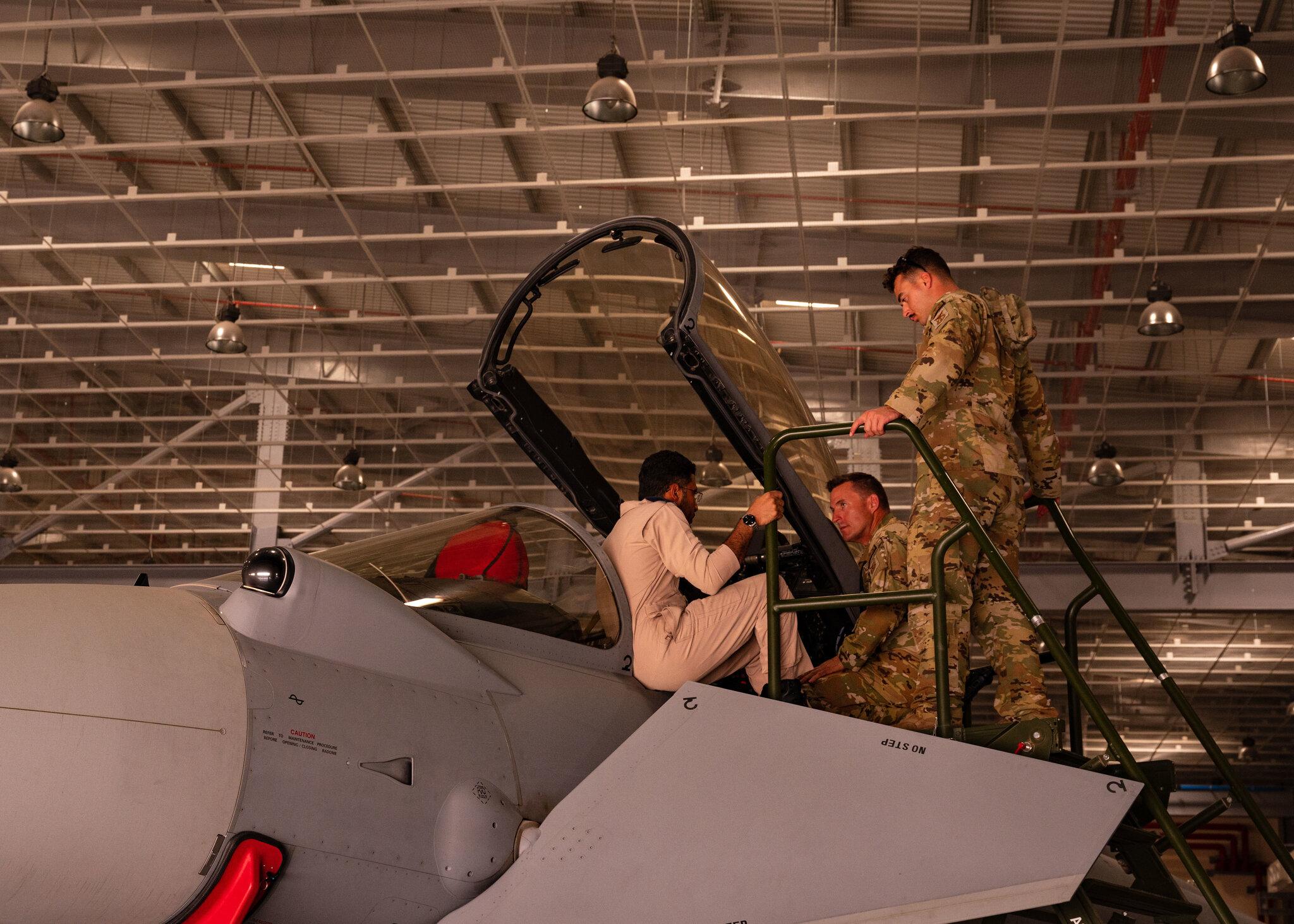
Oman adopted the Typhoon jet, sourced from the UK. Credit: USAF
For pilot training and light attack roles, Oman procured BAE Systems Hawk fighter trainers across the 1990s–2000s, with followon support and spares sustaining training throughput for conversion onto F16s and Typhoons. Additionally, Oman invested in turboprop trainers/COIN types (such as PC21class aircraft in the 2010s) to modernise basic-toadvanced training and provide lowintensity operational capability.
Oman’s defence budget reduced from $9bn in 2020 to $8bn in 2024, with the acquisition budget also dropping from $1.7bn in 2020 to $1.4bn in 2024. Future combat air acquisition will centre on continuing to upgrade existing F-16 and Typhoon fleets, with integration of fifth-generation platforms not a consideration at present.
| Current / Possible future | Platform |
|---|---|
| Current | F-16C (17 × aircraft) |
| F-16D (6 × aircraft) | |
| Eurofighter Typhoon (12 × aircraft) | |
| Possible future | In-service modernisation |
Source: GlobalData
Combat air: Qatar
The strategically situated peninsula of Qatar, which hosts US and UK combat aircraft at Al Udeid Air Base, also maintains a modern and varied combat air fleet, incorporating US, UK/European, and French fighters.
A landmark 2015 deal for French Dassault Rafale fourth-generation fighters was followed in 2018 with the addition of a further 12 airframes, while 36 units are also held on option. The modern multirole fighters complement the existing Mirage 2000 fighters operated by the Qatar Emiri Air Force (QEAF).
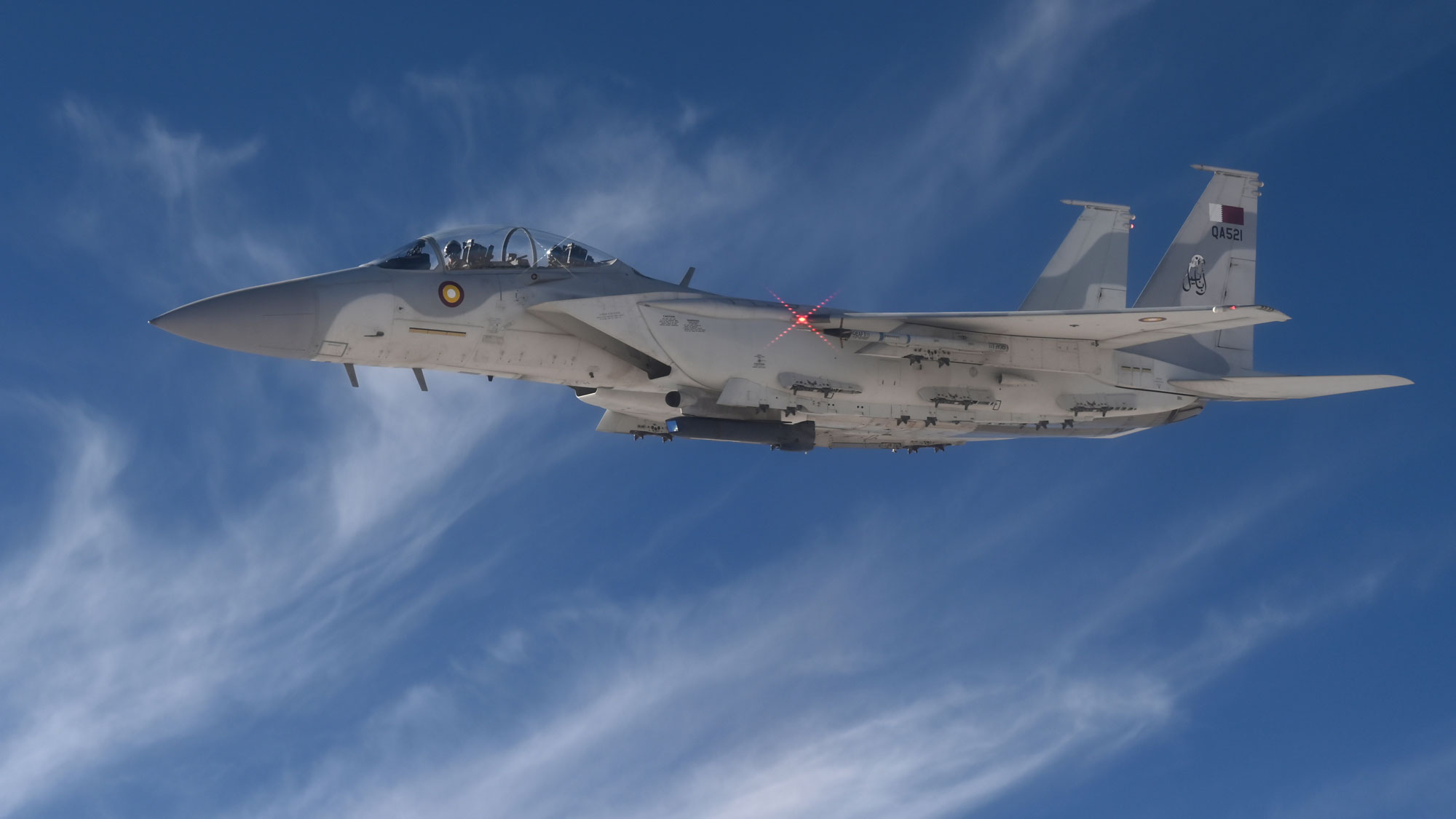
Qatar’s fleet includes the F-15QA. Credit: USAF
The QEAF also operate the Eurofighter Typhoon following a multi-billion-dollar deal signed in 2017 for multiple aircraft. Training and operation of these are augmented through a unique joint Qatar-UK squadron, operating from RAF Coningsby in the UK.
Qatar’s final combat airframe is the F-15QA Advanced Eagle, obtained in a 2017 deal with Boeing, offering a large payload and surface strike capability.
Current acquisition timelines for Rafale, Typhoon, and F-15QA deliveries have been phased over multi-year schedules — contracts signed in 2017–2018 with deliveries stretching from 2019 into the mid-2020s.
Doha is keen to obtain fifth generation platforms such as the US F-35 stealth fighter, although initial requests were rejected. However, the new US administration could be tempted to offer up the F-35 and prevent Qatar from pursuing potential European or Eastern fifth- and sixth-generation fighters.
| Current / Possible future | Platform |
|---|---|
| Current | Mirage 2000-5 (9 × aircraft) |
| F-15QA (36 × aircraft ordered) | |
| Dassault Rafale (26 × aircraft ordered) | |
| Eurofighter Typhoon (24 × aircraft ordered) | |
| Possible future | F-35A, others |
Source: GlobalData
Combat air: Saudi Arabia
As the region’s biggest defence spender, Saudi Arabia maintains the GCC’s most capable and diverse combat air force, centred on modern Western platforms.
The Royal Saudi Air Force (RSAF) operates a core fleet of US-origin F-15 variants – principally the F-15C/D Eagle for air superiority and F-15S/SA Eagle for multirole strike – with modernisation programmes to extend service life.
The RSAF also fields Eurofighter Typhoon fighters acquired in the 2000s and early 2010s, forming a modern multirole capability with advanced sensors and weapons. For strike and multi-role tasks, Saudi Arabia operates Panavia Tornado IDS aircraft, though these are ageing and have seen reduced numbers through attrition and retirement.
Over the past decade, combat air spending has centred on modernisation, in areas such as radar, advanced targeting systems, avionics, and weapons integration, as well as munition replenishment.
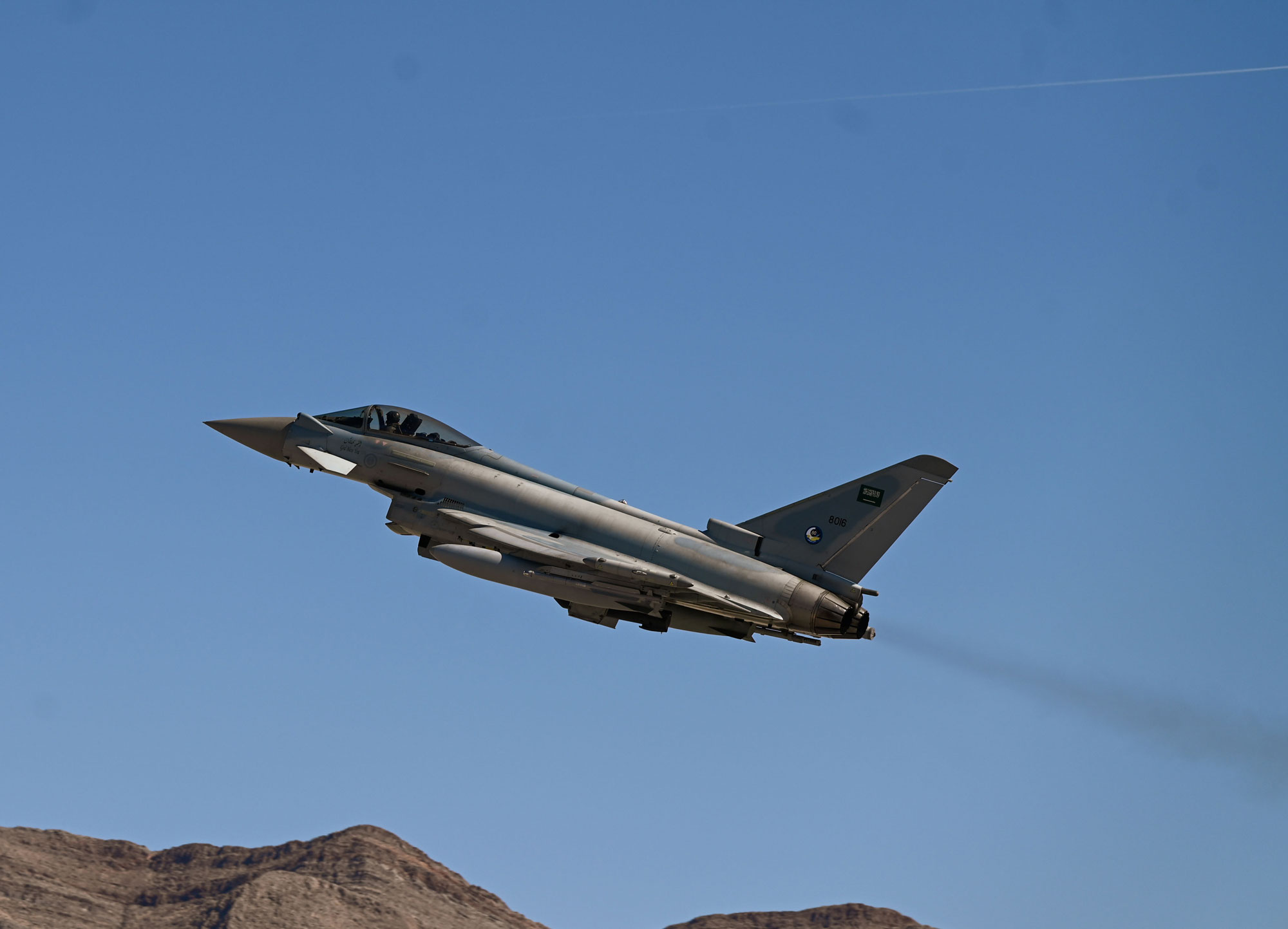
Saudi Arabia’s Typhoon fleet is the largest in the region. Credit: USAF
Saudi Arabian defence expenditure increased from $53.9bn in 2021 to $72.5bn in 2025, reflecting a compound annual growth rate of 7.7% during 2021–25. Further defence spending increases are likely as the country establishes itself as a leading regional, and potentially global, power.
Looking forward, Saudi Arabia will continue to operate a mixed fleet of Typhoons and F-15s, but is thought to be considering fourth, fifth, or future-generation fighters such as France’s Rafale, the US F-35, Türkiye’s KAAN, or the UK-led GCAP as potential options.
| Current / Possible future | Platform |
|---|---|
| Current | Eurofighter Typhoon (71 × aircraft) |
| F-15SA (83 × aircraft) | |
| F-15SR (68 × aircraft) | |
| F-15C/D (60 × aircraft) | |
| Tornado IDS (82 × aircraft) | |
| Possible future | F-35A, KAAN, GCAP, Rafale, other |
Source: GlobalData
Combat air: UAE
Similar to Qatar, the United Arab Emirates Air Force (UAEAF) fields a Western-centric combat aviation fleet with the inclusion of French fighters to augment existing US-origin aircraft. Like Saudi Arabia, the UAE’s combat air was heavily involved in the Yemen Civil War in the mid-2010s.
Core combat types include the F-16E/F Block 60 Desert Falcon – a highly upgraded variant with advanced avionics, conformal fuel tanks, and AESA radar – which forms the backbone of the UAE’s strike and air-superiority capability. The Block 60 F-16s were delivered in the mid-2000s and have been subject to ongoing upgrades and weapons integration programmes.
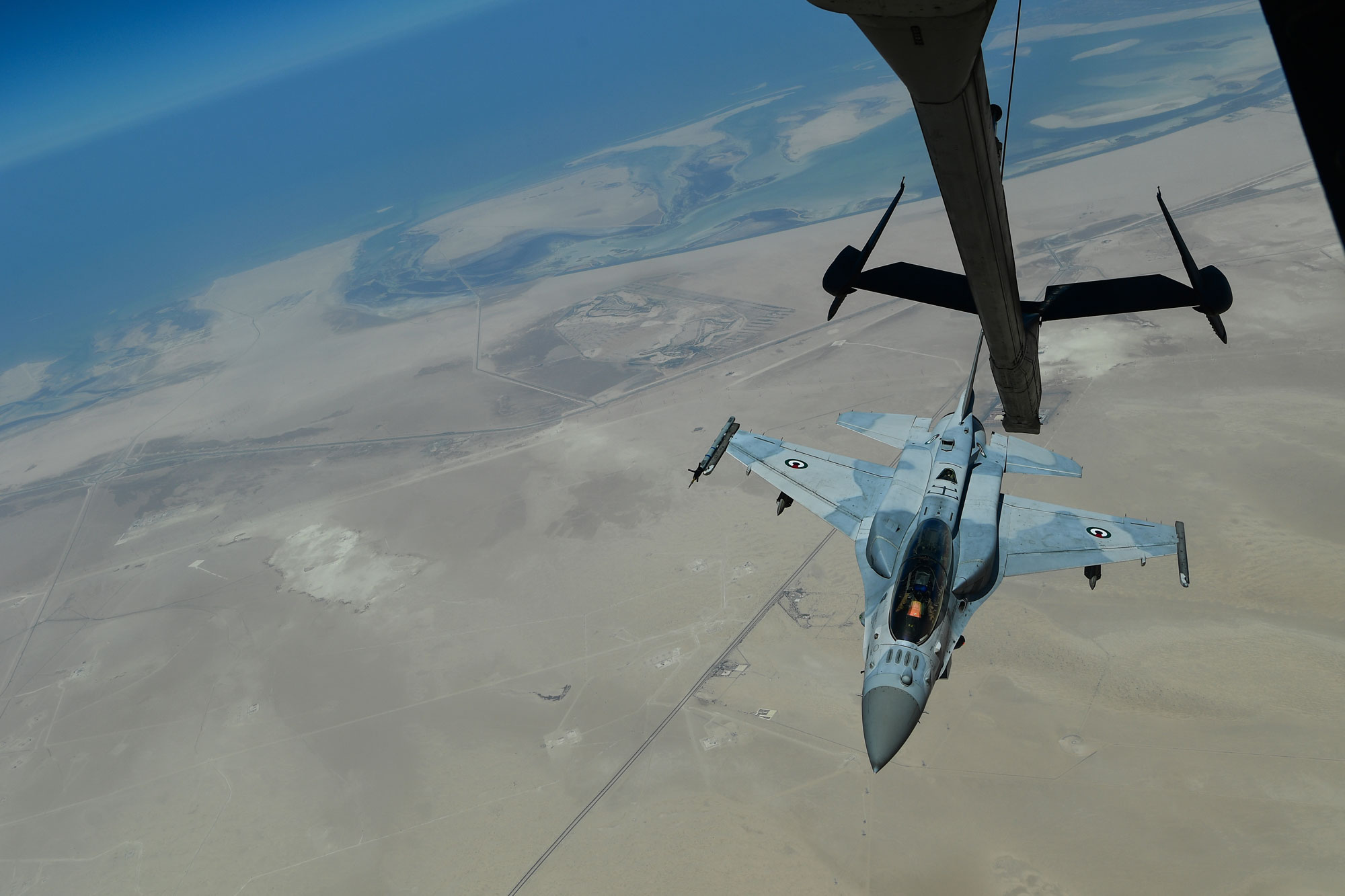
A UAEAF F-16 operating with US Air Force. Credit: USAF
The UAE also acquired Dassault Mirage 2000-9 fighters from France in the mid-2000s, following on with an order for Rafale multirole fighters in 2021, with the first aircraft handed over in 2025.
In the first half of the 2020s, the UAE defence expenditure rose from $18.7bn in 2021 to value $23.9bn in 2025, and likely to reach in excess of $30bn by the end of the decade.
Abu Dhabi is keen to continue modernising its air capabilities with fifth generation platforms and has made no secret of its desire for the F-35 stealth fighter. However, the UAE could shop around if that deal does not materialise, with China’s J-20 fifth-generation platform thought to be an alternative.
| Current / Possible future | Platform |
|---|---|
| Current | F-16E/F (80 × aircraft) |
| Rafale (80 × ordered) | |
| Mirage 2000-9 (59 × aircraft) | |
| Possible future | F-35A, J-20, others |
Source: GlobalData