Feature
UK military timeline: key equipment out‑of‑service dates
The UK military is seeking to address glaring defence weaknesses and obsolescence. Richard Thomas reports.
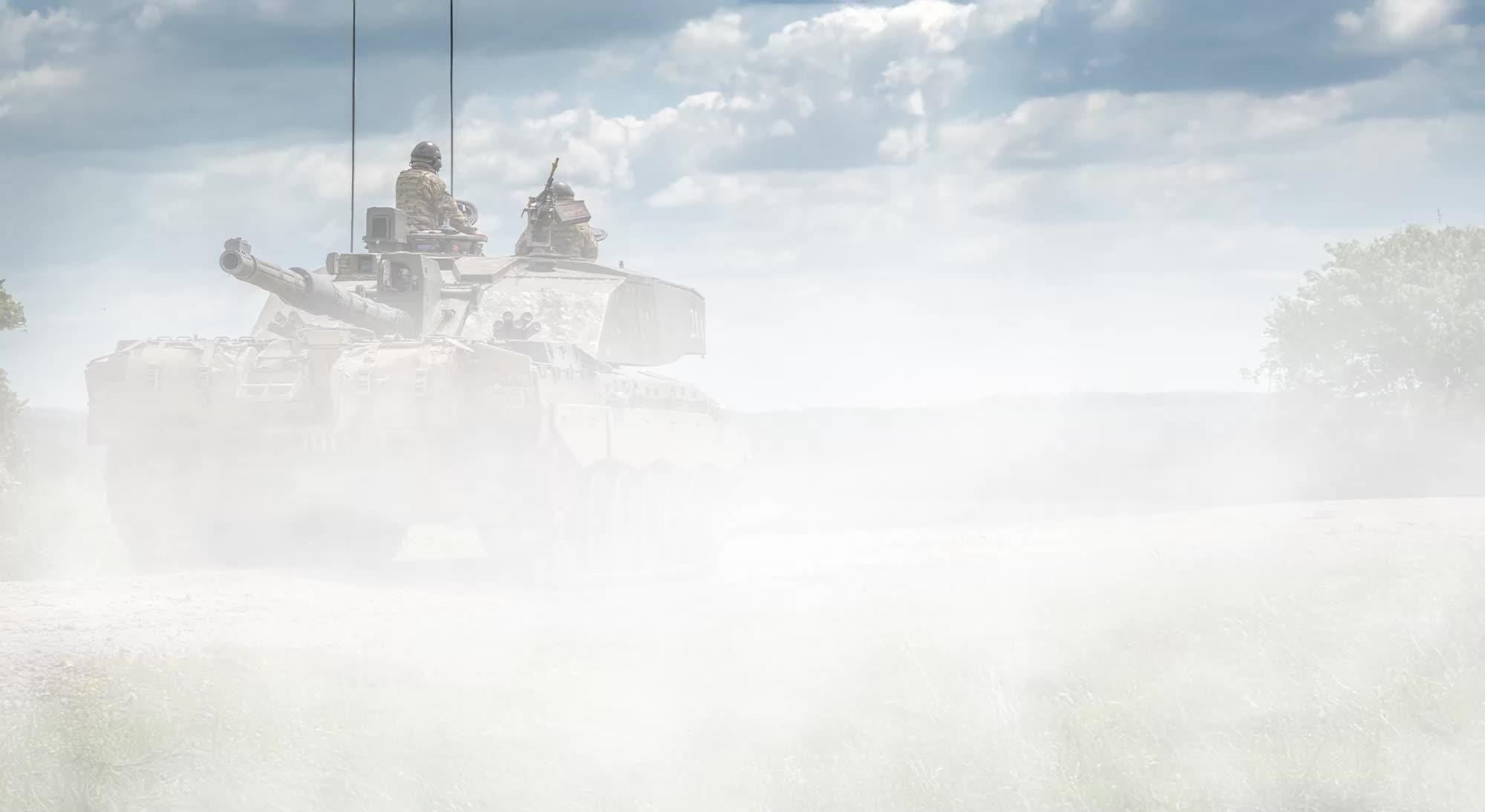
Main image: The British Army is in its weakest state for generations. Credit: UK MoD
Cover Story
Eye in the sky
As the first line of threat detection, airborne early warning is a must-have capability for the world’s militaries. Gordon Arthur reports.
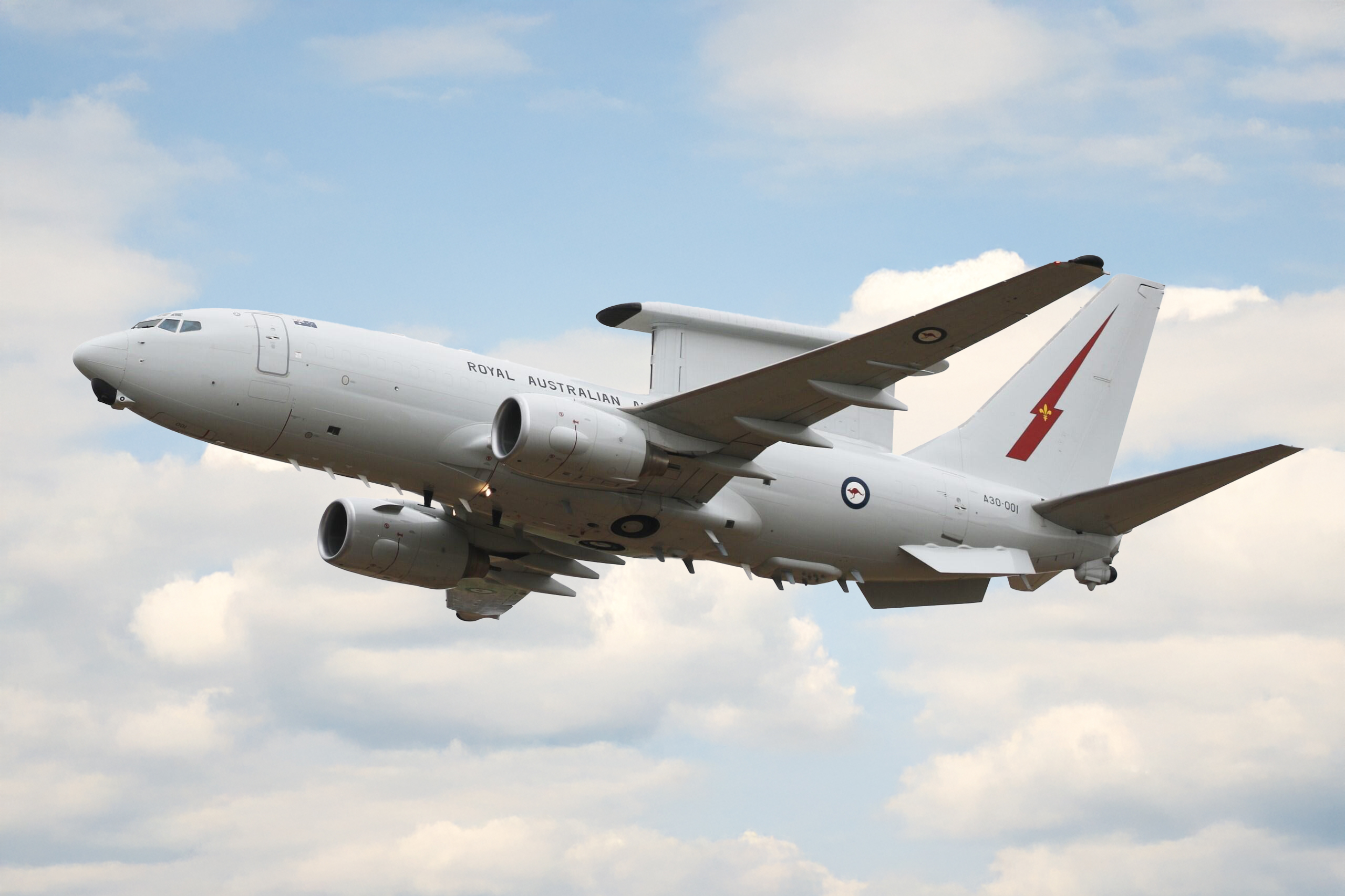
Australia was the first country to adopt the E-7A Wedgetail. Credit: Gordon Arthur
Defence procurement is a complex balance of budgets, timelines, and requirements, all of which compete to gain primacy in the argument, as national governments, for the main, seek to generate the minimum-required capability at the lowest possible price.
For the UK, currently embarking on a large-scale modernisation across its military, the timeline argument is perhaps the most acute with dozens of platforms due to leave operational service over the next decade.
This is particularly critical in the land and naval domains, where the British Army and Royal Navy contend with empty inventories and obsolescent capability.
Broken down by the land, sea, and air domains, Global Defence Technology investigates the out-of-service dates for key UK Armed Forces platforms and replacement programmes. The list is not exhaustive, but rather indicative of areas of specific strength and weakness.
The DroneGun Mk4 is a handheld countermeasure against uncrewed aerial systems. Credit: DroneShield
One key programme that will affect by a number of European operators is the evolution of the Type 212A conventional diesel-electric submarine (SSKs) design. Three nations are building on this legacy model in two different variations: first, the German and Norwegian Type 212 Common Design (CD) and second, Italy’s U212 Near Future Submarine (NFS).
It will also be valuable to examine how these changes differ from the capabilities offered by other European SSK designs, including the Dutch Orka class and Swedish Bleckinge-class submarines.
British Army: selected platforms
The British Army is the focus of several platform replacement programmes, although delays have resulted in confusion among industry, while some capabilities have been lost in their entirety.
| Vehicle type | Out of Service Date |
|---|---|
| Challenger 2 main battle tank | 2027 (phased replacement with Challenger 3) |
| AS90 155mm self-propelled artillery | 2025 (replacement from 2029 with RCH 155) |
| Warrior infantry fighting vehicle | 2027 (no like-for-like replacement) |
| Bulldog armoured personnel carrier | 2030 (no like-for-like replacement) |
| Stormer mobile short range air defence | 2026 (no known replacement) |
| Viking tracked armoured vehicle | 2029 (no like-for-like replacement) |
| Jackal 2 reconnaissance vehicle | 2030 (replacement with LMP programme, timeline uncertain) |
| Cougar-family MRAPs | 2028 (replacement with LMP programme, timeline uncertain) |
| Foxhound 4×4 patrol vehicle | 2030 (replacement with LMP programme, timeline uncertain) |
| Panther 4×4 command vehicle | 2037 |
| M270A1/2 MLRS | At least 2050 |
Some of the above-mentioned platforms will be replaced by the incoming Boxer Mechanised Infantry Vehicle (MIV), a platform slowly being introduced into British Army service. In November 2019, 523 Boxer vehicles were ordered in four build configurations, covering eleven different roles, with a contract placed for a further 100 units in April 2022.
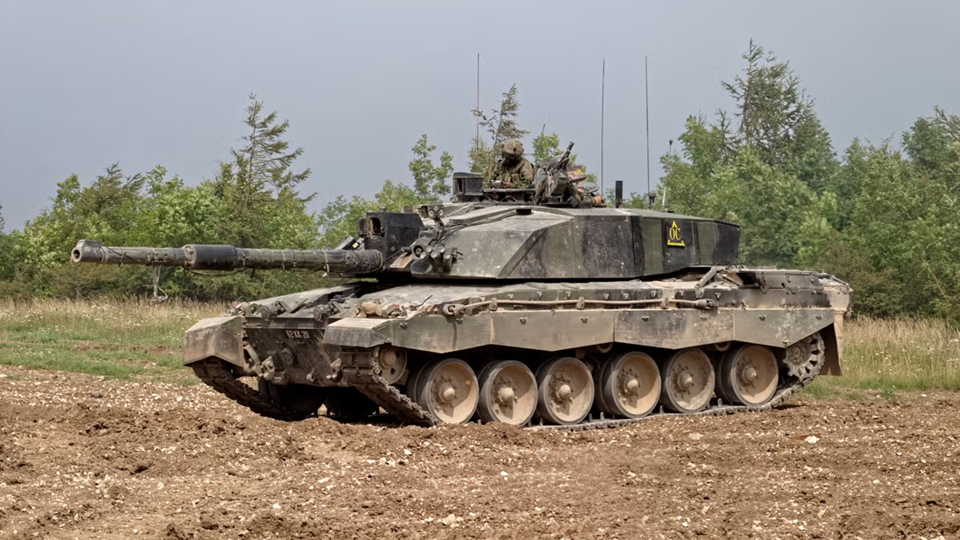
The British Army operates the Challenger 2 main battle tank. Credit: Andrew Harker/Shutterstock
However, on a purely numerical basis, the currently planned 623 Boxers will not replace the in excess of 1,500 vehicles the British Army will be retiring from service by the end of the decade, as the long-delayed Land Mobility Programme continues to stutter.
Capability gaps include virtually no long-range 155mm artillery (just 14 Archer systems obtained from Sweden) until at least 2029 and likely beyond, low munitions stockpiles on account of Ukraine donations, and little reserve materiel, for similar reasons.
Royal Navy: selected platforms
In a parlous state, the Royal Navy has just a handful of functioning major surface combatants, and capability gapping its ability to effectively perform amphibious assault operations. Of all carrier-capable navies, it is the most top heavy, with the two Queen Elizabeth-class vessels representing the largest proportion of naval tonnage of the surface fleet among Nato members.
| Ship type | Out of Service Date |
|---|---|
| Queen Elizabeth‑class aircraft carriers | 2069 |
| Albion‑class amphibious assault ships | 2025 |
| Daring‑class air defence destroyers | 2038 |
| Duke‑class guided-missile frigates | 2035 |
| Hunt‑class (6 × mine hunters) | 2031 |
| Sandown‑class (1 × mine hunter) | 2025 |
| River‑class Batch 1 and Batch 2 offshore patrol vessels | 2028 (Batch 1) 2040 (Batch 2) |
| Astute‑class nuclear-powered attack submarines | From 2035 |
| Vanguard‑class nuclear-powered ballistic missile submarines | From early 2030s |
Of particular concern will be the loss of the Royal Navy’s vaunted mine countermeasure (MCM) capabilities, which is being transitioned to uncrewed platforms. Such systems will be vulnerable in non-permissive environments like the Strait of Hormuz, where Royal Navy MCMVs were highly regarded by the US Navy.
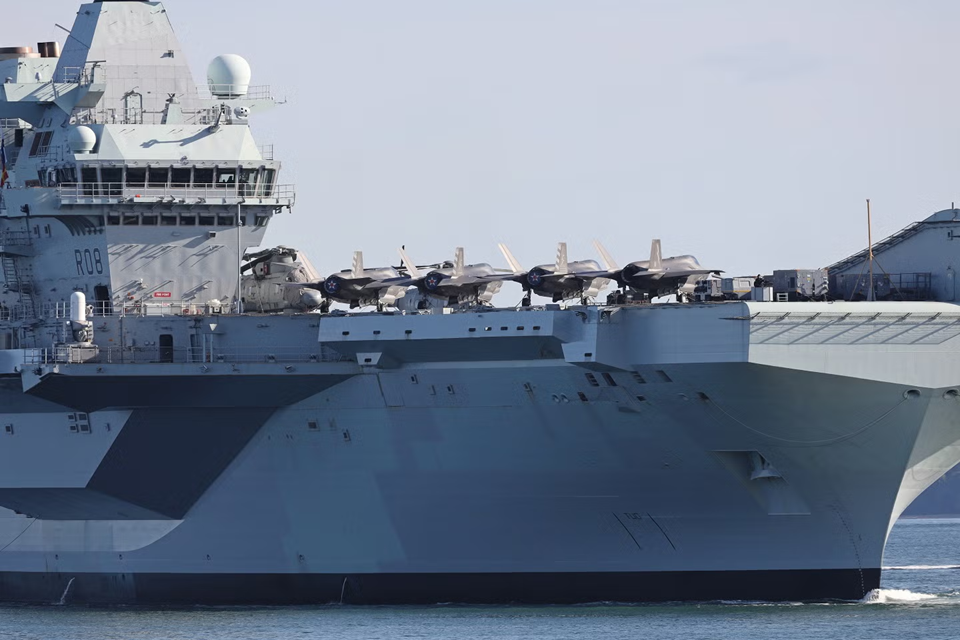
The Queen Elizabeth-class carriers are the centrepiece of the Royal Navy. Credit: Kevin Shipp/Shutterstock
Incoming platforms such as the Type 31 and Type 26 frigates are capable but will not arrive fast enough to prevent the Royal Navy service fleet dropping further still.
Royal Air Force: selected platforms
The Royal Air Force, in contrast to the UK’s other two services, is at the other end of a recapitalisation process, having introduced new fighters, maritime patrol aircraft, strategic transporters, and electronic warfare platforms.
| Aircraft type | Out of Service Date |
|---|---|
| A400M Atlas transporter | 2050 |
| C‑17 Globemaster transporter | 2040 |
| CH‑47 Chinook heavy lift helicopter | 2040 |
| F‑35B Lightning stealth fighter | 2069 |
| Hawk T1 jet trainer | 2030 |
| Hawk T2 jet trainer | 2040 |
| P‑8A Poseidon maritime patrol aircraft | 2045 |
| Protector RG Mk1 (MQ‑9B) drone | 2040 |
| RC‑135W Rivet Joint electronic surveillance aircraft | 2035 |
| MQ‑9 Reaper drone | 2035 |
| R1 Shadow Electronic warfare aircraft | 2030 |
| Typhoon FGR4 multirole fighter | 2027 (Tranche 1), 2040 (Tranche 2 and 3) |
The UK government recently committed to the switching the next batch of vertical take-off and landing variant F-35B fighters for 12 of the conventional F-35A variants, in what was perceived as a win for the Royal Air Force in acquiring the non-naval type.
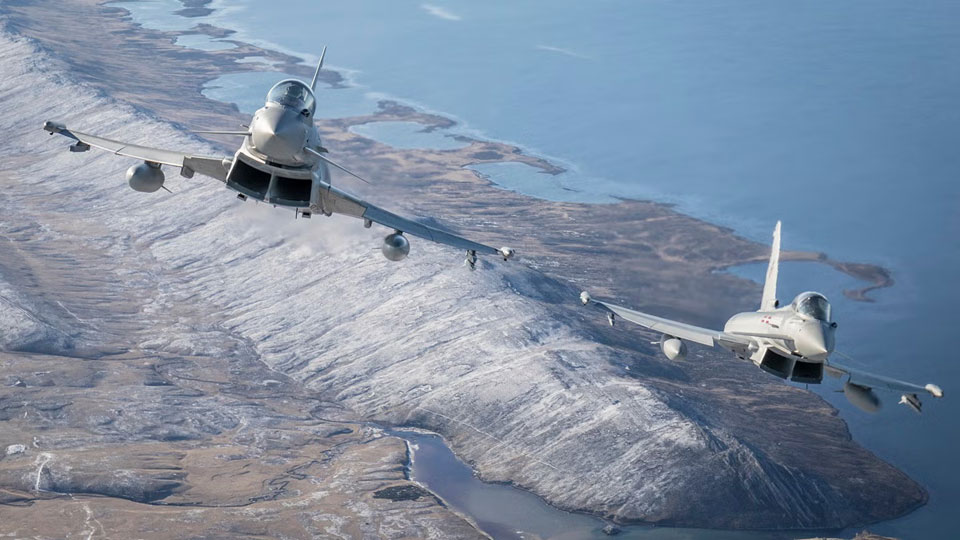
UK Typhoon FGR4 fighters flying over West Falkland. Credit: UK MoD/Crown copyright
Further down the pipeline a replacement jet trainer aircraft will need to be found, and there is a concern at the service’s relatively small numbers of fighters (107 Tranche 2 and 3 Typhoons post 2027 and ~48 F-35s by 2026), but broadly, the RAF is in good health.
There is a notable capability gap in airborne early warning aircraft since the dismemberment of the Nimrod fleet, but the UK is close to bringing into service the first of three E-7 Wedgetail aircraft, due to begin entering service in 2026.
To modernise the platform, via an April request for information, the USAF is canvassing the inclusion of a new radar, electronic warfare equipment and enhanced
communications to create an “Advanced E-7”. Two such examples are sought within seven years, after which other E-7s could be retrofitted with the modifications.
As for the UK, three 737NG aircraft are currently undergoing modification in Birmingham, the first completing its maiden flight in September 2024.
Global Defence Technology asked Boeing what makes the E-7 stand out, and a spokesperson listing three points. First is its allied interoperability. “With the aircraft in service or on contract with Australia, South Korea, Türkiye, the UK and USA – and selected by Nato – its unmatched interoperability benefits a growing global user community for integration in future allied and coalition operations.”

The E-7 platform is less expensive to operate compared to platforms based on small business jets.
Boeing spokesperson
The US is by far the largest spend on nuclear submarines. Credit: US Navy
Country | 2024 | 2025 | 2026 | 2027 | 2028 | 2029 | 2030 | 2031 | 2032 | 2033 | 2034 |
Australia | 3,582 | 3,586 | 3,590 | 3,594 | 3,613 | 3,622 | 6,183 | 6,207 | 6,216 | 6,239 | 6,380 |
China | 2,607 | 2,802 | 3,040 | 3,081 | 3,174 | 3,291 | 3,396 | 3,603 | 3,664 | 3,710 | 4,316 |
India | 2,320 | 2,533 | 3,675 | 2,457 | 2,526 | 2,639 | 2,741 | 2,873 | 2,958 | 3,350 | 3,560 |
Russia | 2,701 | 2,893 | 2,973 | 3,334 | 3,458 | 3,106 | 3,235 | 3,405 | 2,958 | 3,487 | 3,942 |
US | 16,957 | 18,037 | 18,522 | 18,607 | 18,137 | 18,898 | 18,898 | 19,643 | 19,876 | 22,592 | 23,730 |
Lisa Sheridan, an International Field Services and Training Systems programme manager at Boeing Defence Australia, said: “Ordinarily, when a C-17 is away from a main operating base, operators don’t have access to Boeing specialist maintenance crews, grounding the aircraft for days longer than required.
“ATOM can operate in areas of limited or poor network coverage and could significantly reduce aircraft downtime by quickly and easily connecting operators with Boeing experts anywhere in the world, who can safely guide them through complex maintenance tasks.”
Boeing also uses AR devices in-house to cut costs and improve plane construction times, with engineers at Boeing Research & Technology using HoloLens headsets to build aircraft more quickly.
The headsets allow workers to avoid adverse effects like motion sickness during plane construct, enabling a Boeing factory to produce a new aircraft every 16 hours.
Elsewhere, the US Marine Corps is using AR devices to modernise its aircraft maintenance duties, including to spot wear and tear from jets’ combat landings on aircraft carriers. The landings can cause fatigue in aircraft parts over its lifetime, particularly if the part is used beyond the designers’ original design life.

Caption. Credit:
Phillip Day. Credit: Scotgold Resources
Total annual production
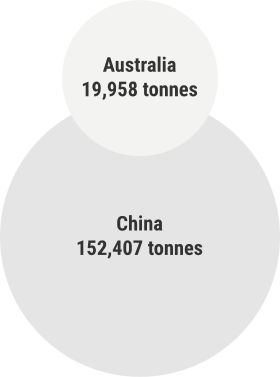
Australia could be one of the main beneficiaries of this dramatic increase in demand, where private companies and local governments alike are eager to expand the country’s nascent rare earths production. In 2021, Australia produced the fourth-most rare earths in the world. It’s total annual production of 19,958 tonnes remains significantly less than the mammoth 152,407 tonnes produced by China, but a dramatic improvement over the 1,995 tonnes produced domestically in 2011.
The dominance of China in the rare earths space has also encouraged other countries, notably the US, to look further afield for rare earth deposits to diversify their supply of the increasingly vital minerals. With the US eager to ringfence rare earth production within its allies as part of the Inflation Reduction Act, including potentially allowing the Department of Defense to invest in Australian rare earths, there could be an unexpected windfall for Australian rare earths producers.
