Interview
Triple target: Aselsan on Steel Dome, the UK, and AI
Aselsan CEO, Ahmet Akyol, discusses plans for Türkiye’s Steel Dome, the UK defence market, and AI. John Hill reports.
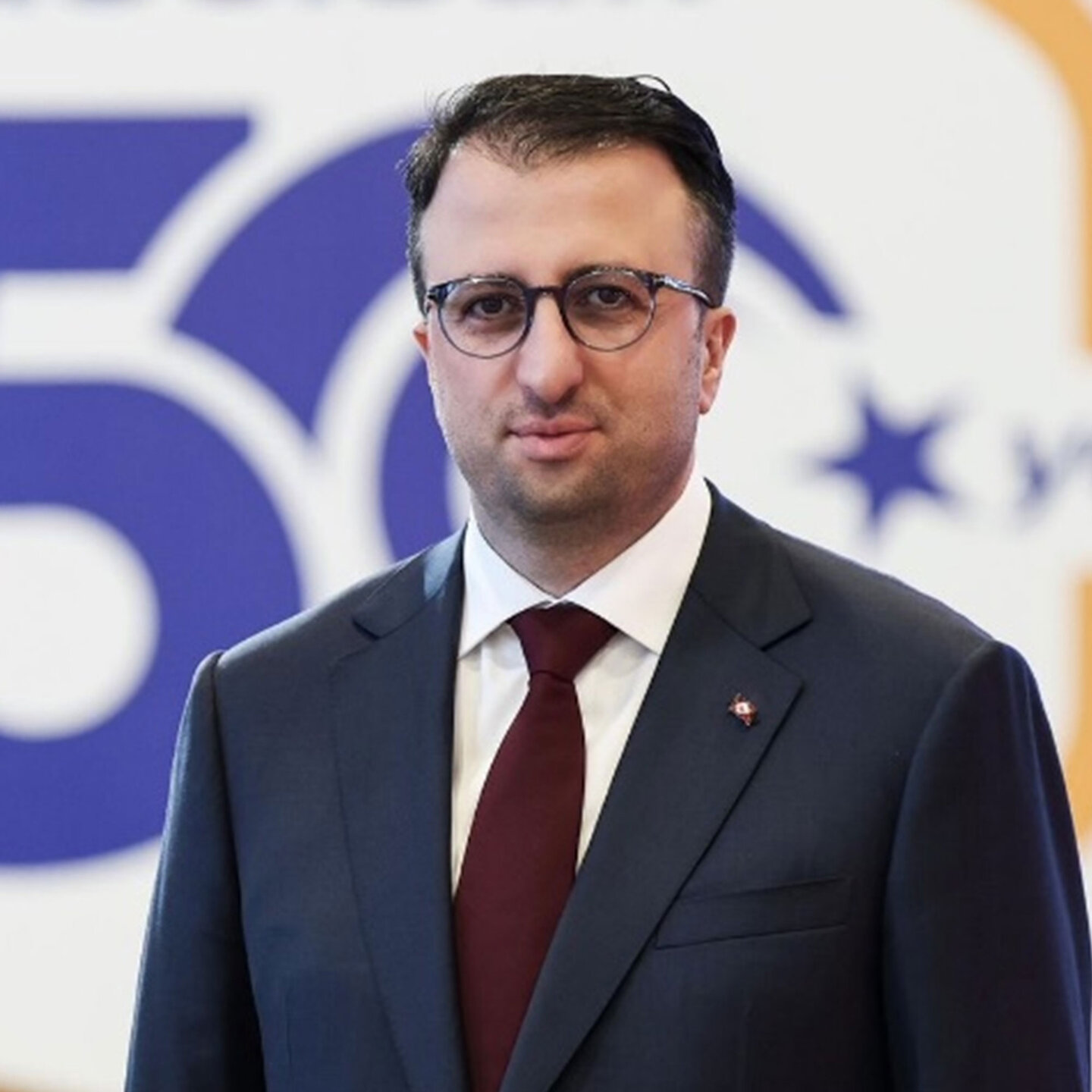
Aselsan CEO, Ahmet Akyol. Credit: Aselsan
At the end of August 2025, Türkiye’s largest defence electronics supplier Aselsan announced a landmark package for its country of origin, supplying 47 components for its Steel Dome integrated air and missile defence network.
But in the same breath, the company also mentioned that it had expanded its manufacturing capacity – a sure sign of orders to come, not just in Türkiye, but also Europe, particularly the UK.
Global Defence Technology met Aselsan’s chief executive, Ahmet Akyol, to discuss the company’s strategy in navigating the current defence climate, ruptured by gaps in the supply chain and with demand outpacing capacity.
John Hill: What demand signals from the Strategic Defence Review do you feel that Aselsan will be able to deliver, allowing the company to break into the UK defence market for the first time?
Ahmet Akyol: The UK’s Strategic Defence Review places strong emphasis on advanced electronic warfare (EW), cyber resilience, and software-driven capabilities — areas where Aselsan has demonstrated considerable expertise and innovation.
Aselsan is already engaged in several UK-focused defence programmes, providing interoperable solutions fully compliant with Nato standards. This established presence underpins our confidence in delivering tailored capabilities that meet the UK’s stringent operational requirements.
Moreover, Aselsan’s agile development approach and commitment to research and development (R&D) enable rapid adaptation to emerging threats and evolving battlefield needs. This aligns with the UK’s strategic goals of future-proofing defence capabilities through modular, software-centric systems.
John Hill: The UK government requires major suppliers to have a footprint in the UK for manufacturing. What plans does Aselsan have in place to that end?
Ahmet Akyol: Aselsan is well aware of the UK government’s emphasis on maintaining a strong, local industrial presence. The UK is considered a strategic market for Aselsan, and establishing a sustainable footprint here aligns with our long-term growth vision.
We are open to a range of industrial collaboration models, including joint ventures, co-production agreements, and technology partnerships. Active discussions with potential UK-based partners are already underway. While no agreements have been finalised at this stage, our focus remains on identifying opportunities where there is both a strong strategic alignment and a clear technological synergy.

The mine’s concentrator can produce around 240,000 tonnes of ore, including around 26,500 tonnes of rare earth oxides.
Gavin John Lockyer, CEO of Arafura Resources
John Hill: With a long way still to go for Türkiye’s Steel Dome layered air and missile defence network, what do you personally envision for this future concept?
Ahmet Akyol: To maximise early warning effectiveness, Steel Dome is designed to simultaneously utilise all available sensors, including active and passive radars, electro-optical systems, and EW assets, within an open-system architecture. As a scalable, modular, and fully dynamic “system of systems,” it relies on real-time fusion of multi-sensor data, where artificial intelligence (AI) significantly improves detection, recognition, identification, and proactive engagement capabilities.
AI also enhances the decision-making process, ensuring greater effectiveness against a wide range of threats, including [one-way attack] drones, stealth fighters, cruise missiles, and multiple ballistic missile attacks. The architecture enables the simultaneous use of different resources under all operational scenarios and incorporates space-based sensors to strengthen ballistic missile defence capabilities.
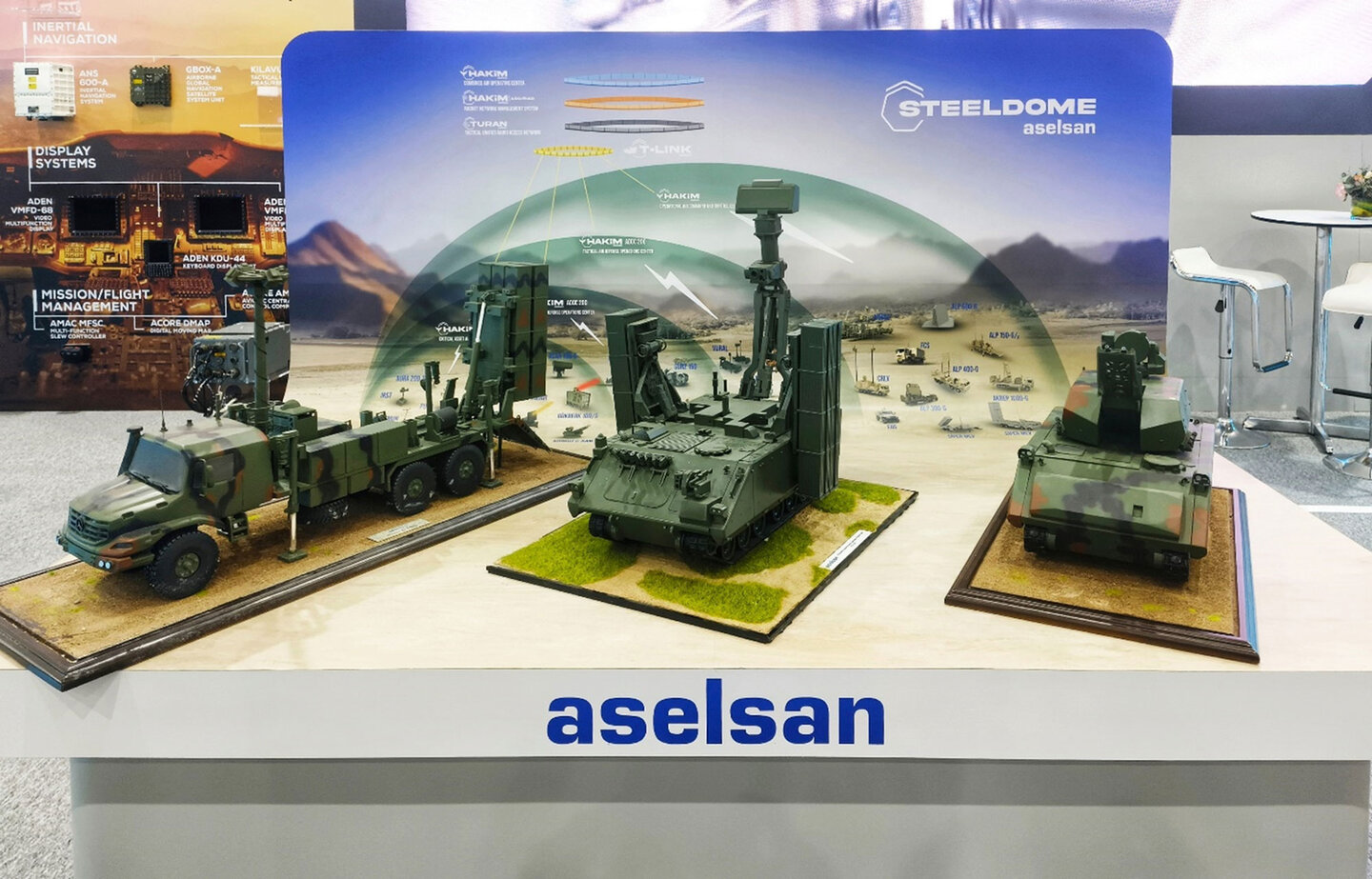
A model of Steel Dome air defence systems. Credit: Shutterstock/Allora Empire Art
Through precise outputs from the integrated fire-control loop, EW systems are directly employed as soft-kill effectors. This approach delivers cost-effective engagement by integrating the fire-control and kill chain across all layers — close-range, tactical, operational, and strategic — even against low-cost yet challenging aerial threats.
Unlike other systems, Steel Dome is not just a [countermeasure for rocket, artillery, and mortars]. It is a comprehensively integrated structure that leverages all sensing and interception resources to provide full-spectrum protection, from mini and micro drones to ballistic missile defence, across every layer of air and missile defence.
John Hill: Aselsan is said to be making strides in accelerating production through AI. What business processes will AI expedite? What objectives do you hope to achieve with these changes?
Ahmet Akyol: We combine software-defined warfare principles with AI-supported systems to deliver intelligent situational awareness and autonomous decision-making. This integration allows our platforms to operate with higher precision, faster response times, and greater adaptability to evolving threats.
AI is already transforming Aselsan’s business processes. Through digitalisation and AI integration, we have achieved over $25m in annual operational savings and improved revenue per employee by 1.6%, despite workforce growth.
AI accelerates R&D, software development, production planning, and lifecycle support, enabling predictive analytics, sensor fusion, and real-time coordination across multi-domain operations.
We are heavily investing in sovereign AI infrastructure, such as HEZARFEN, our enterprise-wide generative AI platform, as well as development environments like MODEL SUITE and Custom Marketplace. These platforms empower engineers with AI-powered tools for agile and autonomous software creation, while our [large language model] Suite ensures AI is democratised across departments, allowing teams to design intelligent solutions tailored to their workflows.
In addition to AI, Aselsan is exploring quantum technologies and next-generation AI-driven communication solutions to orchestrate all systems under a unified operational framework.
John Hill: Aselsan has made changes to the TOLUN family of systems. How do these changes provide the user with greater flexibility?
Ahmet Akyol: The TOLUN-IIR (imaging infrared), a 250-pound glide munition, integrates INS/GNSS guidance with an advanced imaging infrared seeker and a two-way datalink, allowing “man-in-the-loop” target updates and aim-point selection in real time. Its retarding canards and foldable diamond-shaped wings extend glide range to 43 nautical miles while enabling controlled terminal manoeuvres.
Complementing TOLUN-IIR, the TOLUN-S (surface) has been adapted for ground launch via the GÖKTAN [precision strike] system. Originally an air-to-ground munition, TOLUN-S now enables long-range, high-precision ground strikes under all weather conditions, with full 360-degree engagement capability. Its advanced penetration warhead, programmable electronic fuse, and waypoint-guided flight ensure effective engagement of both armoured and reinforced targets while eliminating risk to manned aircraft.
Looking ahead, such flexibility also positions the system for potential integration with allied forces, including the UK, enabling collaborative operations in complex and contested air defence environments.
John Hill: To what extent is the unveiling of the KORKUT 100/25 close-in weapon system at DSEI 2025 a signal that Aselsan is beginning to explore countermeasures for emerging threats in layered air defence?
Ahmet Akyol: While existing Aselsan systems already counter many modern threats effectively, new challenges are emerging, including [first-person view] and fibre-optic guided drones. In such scenarios, soft-kill measures like jamming are not always sufficient, making hard-kill solutions increasingly critical.
KORKUT 100/25 SB was designed to address precisely this need. Equipped with AI-powered target detection and engagement capabilities, it reacts faster and more accurately against close-range threats.
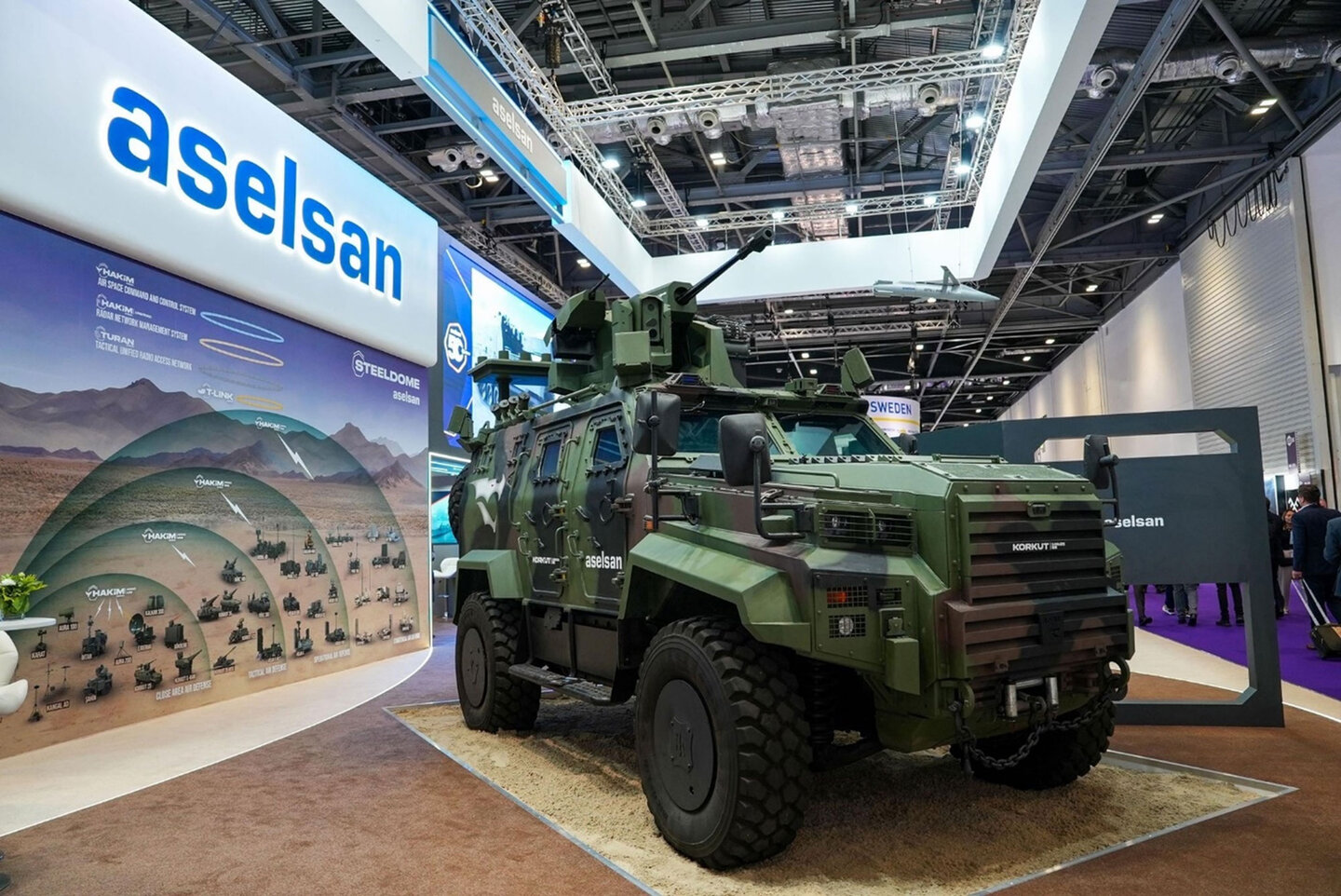
KORKUT 100/25 SB turret mounted on an Ejder Yalçın 4x4 armoured vehicle. Credit: Aselsan
The system’s stabilised, remotely operated turret incorporates high-resolution day and thermal cameras, a laser rangefinder, and advanced fire control software to engage fast, highly manoeuvrable drones—even on the move. Using 25mm ATOM airburst ammunition, KORKUT delivers against both single [uncrewed aerial vehicles] and coordinated drone swarms.
Crucially, KORKUT complements Aselsan’s broader layered air defence ecosystem. Integrated with medium- and long-range assets, such as Hisar air defence missiles and radars like ALP and MURAD, it closes the gap in close-range protection and ensures uninterrupted coverage across all threat profiles.
When extending layered defense to such short ranges, factors like rapid sensor-to-shooter loops, AI-assisted prioritisation, modular design, and mobility become essential. These features allow rapid adaptation to evolving threats while minimising collateral damage, providing resilient, adaptive, and reliable close-in defence within modern multi-layered architectures.
