Company Insight
Sponsored by Calian
Training for the Unpredictable
How Synthetic Training Environments Support Operational Readiness Without Compromise
Main image credit:
As Europe strengthens deterrence and collective defence, synthetic training is moving from an ancillary training component to a strategic imperative. To prepare for multi-domain operations, coalition warfare and rapid mobilisation, European forces require immersive, scalable environments that mirror the complexity of modern conflict.

In early June 2019, mining companies avoided increases to royalties by agreeing to provide A$70m to a A$100m infrastructure fund.
Frank Smith, Founder and CEO of TowHaul
Phillip Day. Credit: Scotgold Resources
Europe’s Security Reality
Europe’s security landscape has fundamentally changed. The return of high-intensity conflict to the continent, persistent hybrid threats, cyber disruption, space-domain vulnerabilities and sophisticated air and missile challenges have compressed decision timelines and increased operational complexity.
European armed forces are modernising rapidly. Nations are investing in new platforms, integrated air and missile defence systems and digitalised command-and-control architectures. Yet capability acquisition alone does not guarantee readiness. Forces must train to integrate these systems across land, air, maritime, cyber and space domains, often within multinational frameworks.
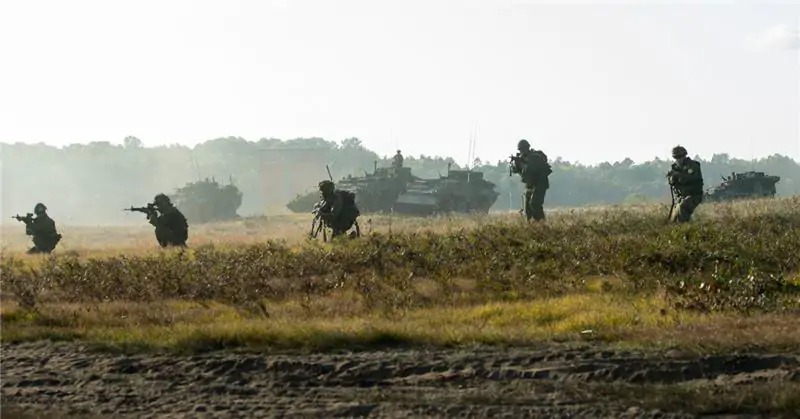
Caption. Credit:
Live training remains indispensable. Field exercises, flight hours and sea deployments build irreplaceable skills. However, Europe faces structural constraints: limited training space, airspace congestion, cost pressures and the practical difficulty of replicating adversary capabilities at scale. Large multinational exercises are essential but episodic.
What Synthetic Training Enables
Synthetic training integrates live, virtual and constructive elements into coherent, persistent environments. It allows distributed units, headquarters and entire coalitions to train together within digitally generated scenarios that replicate operational friction, ambiguity and tempo.
For Europe, three dimensions are critical.
1. Multi-Domain Integration at Scale
European defence increasingly revolves around joint and combined operations. Land manoeuvres must be synchronised with air defence networks, maritime surveillance, cyber effects and space-enabled ISR. Synthetic environments enable these interactions to be exercised repeatedly without the cost and complexity of physically co-locating assets.
Constructive simulations can generate realistic adversary behaviour, including anti-access/area-denial systems, electronic warfare and integrated air defence architectures. Commanders can rehearse decision-making under degraded communications, contested spectrum conditions and cyber disruption—scenarios that are difficult, if not impossible to fully reproduce in live environments.
Importantly, these environments allow headquarters-level training to match the sophistication of the platforms they command. As Europe fields more advanced systems, the cognitive burden on leaders increases. Synthetic environments create the space to practise coordination, timing and joint fires integration without operational risk.
2. Coalition Interoperability
Europe’s defence architecture is inherently multinational. Whether operating under NATO frameworks, EU missions or ad hoc coalitions, interoperability is crucial.
Synthetic training environments enable geographically dispersed forces to connect into shared scenarios. Common standards, federated simulation architectures and interoperable data protocols allow units in different countries to train together without physically deploying.
This approach strengthens more than technical interoperability; it builds procedural and cognitive alignment. Staff officers learn to interpret allied doctrine, command relationships and reporting structures through repetition.
In an era where reinforcement timelines matter, the ability to plug into a shared synthetic environment accelerates collective operational readiness. It ensures that when forces assemble physically, they are not meeting for the first time conceptually.
3. Operational Readiness Under Resource Constraints
European defence budgets are rising, but so are demands. Platform procurement, sustainment, personnel costs and energy prices compete for limited resources. Synthetic training offers a scalable method to increase training volume without proportionally increasing expenditure.
Virtual flight hours can supplement live sorties. Digitally generated manoeuvre exercises can precede or follow live field training. Headquarters can rehearse contingency plans repeatedly before committing to large-scale exercises.
The value lies in repetition. Operational proficiency is built through exposure to complexity over time. Synthetic environments allow forces to compress learning cycles, refine tactics and experiment with new concepts before validating them live.
This becomes especially important as reserve forces and rapidly mobilised units gain prominence in European defence planning. Synthetic platforms can support distributed training, enabling personnel to maintain operational readiness without constant physical concentration.
The Future Potential: Beyond Replication to Innovation
Synthetic training is evolving beyond high-fidelity replication. Advances in artificial intelligence, data analytics and immersive technologies point toward adaptive training ecosystems.
AI-enabled opposing forces can dynamically adjust tactics in response to trainee decisions, creating unpredictable scenarios. Data analytics can track performance trends across exercises, identifying systemic weaknesses in doctrine or coordination. Digital twins of platforms and operational theatres can allow forces to simulate specific geographic contingencies with granular detail.
The long-term opportunity lies in federated, sovereign synthetic ecosystems. Nations can maintain control over sensitive data while participating in shared training architectures. Secure cloud infrastructures and modular simulation components will enable scalable integration across defence industries and armed forces.
Additionally, synthetic training can support experimentation. As Europe explores concepts such as distributed lethality, integrated air and missile defence networks and human-machine teaming, virtual environments provide a safe arena to test doctrine before committing to physical implementation.
From Supplement to Strategic Necessity
As Europe strengthens its defence posture, the question is not whether synthetic training should be adopted, but how deeply it should be integrated into force generation models.
In a security environment defined by speed, complexity and coalition dependence, operational readiness cannot be episodic. It must be continuous.
Calian has delivered realistic, immersive simulation-based military training for over 25 years for more than 300,000 military personnel at over 30 locations across NATO countries. Learn more at www.calian.com/defence.

- Biffa internal savings data, average saving (January - August 2023)
- Nisbets internal savings data, average saving (January – September 2023)
- Compliance365 internal data, average savings
- HEINEKEN UK data, Calculations based on SmartDispense® active accounts each year since 2015 with 10 lines
- Independent test results based on subterranean and ground floor pub cellars of varying sizes
- Independent test results based on subterranean and ground floor pub cellars of varying sizes
