Feature
Case study: Iran’s air defence failure
Iran’s air defence network has been decimated by US-Israeli attacks. John Hill reports.
Powered by


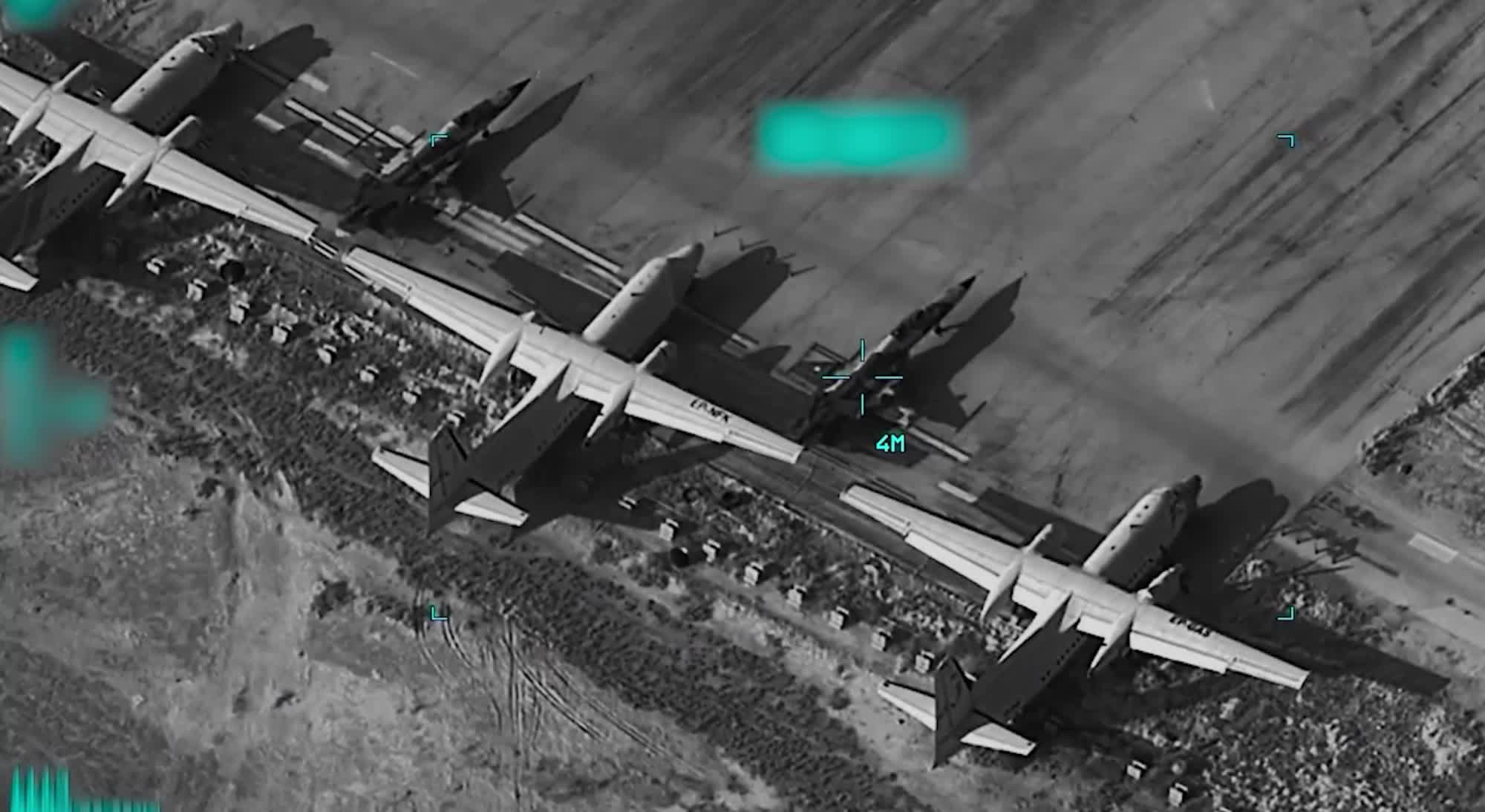
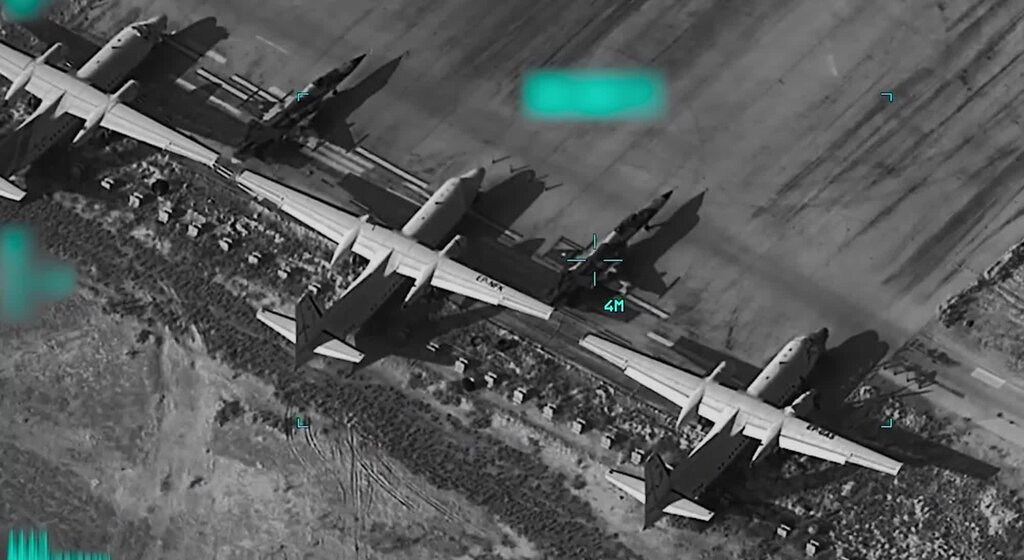
Main image: The United States and Israeli have been able to strike deep inot Iranian territory. Credit: US Department of War
US-Israeli strikes on Iran’s military and command and control infrastructure have exposed the deeply rooted failure of the Islamic Republic’s air defence network, amid the latest crisis to engulf the Middle East.
From the outset of the campaign, the US and Israel almost immediately achieved air superiority over Iran, enabling continued strikes against more than 5,000 targets within the Islamic Republic, at the time of publishing. Iranian air defence sites were subjected to aggressive electromagnetic spectrum operations but in tandem, its defences were also targeted kinetically.
Notably, the two allies appear to have split up responsibility. While US strikes focused on targeting strategic infrastructure such as air defences, command and control nodes, logistics networks, industrial facilities, and Iran’s military structure, Israel has prioritised ballistic missile launchers, Iranian leadership and Hezbollah while also launching a forward presence group into southern Lebanon.
Depletion after years of conflict
The Iranian Revolutionary Guard Corps (IRGC) is believed to have expended approximately half of its ballistic missile stockpiles during the 12-Day War in June 2025.
GlobalData defence analyst Callum Kaye stated the country’s ability to replenish these is now “negligible” due to US-Israeli precision strikes.
Likewise, the IRGC retained around 100 air defence launchers prior to the latest joint campaign. It is unlikely these units would have been compatible with all the missile types they fielded, “further exasperating their ability to launch coordinated strikes,” noted Kaye.
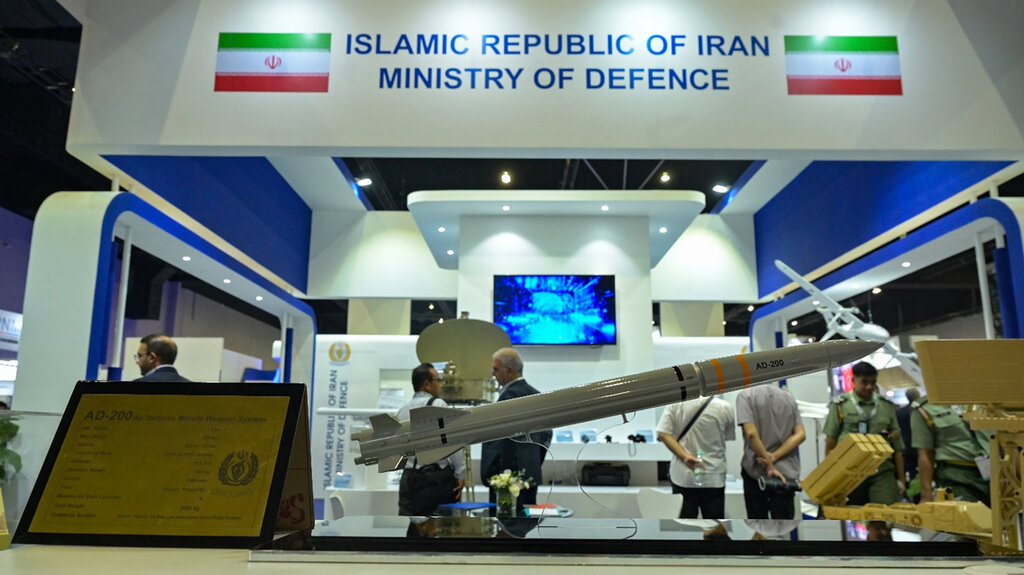
Assortment of Iranian air defence components. Credit: Djohan Shahrin/Shutterstock
“As a result, the IRGC will continue to switch to drones as the remaining [offensive] stockpile depletes,” Kaye determined. There is no evidence at present that Shahed drones have been used for interception, at least at this stage, although such a defensive solution is technically feasible, even if its effectiveness against advanced US and Israeli systems is limited.
Still, Iranian drones are managing to slip through air defences across the Gulf region in an offensive capacity due to mass effect tactics. These instances, one think tank noted, comes down to “shared learning” with partners Russia, China and North Korea.
The EW element
Iran has primarily relied on its ability to emulate and reverse engineer systems. This is largely because of global sanctions going back to the state’s inception in the 1979 revolution.
A significant portion of medium range air defence is vested in the Mersad, a low- to medium-range air defence system, which is a reverse engineered MIM-23 HAWK with some modifications.
These are fielded alongside indigenously produced designs including Ra'ad 1, Ra'ad 2, 3rd Khordad and Tabas systems.
For long-range defence, Iran has developed the Bavar-373 which has comparable capabilities to the Russian S-300. While for its short-range air defence, the country has reverse engineered the Chinese HQ-7 as the Ya Zahr, and in 2021 the Zoubin system was unveiled.
Besides these copycat systems, the country also leans on ageing Russian air defences, most notably the S-300PMU-2 battery.
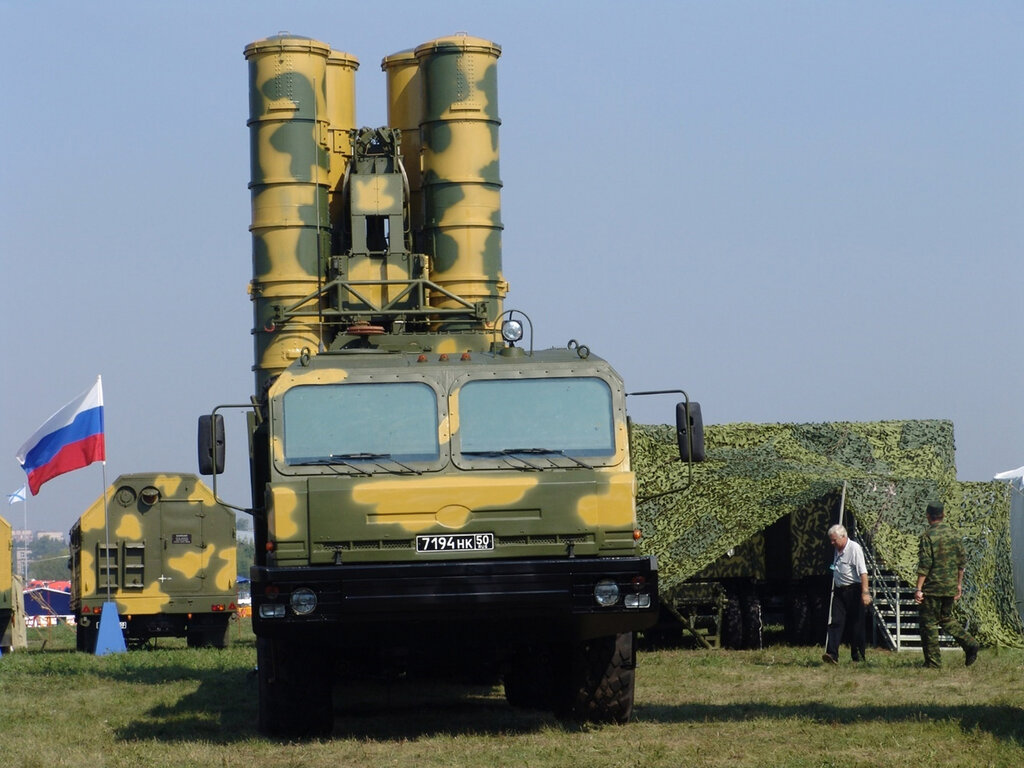
S-300PMU-2 air defence launcher unit. Credit: Vitaly V. Kuzmin / Wikimedia Commons
However, Israel destroyed a significant number of these components in October 2024 and during the 12-Day War. Worse still, the Israel Defense Forces learned all it could about the system in 2015 during joint air drills with Greece, which formerly operated its predecessor, the S-300PMU-1.
In doing so, the exercise enabled Israel to develop comprehensive electronic warfare (EW) technologies specifically designed to compromise radars used by S-300 batteries, such as the Icebreaker missile and Harop loitering munitions which hunt such radar units.
“The Israelis are masters at this,” said associate RUSI fellow Dr Tom Withington, speaking with Global Defence Technology. “Remember, they’ve had the advantage of fighting Russian and Soviet origin air defence systems and larger integrated air defence systems… since the missile age, since the creation of Israel in 1947.
“Notwithstanding the three aircraft that we see lost to… friendly fire,” Withington continued, “the lack of losses so far as combat operations are ongoing really does underscore, I think, how efficient and how capable the EW effort, the cyber warfare effort of both countries has been at this point in the conflict.”

The Israelis are masters at this
Dr Tom Withington, RUSI
The US and Israel are among the few countries to develop and operationally deploy gallium-nitride (GaN)-based airborne EW jammers. These next-generation, wideband phased-array EW systems offer increased power, longer range, and directional jamming capability. They also feature cognitive artificial intelligence to support autonomous, real-time threat response.
In the ongoing conflict, the US would mostly rely on the recently operationalised AN/ALQ-249 EW systems developed by RTX while Israel, by contrast, would primarily deploy Rafael’s Sky Shield and IAI’s Scorpius SP (ELL-8222SB) escort jamming systems.
Particularly in the opening of the joint strike campaign, it is highly likely that the US repeated its electronic warfare [EW] effects against Iran, just as US Special Forces had against Venezuela’s tactical variant of the same air defence system, the tracked S-300VM, two months ago.
“Much like their counterparts in Venezuela, the remaining [Iranian] S-300 batteries would be highly vulnerable to the EW capabilities of US and Israeli aircraft, particularly the F-22, F-35, and the EA-18G Growler, itself a dedicated EW aircraft,” Kaye considered.
At the same time, however, Iranian S-300 batteries most likely used an indigenous radar system instead of an original Russian one, which would offer inferior detection capability.
In using these indigenous radar components instead, Kaye continued, “operators of the remaining batteries would have needed to increase their radar power output, which in turn would have revealed their position and left them open to strikes from AGM-88 anti-radiation missiles, which is fielded by both Israel and the US.”
Can reshoring metals industry work?
But the harder question to answer is if all this energy and effort will actually wrest supply chains and capacity back from China. Alice Wu, policy manager, clean energy & supply chains at the Federation of American Science, said in this effort to build-up rare earth and magnet industries, the government is ultimately taking on the risk the private sector isn’t willing to take on.
“So, you expect a slightly higher rate of failure,” Wu said. “And that is the government's role – to take that extra risk because it's good for US national security.”
But Wu added that there is not a lot of public information, specifically on some of these equity plans. Others agreed there wasn’t a ton of transparency on how some of these deals – or even the international partnerships – would work.
“We don't know if they're taking a smart portfolio approach, or if it's willy-nilly,” Wu said, adding, “I would like to think that there's a strategy, but until that’s shared, we don’t know.”

Terbium is vital for the defence industry. Credit: Ployker/Shutterstock.com
Many experts and people involved in the rare earth industry suggested some people were overpromising on what they could deliver – and when.
“The reality is, we didn't get in this position overnight. We're not going to get out of it overnight,” said said Ed Richardson, president of the US Magnetic Materials Association, who was warning about America’s dependency on China for rare-earth magnets for decades.
“People want a Manhattan Project where you bring all the best scientists in the world together and they solve this problem in six months,” Richardson added. “It's not that we don't know what to do. We know how to do this, but you've got to build institutional knowledge. You have to build a workforce that knows what they're doing.”
Lewis, of Northwestern, said promises of a magnet from the ground in five years isn’t realistic. “We lost a lot of the capability and the equipment. The good equipment to make this still comes from China.”
I would like to think that there's a strategy, but until that’s shared, we don’t know.
Alice Wu, Federation of American Science
As Gracelin Baskaran, the director of the Critical Minerals Security Program at the Center for Strategic and International Studies wrote: “Even once operational, MP Materials is projected to produce only 1,000 tons of neodymium-iron-boron magnets annually by the end of 2025—less than 1 percent of the 138,000 tons China produced in 2018.”
As the US transitions, it will still need to rely on China, for example, to turn rare earth oxide into metal. Any stockpile started now will need to involve China.
While there is no question that the US needs to de-risk from China, especially for its defence components, a federal rule, set to go into effect in 2027, will ban defence contractors from using magnets from China in weapons. It is not clear, now, how contractors will meet that requirement – and what it means, especially amid billions in investment, if they cannot.

Dr. David W. Bates, Chief of General Internal Medicine at Brigham and Women’s Hospital

Caption. Credit:
Total annual production

Australia could be one of the main beneficiaries of this dramatic increase in demand, where private companies and local governments alike are eager to expand the country’s nascent rare earths production. In 2021, Australia produced the fourth-most rare earths in the world. It’s total annual production of 19,958 tonnes remains significantly less than the mammoth 152,407 tonnes produced by China, but a dramatic improvement over the 1,995 tonnes produced domestically in 2011.
The dominance of China in the rare earths space has also encouraged other countries, notably the US, to look further afield for rare earth deposits to diversify their supply of the increasingly vital minerals. With the US eager to ringfence rare earth production within its allies as part of the Inflation Reduction Act, including potentially allowing the Department of Defense to invest in Australian rare earths, there could be an unexpected windfall for Australian rare earths producers.
