
Feature
Determining demand: the case for GBAD
The demand for ground-based air defence systems is increasing as threats evolve. Gordon Arthur reports.
Powered by


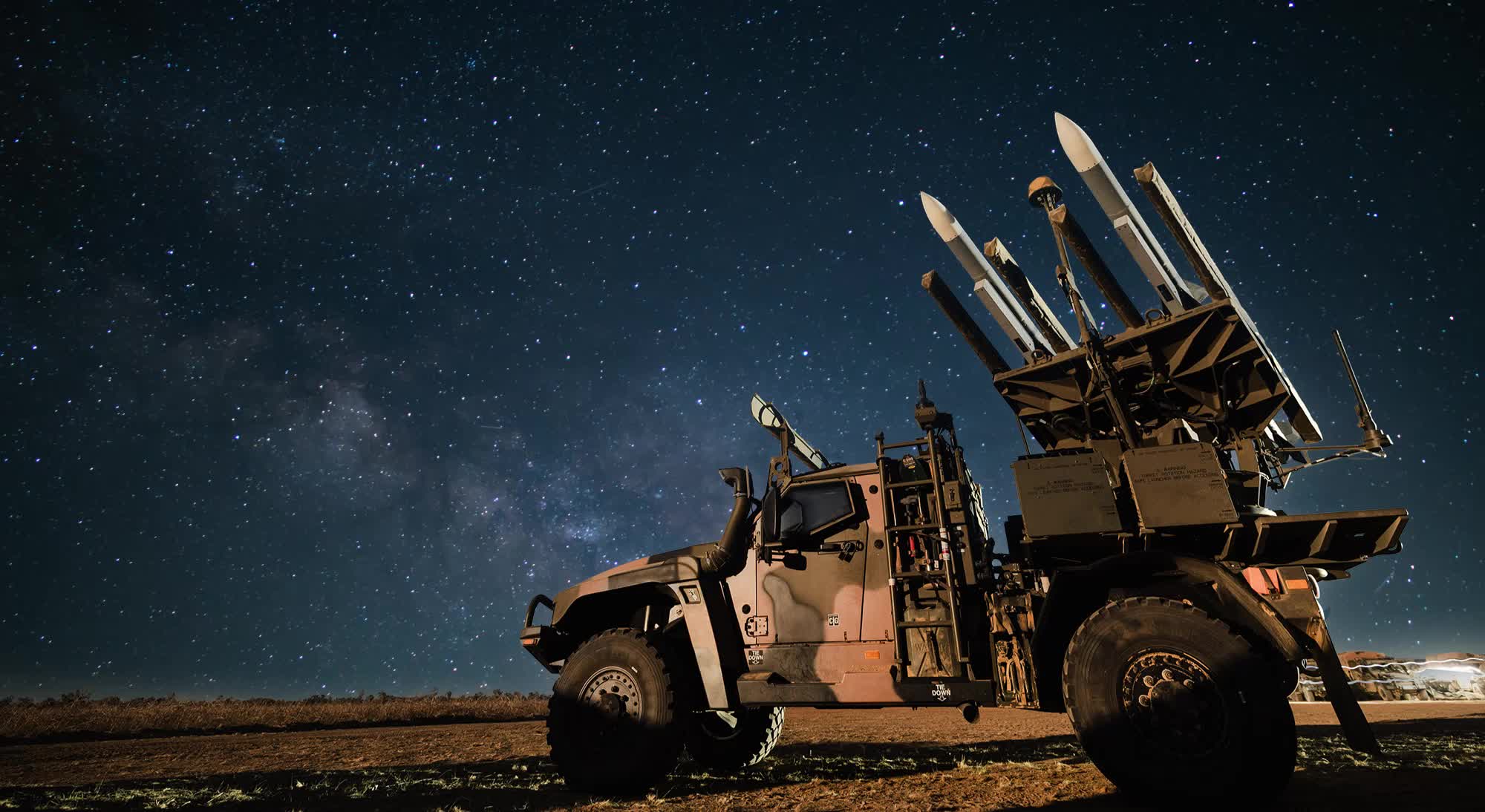
Main image: A Hawkei 4x4 High Mobility Launcher. Credit: ADF. Main video supplied by gorinyan/Creatas Video+ / Getty Images Plus via Getty Images
Recent international conflicts have served to emphasised the importance of ground-based air defence (GBAD) against multiple threats like drones, loitering munitions, helicopters, aircraft and missiles.
Take the twelve-day Iran-Israel War in June 2025, for instance, where Israel decimated Iran’s air defence network in just 24 hours through 200 manned and unmanned aircraft sorties.
On-the-ground Israeli special forces teams also helped degrade Iranian GBAD capabilities by attacking air defences with loitering munitions. This unexpected tactic underscores how GBAD effectors and sensors need to be protected against close-range aerial attack.
The same message had been hammered home in Russia when Ukraine launched Operation Spiderweb, launching 117 armed drones against five Russian airbases on 1 June 2025. These weapons had been hidden in cabins unwittingly transported by truck to pre-selected locations close to the Russian airbases.
Ukraine simultaneously launched these weapons to strike around 20 Russian aircraft, such as strategic bombers, causing significant damage.
In fact, the four-year-long war in Ukraine presents numerous lessons, with the Ukrainian General Staff claiming to have destroyed at least 1,300 Russian air defence systems to date.
Alexander Palmer and Kendall Ward of the Center for Strategic and International Studies (CSIS), examining why Russia never achieved air superiority over Ukraine, commented: “Ukraine rapidly relocated most of its mobile air defence systems shortly before the first round of Russian long-range strikes. It then dispersed its Buk units, which had previously operated as divisions, into small air defence teams.
“Ukraine’s dispersal and mobility allowed it to employ new shoot-and-scoot tactics with its mobile Buk systems, deploying them as individual pop-up threats rather than as batteries.”
The CSIS analysts continued: “Integration of Ukrainian MANPADS [man-portable air defence systems] operators into air defence teams also allowed the Ukrainians to force Russian pilots to choose between flying high and being targeted by radar-based GBADs or flying low and facing Ukrainian MANPADS missiles.”
Kyiv declares that air defence systems and missiles are the most important weapons they want from the West. Yehor Cherniev, Deputy Chairman of the Ukrainian Parliamentary Committee on National Security, Defence and Intelligence, revealed Ukraine is informing Lockheed Martin about its Patriot PAC-3 missile performance, for example.
Cherniev said the Patriot is his country’s most effective defence against Russian missiles, as Moscow employs various tactics to overwhelm defences, including launching in waves, changing missile trajectories in their terminal phase, and launching missiles and drones without warheads to exhaust air defence inventories.
Phil Gordon, a Lockheed Martin Australia executive, told Global Defence Technology that the Patriot PAC-3 Missile Segment Enhancement (MSE) hit-to-kill missile is “the world’s most advanced air defence interceptor”. To meet global demand, Lockheed Martin will triple annual production over the coming few years.
Another relevant conflict demonstrating the need for integrated air and missile defence (IAMD) was the four-day India-Pakistan war last May. India’s layered air defence system proved resilient in taking down drone swarms from Pakistan, including 600+ drones at one point.
Indeed, the recent Iranian response to US-Israeli strikes has seen air defence systems in the Gulf swamped with one-way attack drones and missiles launched by Tehran, causing significant damage and economic disruption across the region.
Reversing declines
GBAD assets had become depleted, the neglect stemming from the end of the Cold War and a long-time focus on counterinsurgency operations in Afghanistan and Iraq.
Mike Taylor, marketing executive, Sales and Business Development at MBDA, told Global Defence Technology: “GBAD has been in decline potentially for 15 years. I’m seeing it now emerging again. It’s prominent because of what we’re seeing in the world. You turn on the news every day and there are constant attacks, and GBAD has now found its place again.”

You turn on the news every day and there are constant attacks.
Mike Taylor, MBDA
One other GBAD system operated by Ukraine's military is the National Advanced Surface-to-Air Missile System (NASAMS).
John Fry, general manager of Kongsberg Defence Australia, said that NASAMS is performing very well in Ukraine, achieving its 1,000th successful intercept in late 2025 with a 94% efficiency rate.
Asked about its development path, Fry shared: “NASAMS is continually evolving with new contracts, an increasing customer base of 15 user nations, and lessons learned from extensive operations in defending Ukraine. One notable potential upgrade involves introduction of the AMRAAM-ER missile” to complement incumbent AIM-120 AMRAAM and AIM-9X Block 2 missiles. The AMRAAM-ER should increase NASAMS’ range to around 60km.
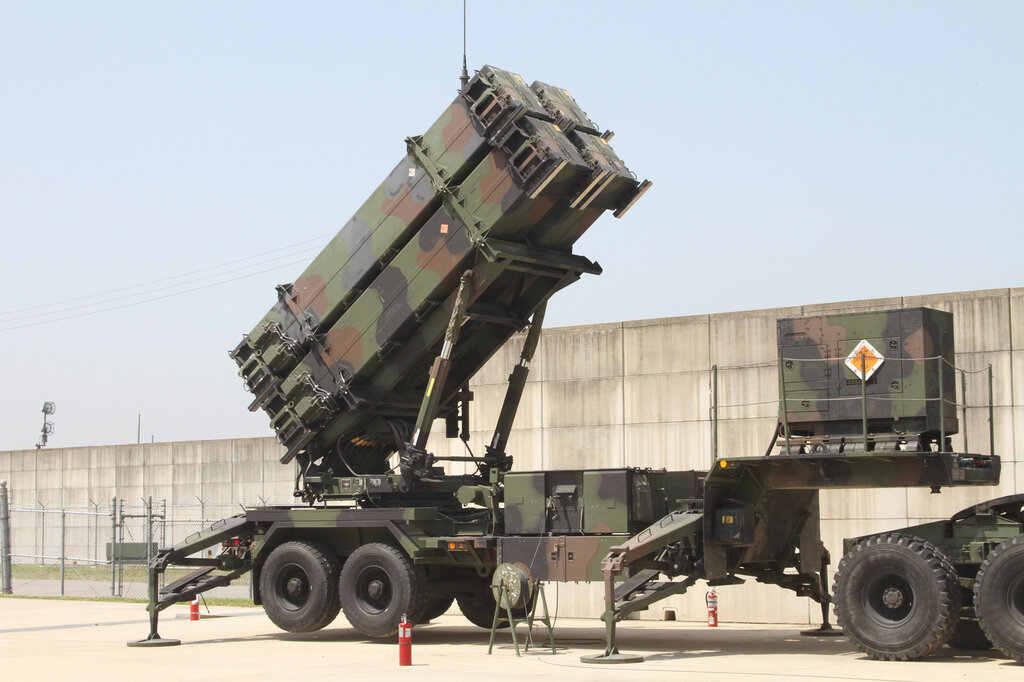
The MIM-104 Patriot air defence system. Credit: Gordon Arthur
Furthermore, Fry noted NASAMS is progressing towards full-spectrum air defence. “There’s also intent to integrate long-range effectors into the NASAMS architecture, providing the ability to undertake short-, medium- and long-range GBAD from a single system, significantly reducing manpower and operating costs. A number of counter-unmanned aerial system effectors have also been integrated into NASAMS, including gun systems, directed-energy and very short-range air defence/MANPADS.”
Integrated air defence
Israel has one of the world’s most effective IAMD systems. It incorporates the medium-range Rafael/Raytheon David’s Sling, and Israel Aerospace Industries (IAI)/Boeing Arrow 2/3 for long-range ballistic missile defence.
The latter will be replaced by the Arrow 4, which recently began flight tests. Rafael’s Iron Beam laser weapon is set to join as well. IAI also offers the modular Barak MX family that spans 15-150km ranges, with Thailand ordering the Barak MX last November.
South Korea offers a wide range of air defence platforms too. These include self-propelled anti-aircraft gun/missile systems, which are a rarity in many Western militaries nowadays.
Hanwha and LIG Nex1 contribute to the medium-range M-SAM system acquired by Iraq, Saudi Arabia, the UAE and South Korea. Seoul is also producing the long-range L-SAM that intercepts targets at 50-60km altitudes. It is South Korea’s first missile possessing a dual-pulse propulsion system, plus a divert and attitude control system, that enable accurate interception of ballistic missiles in thin air at very high altitudes.
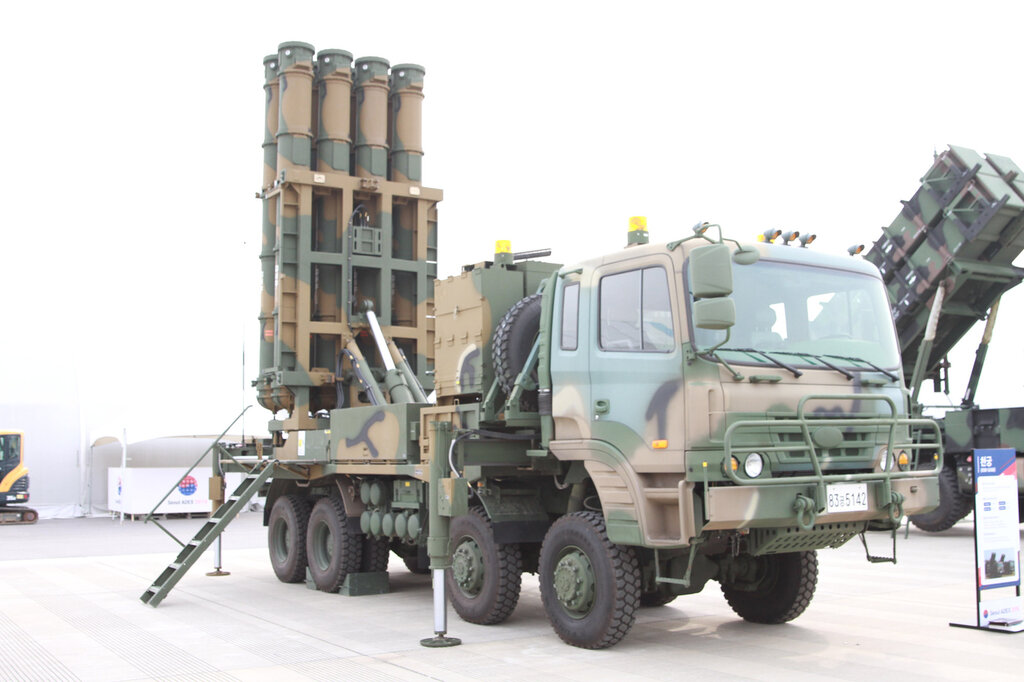
The medium-range M-SAM is produced in South Korea. Credit: Gordon Arthur
South Korea is already developing the more advanced L-SAM-II, due for completion in 2032. This will boast two missile types: a high-altitude interceptor and a glide-phase interceptor optimised against hypersonic glide vehicles.
Taylor told Global Defence Technology that MBDA is one of the few companies offering whole-spectrum air defence systems. “It puts us in a good position so we can do integrated air and missile defence; we can sell the whole package.”
MBDA’s and Thales’ top-tier product is the long-range Eurosam SAMP/T. The improved SAMP/T NG with a ballistic missile defence capability was delivered to Italy in January and was due to reach France in February. This uses Aster B1NT interceptors with a 150+km range. MBDA is also leading a consortium to develop the Aquila interceptor for countering out-of-atmosphere hypersonic missiles.
Another important MBDA product is the 25km-range Common Anti-Air Modular Missile (CAMM), which can flexibly perform both naval and land applications. “If you’ve got a common stockpile, you can transfer between your services,” Taylor explained.
Sharing 90% commonality, the 40+km-range CAMM-ER was designed for an Italian requirement and should enter service later this year. The Brazilian Army also selected the CAMM-ER in January as part of a three-battery requirement. Like Italy, Brazil’s Enhanced Modular Air Defence Solutions (EMADS) system will combine CAMM-ER with Leonardo Kronos radars.
Recent market movements
The German Army is procuring Skyranger 30 systems from Rheinmetall, and series production deliveries will begin next year based on the Boxer 8x8 chassis. The Oerlikon Skyranger 30 turret features two Stinger missiles and a 30mm KCE Revolver Gun firing advanced hit efficiency and destruction programmable airburst munitions.
There is still a place for towed/transportable cannon-based systems too. Romania, for instance, is ordering seven Oerlikon Skynex very short-range batteries from Rheinmetall for €476 million. Each battery unit comprises four 35mm Revolver Gun Mk3 unmanned turrets, an X-TAR3D radar and command post.
Also in Germany, Diehl Defence plans to lift production capacity of IRIS-T SLM/SLS systems, these being used by Ukraine to defend critical infrastructure. CEO Helmut Rauch said recently, “In the medium term, we’re planning to expand production to up to 16 firing units in about two years. If we see more demand from our customers, we can ramp up production even further.”
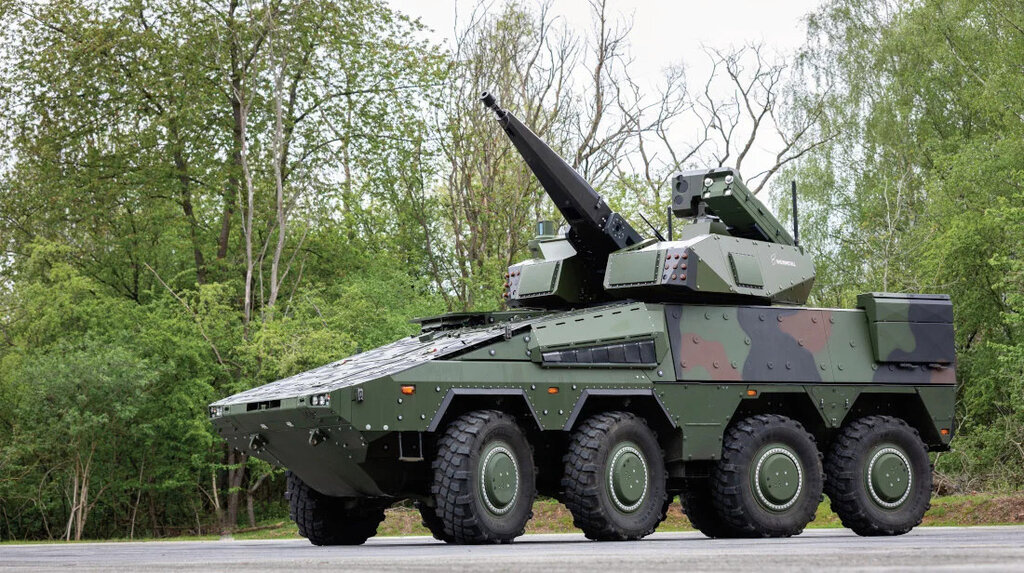
The Skyranger 30 turret can be mounted on various hulls. Credit: Rheinmetall
Rauch revealed that Diehl had moved to increase production of 40km-range IRIS-T SLM missiles tenfold since 2021.
Germany launched the European Sky Shield Initiative (ESSI) in 2022, designed to boost GBAD in Europe. Of ESSI’s 24 member states, eight have acquired the IRIS-T SLM. This includes Germany, which received its first firing unit in 2024. Diehl is also developing the 80km-range IRIS-T SLX, due to enter production in 2029.
Across the Atlantic, concepts such as Raytheon’s DeepFires are emerging, an autonomous vehicle/launcher with a modular design compatible with effectors such as Tomahawk and Patriot missiles. Another American offering is the Terminal High Altitude Area Defense (THAAD) system in service with Saudi Arabia, the UAE and USA.
US President Donald Trump is attempting to push through Golden Dome as a defensive shield for the US homeland, but details remain sketchy.

Dr. David W. Bates, Chief of General Internal Medicine at Brigham and Women’s Hospital
Threat landscape evolution
Taylor of MBDA acknowledged that surface-to-air missile systems are vulnerable to close-range attacks such as drone swarms, and leakers need to be taken out by cost-effective effectors. “You need to protect them, so you have a lesser-range capability protecting the greater asset, and then you use the greater asset when you need the longer range, the higher altitude.”
He advised: “Don’t have them in isolation. Make them work, make them talk together, and that will help you evaluate the threat, to decide which is the best effector to engage that threat and to nullify it.”
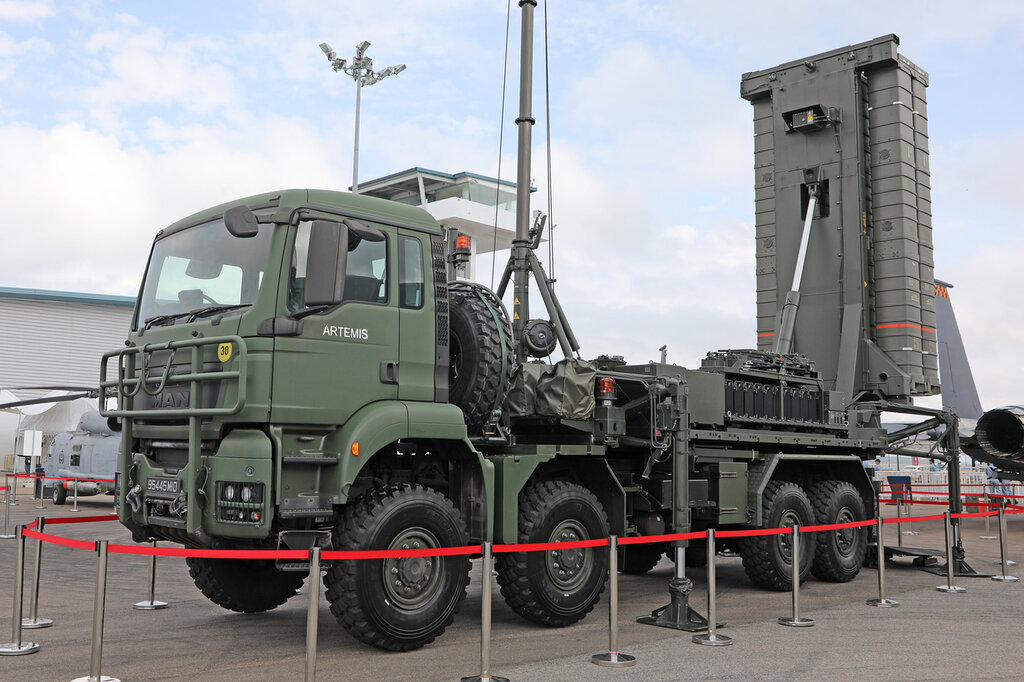
The Eurosam SAMP/T from MBDA and Thales. Credit: Gordon Arthur
In addition, IAMD had a “big part” to play, as threats included not just crewed fighters but also munitions and other hardware that is used to strike at arm’s length.
“Those threats are getting smaller, more difficult to track, more difficult to detect. So you need good radars and you need good seekers in the missile,” Taylor said.
Dr. David W. Bates, Chief of General Internal Medicine at Brigham and Women’s Hospital

Caption. Credit:
Total annual production
Australia could be one of the main beneficiaries of this dramatic increase in demand, where private companies and local governments alike are eager to expand the country’s nascent rare earths production. In 2021, Australia produced the fourth-most rare earths in the world. It’s total annual production of 19,958 tonnes remains significantly less than the mammoth 152,407 tonnes produced by China, but a dramatic improvement over the 1,995 tonnes produced domestically in 2011.
The dominance of China in the rare earths space has also encouraged other countries, notably the US, to look further afield for rare earth deposits to diversify their supply of the increasingly vital minerals. With the US eager to ringfence rare earth production within its allies as part of the Inflation Reduction Act, including potentially allowing the Department of Defense to invest in Australian rare earths, there could be an unexpected windfall for Australian rare earths producers.
