Cover Story
Facing the threat: drone defence doctrine
The inner layer is no longer just the last line of the drone defence. John Hill reports.
Powered by


Main video supplied by My-Ukraina/Global Images Ukraine via Getty Images
Historically, air defence has been more clear-cut in describing different layers of protection against higher altitude, large and costly aircraft and missiles. However, familiar terms like short-, medium- and long-range tiers no longer capture the nuances of air defence requirements.
In the drone age, the wide variety of cheap uncrewed aerial systems (UAS) have made air defence levels more elaborate, expanding inner layer air defence, thus complicating a defender’s response.
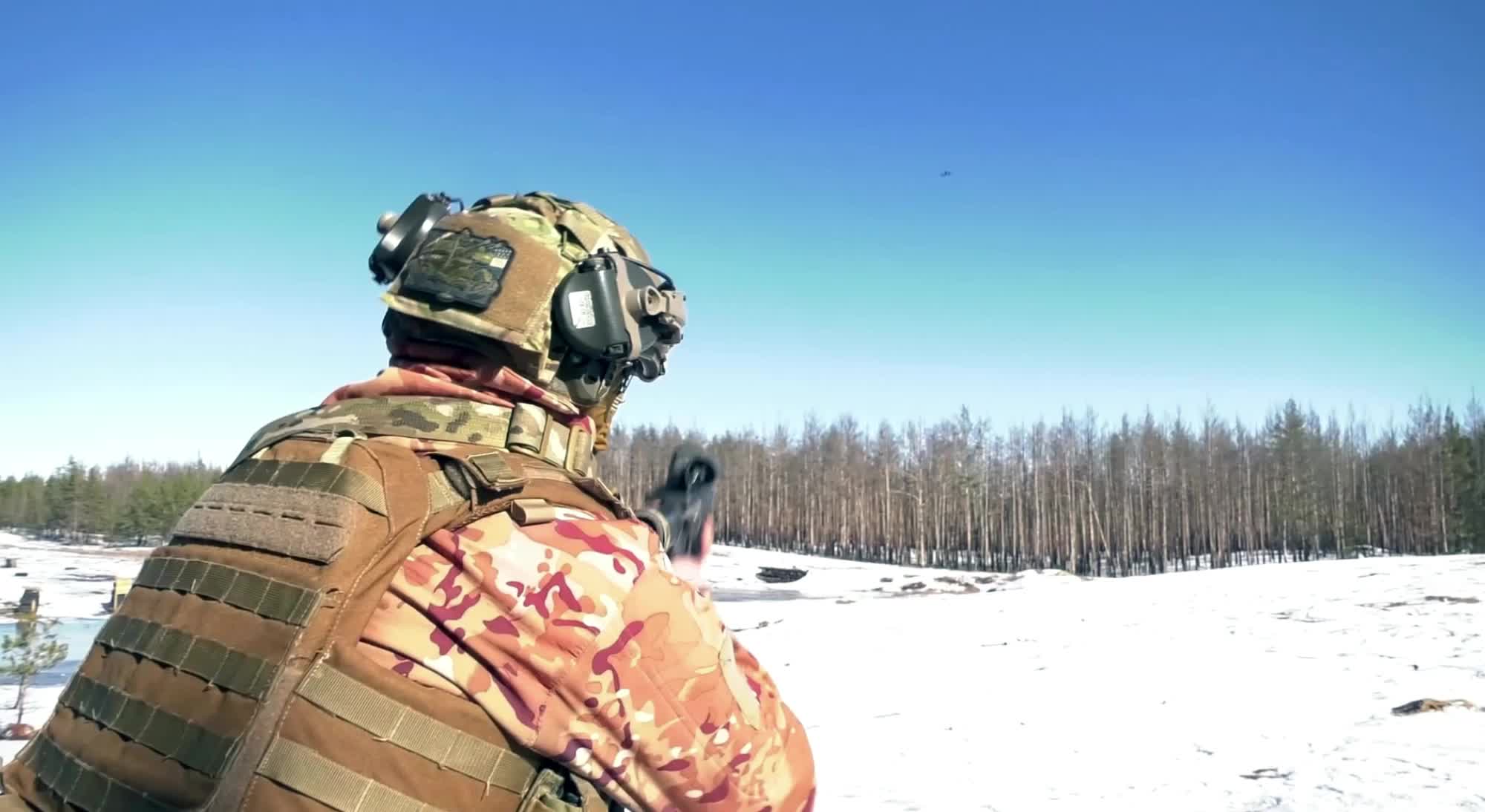
While the ‘inner layer’ once referred to last-ditch, point defence systems – such as the 20mm Phalanx or the Trophy Active Protection System – the phrase now has a wider meaning. This is demonstrated by the emergence of new counter drone (C-UAS) technologies employed at different distances: firing cheap missiles within a few kilometres, preserving the individual soldier to protecting cities with a flying minefield.
The inner layer is no longer just the last line of defence; it is now the most active and technologically diverse battlespace.
The saturation of UAS has inversely spurred global investment in the means to counter them. Militaries are likely to prioritise comprehensive, layered and robust C-UAS systems to counter UAS threats, according to the analytics firm GlobalData.
But the C-UAS value chain involves activity across a range of product areas, covering detection, tracking, and interdiction. This report will consider different kinetic effects to capture the breadth of existing interception methods.
From Ukraine to the Gulf
Iran and Russia’s advantage lies in cheap, mass-produced UAS, which defenders struggle to take down. There are many Shahed units slipping through Arab air defences while the European response to incursions last year exposed their total impotence.
It is well understood that one can no longer rely on conventional and costly air defence interceptors against increasingly autonomous (or pre-programmed) Shahed-type attack drones that can cost millions per shot; a single PAC-3 missile can cost up to $3.7m, and defence observers suggest it takes at least two per target.
Ukraine’s forces have become all too familiar with this reality in sustaining its war effort in the last four years. This experience prompted its leader, president Volodymyr Zelenskyy, to advise Gulf counterparts that cheaper drone interceptors, like the Octopus units the UK is helping Ukraine to manufacture, are considerably more economically sustainable against Iranian Shaheds.
It is said that Ukraine’s domestically produced interceptor drones now account for nearly one-third of all Russian drone aerial threats that are successfully neutralised.
Missile interceptors
While drone interceptors are an immediate answer to the UAS threat given the current pace of technology innovation, militaries are demonstrating an ability to adapt to the C-UAS challenge using relatively cheaper missile interceptors, which reach their target much faster than subsonic drones.
Engaged in the Middle East crisis in a defensive capacity, the UK will send several AW159 Wildcat helicopters to perform the role of “drone busters”, to lift a phrase used in a government statement in early March, which is a different mission to the helicopter’s conventional maritime attack role.
This new role will see the rotorcraft fire Martlet Lightweight Multirole Missiles (in excess of £50,000 per unit) to intercept Iranian Shaheds in the Eastern Mediterranean.
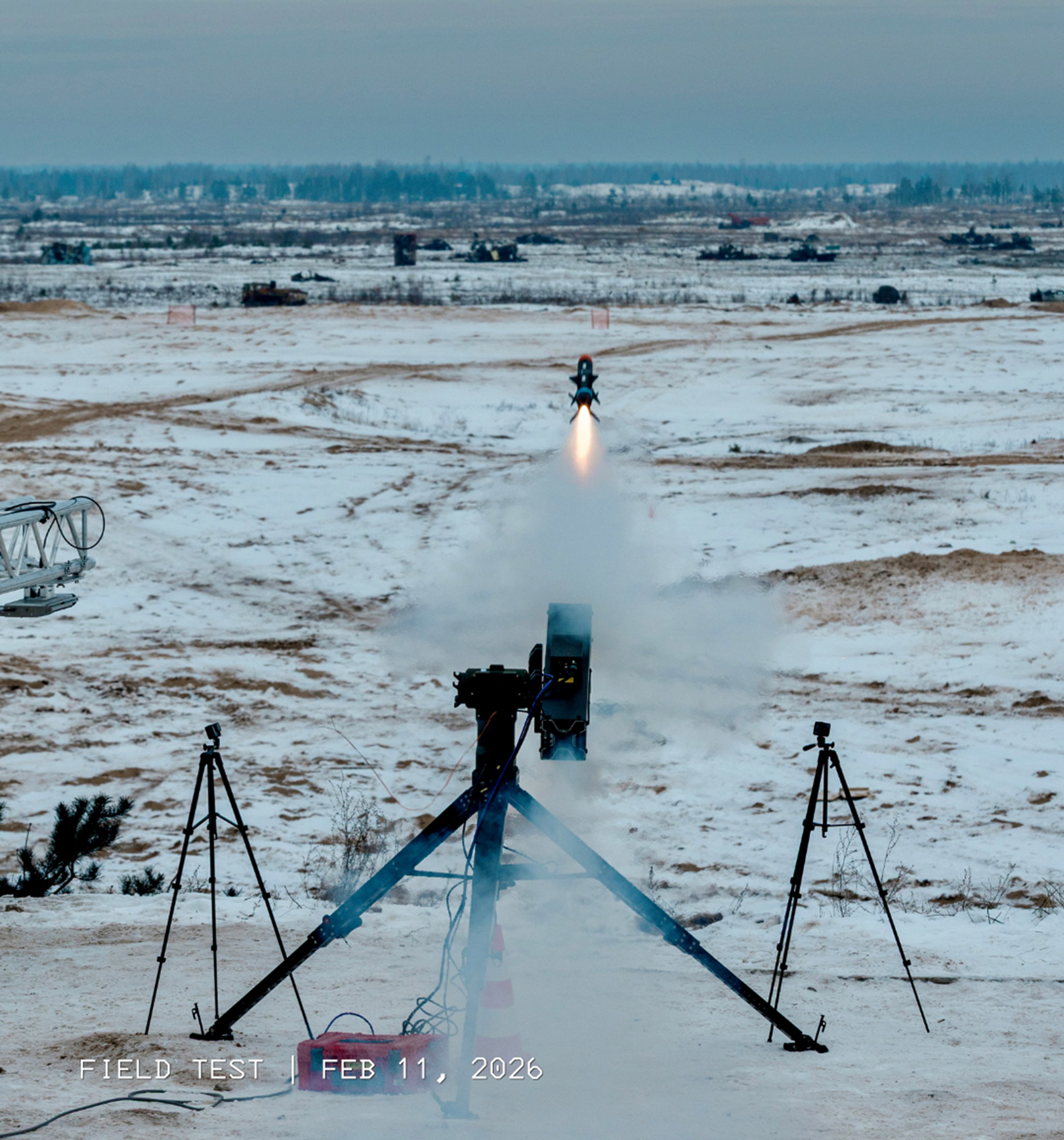
Mark I missile firing test. Credit: Frankenburg
But the cheap missile interceptor sector is only beginning to scale, most notably though the efforts of Estonia’s Frankenburg Technologies. The CEO, Kusti Salm, told Global Defence Technology that “we don’t want to organically go into the tens of thousands of missiles; we want to immediately go there.”
At a cost of around $50,000 per unit, and with plans for each of its factories to produce 100 missiles a day very soon, Frankenburg aim to open up the missile market as Ukraine has done with the commercial drone market. It is hoped the company’s Mark I missile interceptor, which happens to be the world’s smallest guided missile, will break the mould.

We don’t want to organically go into the tens of thousands of missiles; we want to immediately go there.
Kusti Salm, CEO Frankenburg Technologies
It is powered by a solid rocket propellant and designed to intercept low, slow, massed UAS with AI-powered course-correction and an airburst capability, meaning the warhead will detonate a couple of metres away from the target. The missile’s range is limited to two kilometres.
When this reporter first reviewed Mark I in September 2025 the missile was said to hit its target about 50% of the time. But Frankenburg aim to exceed the 90% hit rate as the missile becomes more scalable, and thus affordable.
While scalability will decrease the cost of Mark I over time, there is promise among larger defence primes which are looking to ingratiate themselves in this fledgling sector, including Babcock and BAE Systems, both of which are looking to work with Frankenburg in developing launchers and warheads for the mini missile.
Protecting the soldier
“You can’t intercept every drone from ten kilometers off,” said Will Ashford-Brown, a director at the Heligan Group, an investment bank with a focus in defence. “There are always a number of drones that slip through the net, and you have to develop a short range method of countering that.”
In this backdrop, there is little individual soldiers can do when confronted by UAS. In such an unlucky situation, hearing the dreaded whizzing, one will run, hide, fire, and in some circumstances, simply freeze in place.
Few tactics have proven effective. Among the Russians, soldiers have used motorcycles and quadbikes to evade attack drones and to penetrate Ukrainian defensive lines. While last year, The Telegraph reported that North Korean troops in Kursk would use a human bait tactic while others tried to shoot the drone down.
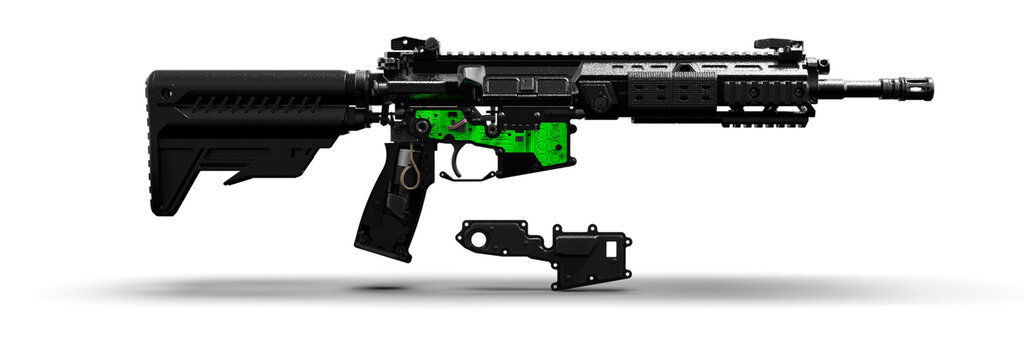
Impression integrating ARBEL system in a rifle. Credit: IWI
A senior official for Israel Weapon Industries in Europe – who is also a current reservist in the Israeli military – said the answer may be found in technology as much as training and doctrine.
“Today, you don’t really have a way to protect yourself against… attacking drones, just like… decades ago, they invented helmets and the bulletproof vest… Now, there is no such thing yet against drones, so your best defence will be to intercept them with your own ammunition,” the official said, who declined to provide a full name for security purposes.
To that end, IWI’s AI-powered ARBEL fire control system enhances small arms shooter accuracy, particularly against moving UAS targets. The computerised system is integrated into the pistol grip of any standard AR-15 rifle.
ARBEL’s sensors monitor soldier behaviours – weapon movement, trigger status – to determine the optimal moment to fire. All the shooter needs to do is to hold down the trigger and the system calculates the suitable moment to fire for the most accurate shot.
Elsewhere, and Ukraine’s forces still maintain confidence in the ability of troops to shoot down drones as demonstrated by the government’s commitment to produce up to 400,000 rounds of Horoshok ammunition per month, specifically to bring down UAS threats at distances between 50 and 60 metres.

Dr. David W. Bates, Chief of General Internal Medicine at Brigham and Women’s Hospital
Mass effect meets mass protection
Another lesson from the frontline in Ukraine is to cultivate a proactive response to UAS. The Ministry of Defence envisage “a system designed not to respond post factum, but to destroy threats while they are still en route”.
The newly appointed deputy air force commander, Colonel Pavlo “Lazar" Yelizarov, has been tasked to deliver a C-UAS shield to protect swathes of territory. However, the government has not described how this will be achieved or what type of technology will be procured to build the concept.
One solution that may be considered is a ‘drone wall’ to prevent Russian salvoes from reaching cities and critical national infrastructure. The French company ATREYD showcased its concept during Nato’s Steadfast Dart exercise in Germany in February 2026. ATREYD deploys a dynamic flying minefield in which adversary UAS are blocked on their course.
“We make drone walls in the sky, but [they] are dynamic and we don’t hunt for this threat, we just impeach it to reach its target,” said Jean-Marc Pizano, founder of ATREYD.
The wall is powered by the RAYN AI architecture to coordinate a distributed, self-coordinating swarm of UAS. The system is designed for about 1,000 drones per RAYN system node, and multiple nodes can be stacked, meaning there is no limit to the number of drones in the swarm.
“Unfortunately, cities and people are part of the war, and you can see that Russia is destroying the whole electricity and power network in Ukraine right now because they want the population to suffer and to be tired of this war… So we need to protect cities, Pizano continued.
This solution will prove highly effective against Russian Geran-2 (Shahed-136) UAS, which primarily rely on a preprogrammed course to hit static coordinates using satellite and inertial navigation. But as attack drones are increasingly made autonomous, systems will begin to independently manouevre past the wall accordingly.
While Pizano noted a 100% hit rate now, this may prove difficult to sutain as technology evolves.
Dr. David W. Bates, Chief of General Internal Medicine at Brigham and Women’s Hospital
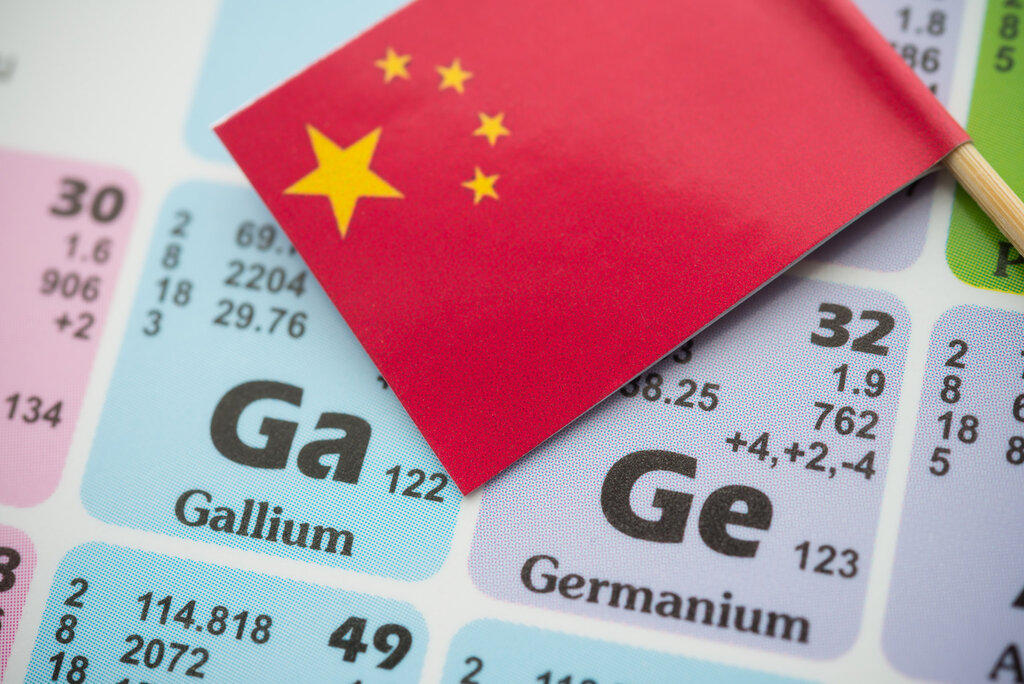
China maintains a near monopoly over rare earth metal extraction. Credit: Pla2na/Shutterstock.com

Caption. Credit:
Total annual production
Australia could be one of the main beneficiaries of this dramatic increase in demand, where private companies and local governments alike are eager to expand the country’s nascent rare earths production. In 2021, Australia produced the fourth-most rare earths in the world. It’s total annual production of 19,958 tonnes remains significantly less than the mammoth 152,407 tonnes produced by China, but a dramatic improvement over the 1,995 tonnes produced domestically in 2011.
The dominance of China in the rare earths space has also encouraged other countries, notably the US, to look further afield for rare earth deposits to diversify their supply of the increasingly vital minerals. With the US eager to ringfence rare earth production within its allies as part of the Inflation Reduction Act, including potentially allowing the Department of Defense to invest in Australian rare earths, there could be an unexpected windfall for Australian rare earths producers.
