Interview
Strength in Unity: Patria’s CAVS programme
Patria is targeting further success with its CAVS platform with the UK’s Recce‑Strike concept, a key element of its force renewal. Richard Thomas reports.
Powered by


Main image: Hugo Vanbockryck, vice president, Europe Market Area.
European militaries are seeking to re-equip and re-arm in the face of emergent threats from a Russian state keen to redraw the continent’s map, and a Nato ally in the United States that is less willing to provide conventional security to the region.
Given this, a range of opportunities have opened up for Europe’s defence sector that did not exist a decade ago.
However, despite the demand and increase in available funding across the continent, the need to find efficiencies through multinational programmes and platform commonality remains an important factor for defence procurement.
Finnish defence manufacturer Patria is one such company that has seen intense interest on its capabilities from European nations, who are keen to grasp the nettle of this once-in-a-generation re-armament process.
Global Defence Technology sat down with Patria’s Hugo Vanbockryck, vice president, Europe Market Area, to discuss the company’s strategy in navigating the current defence climate and its landmark Common Armoured Vehicle System (CAVS).
Richard Thomas: What are the biggest technical and operational lessons Patria has taken from CAVS so far?
Hugo Vanbockryck: “Through its adoption by multiple nations, the CAVS programme has reinforced the critical importance of Nato-First interoperability. Operationally, we've seen firsthand how a common platform streamlines logistics, enhances joint training, and reduces the fragmentation of European land vehicle fleets. Technically, it has demonstrated the value of a modular design that allows for rapid adaptation to specific mission requirements and technological advancements.
“When differentiating CAVS, its operational status across seven allied nations sets it apart. This real-world validation translates to lower lifecycle costs due to established supply chains and shared maintenance procedures. The inherent modularity, designed for spiral development and technology insertion, allows for the platform to remain relevant against evolving threats - meaning the UK can implement one-year upgrade cycles. While other platforms may offer modularity, CAVS's maturity and widespread adoption within Nato provides a readily available, de-risked capability.”
Richard Thomas: Through 2026 and into 2027, what capability areas do you expect to drive the most customer interest in CAVS?
Hugo Vanbockryck: “Across our CAVS roadmap, the strongest customer demand through 2026–27 centres on enhanced survivability, counter UAS capabilities, cyberresilience and openarchitecture digital systems. The platform’s modular design allows rapid integration of active protection, signaturemanagement solutions, and emerging technologies such as autonomy.
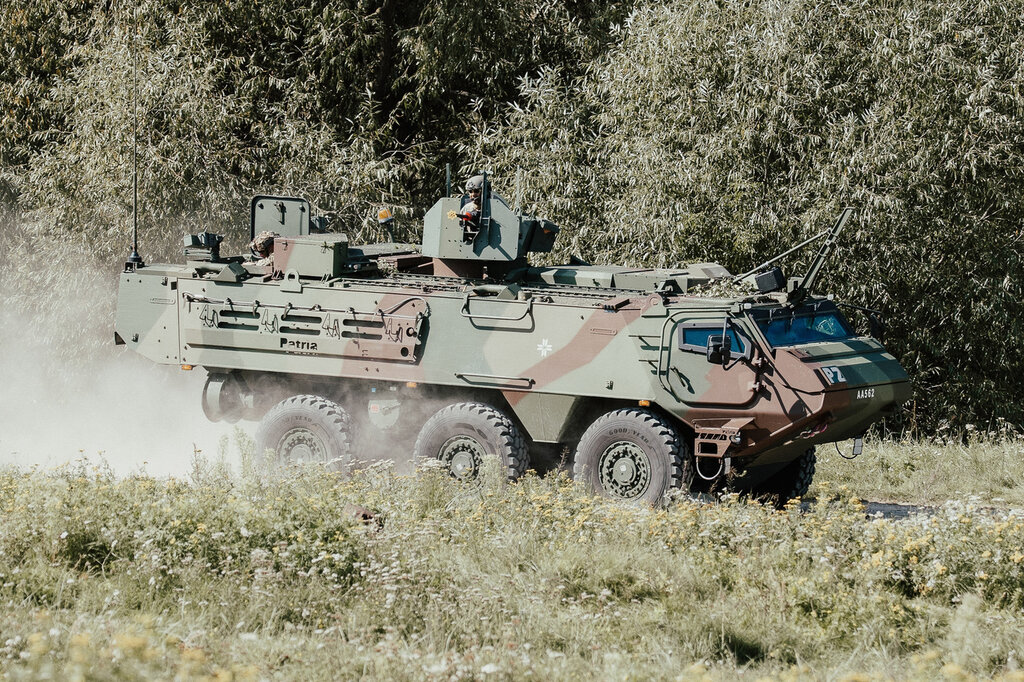
Patria’s CAVS is operated by a number of European countries. Credit: Karlis Miksons/Shutterstock.com
“This multinational programme is built for continuous, lowrisk technology insertion—ensuring the Patria 6×6 remains adaptable, upgradeable and operationally relevant as threats evolve.”
Richard Thomas: How is Patria approaching the UK market specifically?
Hugo Vanbockryck: “Our approach to the UK market is centred on addressing the British Army's urgent need for a modern, interoperable and proven platform. The Patria 6x6 directly fills a critical capability gap, offering a balance of protection, mobility, and versatility.
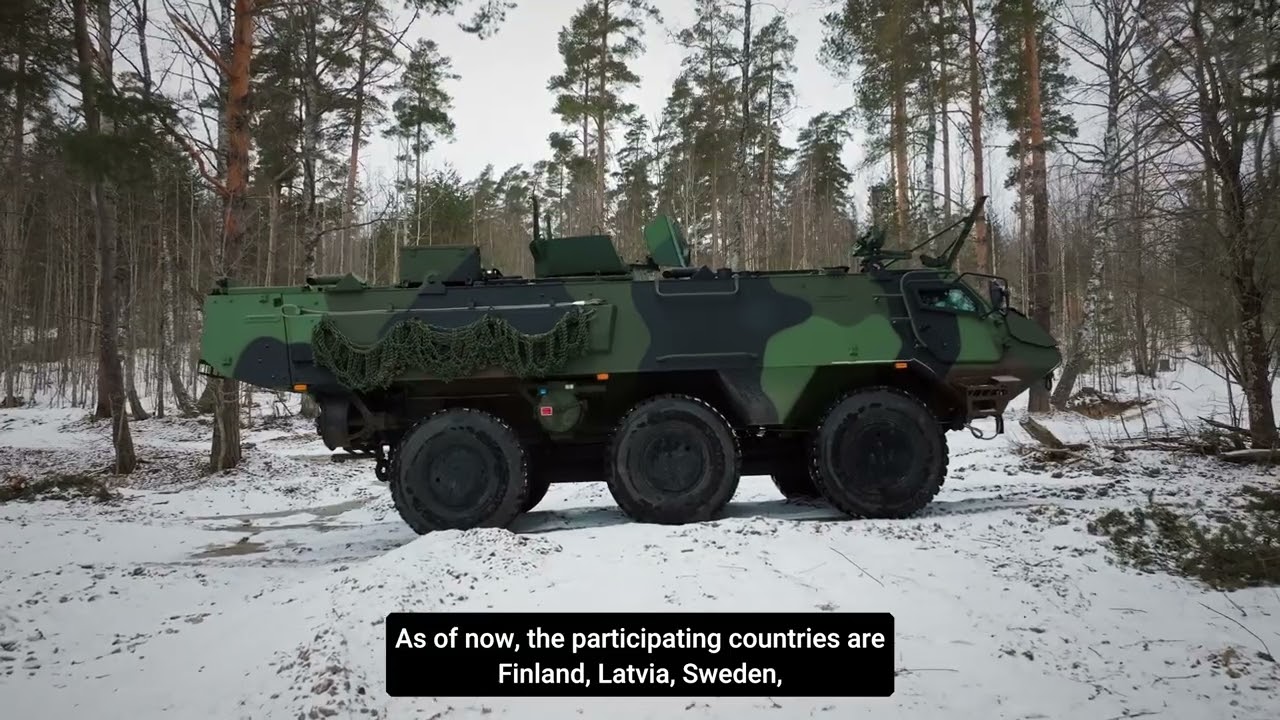
“The Patria 6x6 aligns perfectly with the Army's Recce-Strike concept, directly supporting Project ASGARD integration, and facilitating multi-domain operations. Crucially, the CAVS programme facilitates joint operations with allies in the Joint Expeditionary Force alliance, of which the UK is a member, with JEF members Finland, Latvia, Sweden, Denmark and Germany all buying the 6x6 personnel carrier.
“The CAVS programme also supports UK industrial strategy, prioritising full technology transfer to UK industry, with Babcock's Plymouth facility serving as the primary manufacturing and integration hub. This teaming agreement includes assembly, maintenance, repair, and overhaul (MRO) activities, and integration of UK firms into the international CAVS supply chain.
“It's about building a long-term sovereign capability, enabling the UK to independently build, adapt, and sustain these vehicles, reduce reliance on external partners, and position British industry for future export opportunities."
Richard Thomas: Modern threats are pushing up protection requirements while customers still want strategic mobility and low operating costs. How is Patria balancing protection with weight, range, soft-ground performance, and maintainability?
Hugo Vanbockryck: “Patria balances rising protection demands with mobility and cost-efficiency through a modular vehicle architecture that allows nations to scale armour, protection systems and mission equipment without compromising range or performance.
Caption. Credit:
“The Patria 6x6 protection against mines and loitering munition resilience is paired with lightweight yet robust chassis optimizsd for mobility and low operating costs. The modular structure and straightforward maintainability ensure that the vehicle remains agile, reliable and affordable to operate over its full lifecycle.”
Richard Thomas: Looking through 2026, which security and supply-chain factors are most likely to affect delivery and competitiveness?
Hugo Vanbockryck: “The supply-chain factors are in managed as part of daily work in CAVS programme. One of the specific CAVS programme strengths is that having a 6x6 platform designed with a mix of MOTS/COTS components we have alternative suppliers over a wide European region to enhance the programme resilience.
“Being ITAR-free also ensures no dependency on US export licenses or geopolitical constraints, enabling Patria to source components flexibly across Europe, pivot rapidly between suppliers during disruptions, and deliver vehicles to customers without delays or third-party permissions—providing superior supply chain resilience and strategic autonomy.”
Richard Thomas: How important will software, cyber-hardening, and ‘digital backbone’ capabilities be in 2026 procurement decisions?
Hugo Vanbockryck: “Software, cyber-hardening, and a robust ‘digital backbone’ including fleet management are absolutely critical in modern defence procurement. The battlefield of today and tomorrow is defined by data, connectivity, and the ability to rapidly adapt to evolving threats.
“As high-end MRO services with data driven solutions and intelligent analytics are becoming increasingly important, if not essential, to provide optimal performance and availability across fleets. Patria enhanced its capabilities by acquiring the number one digital defence platform ILIAS in early 2025.
“Patria recognises the requirements and is investing heavily to ensure the CAVS platform remains upgradeable over decades. The modular design, coupled with an open architecture, facilitates rapid technology insertion and integration of new digital battlefield systems. This includes enhanced sensors, network-enabled capabilities, and secure data handling.
“Our commitment extends to cyber-hardening, ensuring the platform is resilient against digital attacks and can operate effectively in contested environments. This digital backbone is not an afterthought; it's integral to the CAVS design, ensuring it remains a relevant and effective asset for the long term."

Hugo Vanbockryck, vice president, Europe Market Area

The real constraint is midstream capacity: processing, separation, magnet-making.
Benedetta Girada, Hague Centre for Security Studies
Total annual production
Australia could be one of the main beneficiaries of this dramatic increase in demand, where private companies and local governments alike are eager to expand the country’s nascent rare earths production. In 2021, Australia produced the fourth-most rare earths in the world. It’s total annual production of 19,958 tonnes remains significantly less than the mammoth 152,407 tonnes produced by China, but a dramatic improvement over the 1,995 tonnes produced domestically in 2011.
The dominance of China in the rare earths space has also encouraged other countries, notably the US, to look further afield for rare earth deposits to diversify their supply of the increasingly vital minerals. With the US eager to ringfence rare earth production within its allies as part of the Inflation Reduction Act, including potentially allowing the Department of Defense to invest in Australian rare earths, there could be an unexpected windfall for Australian rare earths producers.
