Company Insight
Sponsored by Atermes
AI Meets Multispectral Vision: Transforming Defense Intelligence and Response in the Middle East
A Record-Breaking Week of Innovation in Aviation
Main image credit:
In modern warfare, seeing is no longer believing. It’s not enough to watch the battlefield, you need systems that understand it. Across the Middle East, where defense forces patrol vast, volatile landscapes and face increasingly agile threats, conventional surveillance systems are no longer fit for purpose. Today’s front lines demand more than passive sensors and grainy feeds. They demand intelligence that moves at the speed of the mission.
Artificial Intelligence, fused with multispectral vision, is transforming how militaries see, think, and act. This isn’t theory or future tech. It’s operational now, shaping missions from remote border zones to complex urban theaters. At its core, this shift is about more than enhanced imaging. It’s about turning overwhelming amounts of visual data into real-time understanding and reactive defense into predictive response.
Threats in the region are evolving fast. Hybrid attacks blend cyber tactics with physical incursions. Weaponized drones operate in swarms, slipping across borders under radar cover. Smoke, sandstorms, or darkness no longer mask movement; they amplify confusion. Surveillance operators are swamped with inputs, thermal patterns, motion alerts, camera feeds and forced to filter signal from noise under immense pressure. The challenge isn’t visibility. It’s clarity.
That’s where AI becomes indispensable. Not as a substitute for human judgment, but as a force multiplier. Trained on thousands of real-world scenarios, AI systems can distinguish military vehicles from civilian traffic, detect anomalies in heat signatures, and recognize subtle behavior patterns. These systems don’t just watch, they interpret. They track a drone’s erratic path as it dips beneath radar thresholds or highlight a hidden vehicle cloaked in thermal camouflage. With every mission, they learn, adapt, and refine.
Now add multispectral vision to the equation, thermal, visible, and near-infrared and the advantage deepens. Each spectrum adds a layer of insight. Thermal imaging cuts through night, fog, or smoke to detect heat trails. Near-infrared reveals surface contrasts invisible to the eye. Visible-spectrum cameras deliver fine-grain detail. Together, these sensors create a composite view of the battlespace that no single channel could provide.
Imagine a desert border at 2 a.m. A drone hugs the terrain, nearly invisible to radar and too small to trigger conventional alerts. But a thermal camera spots a faint heat trace. The AI classifies its movement pattern as hostile, tracks its trajectory, and sends a high-priority alert, all before a human ever sees it. This is no longer surveillance, it’s autonomous battlefield awareness.
But this isn’t just a technical breakthrough, it’s a strategic one. AI-powered, multispectral systems enable forces to detect sooner, classify faster, and respond with unprecedented precision. They operate at the edge, making instant decisions in environments where central command might be disconnected or delayed. In convoy protection, perimeter defense, or infrastructure security, seconds make the difference. These systems deliver them.
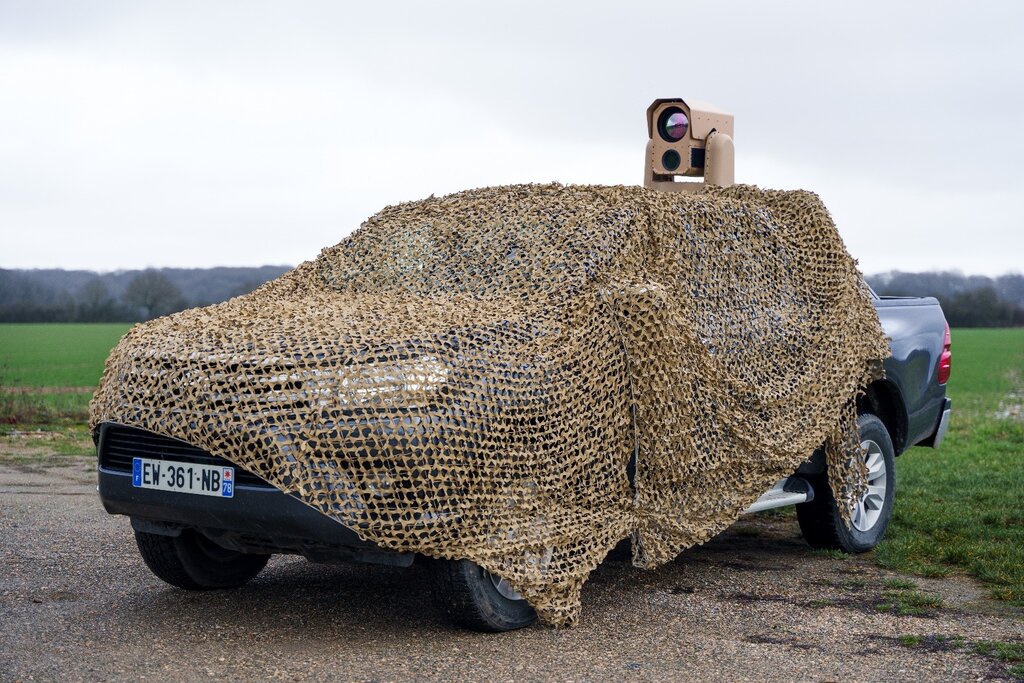
Caption. Credit:
ATERMES has been at the forefront of this shift. With decades of field insight and direct collaboration with defense partners, we’ve engineered solutions that meet the realities of modern conflict. Our SURICATE system is a clear example, fusing thermal and visible-spectrum sensors with onboard AI to autonomously monitor, detect, and classify threats. Designed for harsh conditions and mission-critical deployments, SURICATE doesn’t just observe, it learns. With every deployment, it refines its detection algorithms and feeds smarter insights into the next operation.
Still, the true power of this evolution lies in the partnership between human operators and machine intelligence. This is not man versus machine. It’s man with machine. AI lightens the cognitive load, sifts through the noise, and presents operators with only the most relevant, high-confidence information. That means fewer errors, faster command decisions, and tighter operational coordination.
In a region defined by both opportunity and instability, this capability is no longer optional. Middle Eastern defense forces must outpace threats that are becoming more autonomous, decentralized, and agile. Nations that embrace intelligent, field-adapted systems will hold the strategic upper hand, not just in detection but in deterrence.
As Lionel Thomas, Chairman of ATERMES, notes: “In the Middle East, where defense forces operate across vast borders, challenging terrain and evolving threat landscapes, Artificial Intelligence is becoming an indispensable ally. We believe that pairing AI with advanced vision systems unlocks a new level of battlefield intelligence where threats are seen earlier, understood faster, and addressed with greater precision.”
At ATERMES, we’re not waiting for the future. We’re building it in partnership with those who serve. Our roadmap is shaped by mission feedback, driven by real-world needs, and anchored in technology that works where it’s needed most. We're doubling down on systems that think at the edge, because the battlefield won’t wait, and neither will we.
In modern defense, clarity isn’t a luxury, it’s a weapon. AI and multispectral vision deliver it. Not in theory, in the field. Not someday, now.

In early June 2019, mining companies avoided increases to royalties by agreeing to provide A$70m to a A$100m infrastructure fund.
Frank Smith, Founder and CEO of TowHaul
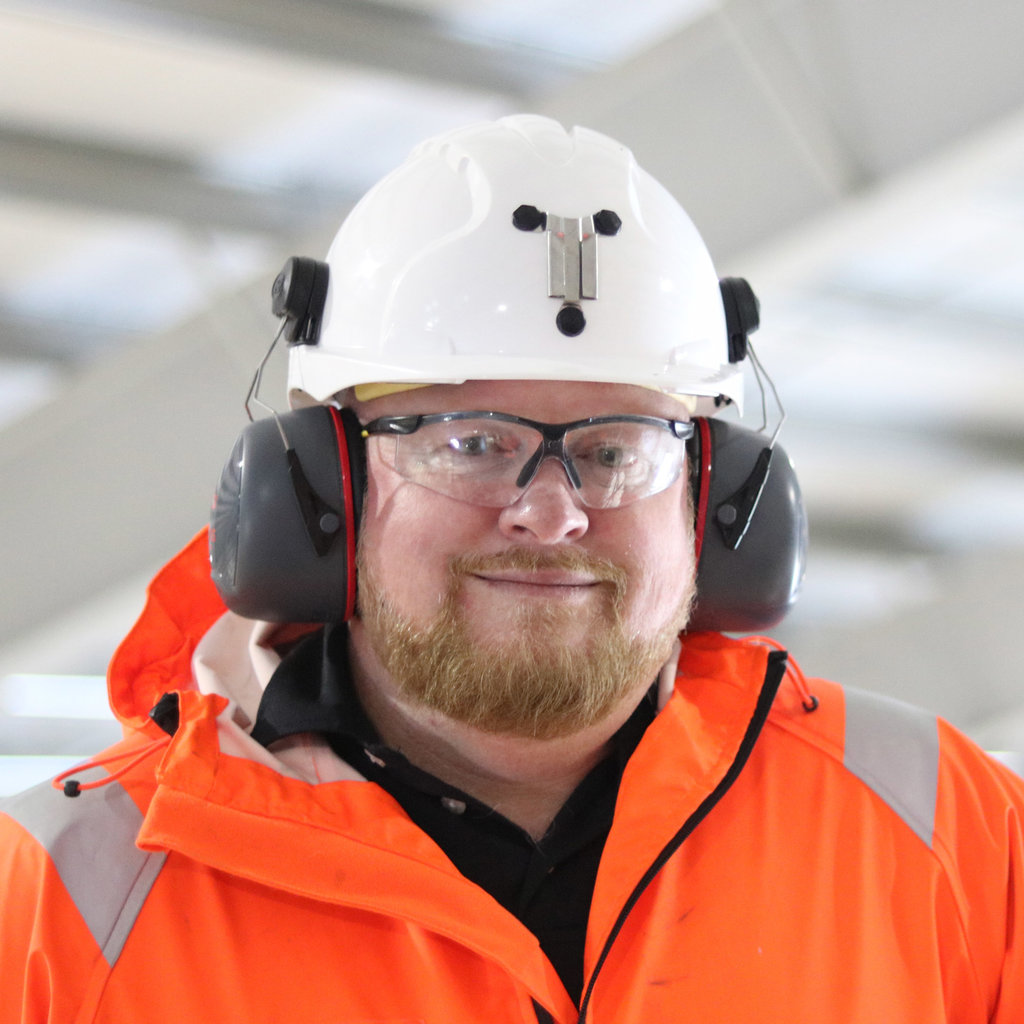
Phillip Day. Credit: Scotgold Resources
Innovation at the Forefront
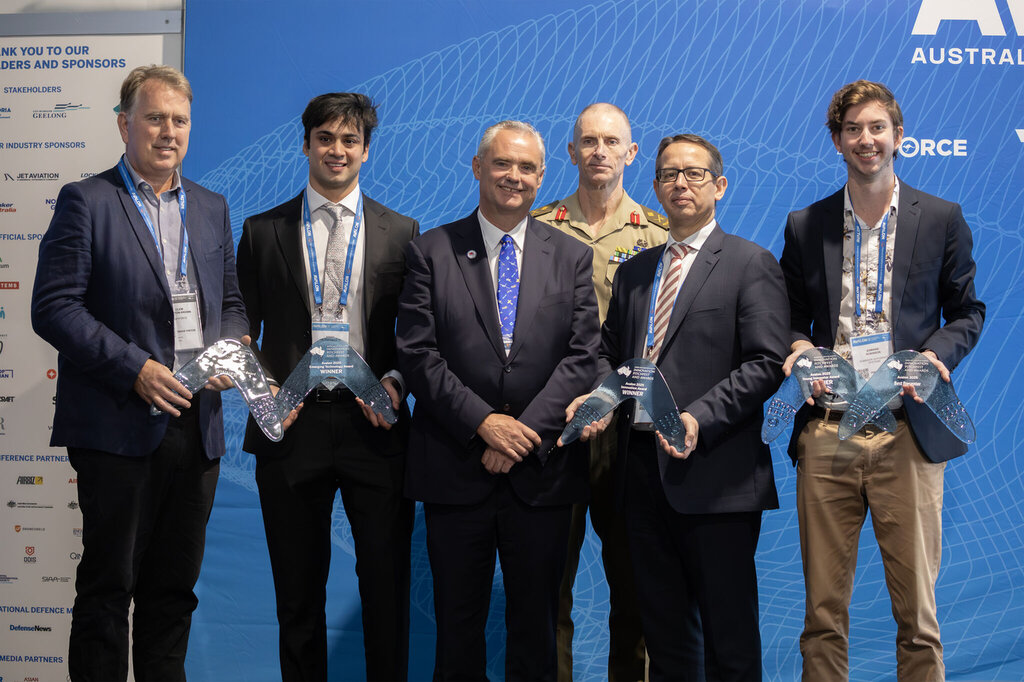
Avalon 2025 continued to serve as a launchpad for cutting-edge technology, with the Innovation Pitchfest and Awards providing a stage for breakthrough ideas. Judges praised the exceptionally high calibre of entries, with 23 finalists competing for prizes.
Four winners emerged, securing a combined $130,000 in funding to propel their innovations forward:
Avalon 2025 Innovation Award: Herve Aster, Neumann Space
Avalon 2025 Young Innovator Award: Edward Robinson, Robinson Aerospace
Avalon 2025 Emerging Technology Award: Nishq Ravindranath, Akula Tech Pty Ltd
Avalon 2025 Blue Sky Thinking Award: Clem Newton-Brown, Skyportz
Keynote speaker, Mike Henry. Credit: PDAC
Contact information
ATERMES
4 Avenue des Trois Peuples,
78180 Montigny-le-Bretonneux, France
Tel.: +33 (0)1 30 12 01 40
Mobile: +971 56 265 8558
Email: wlahoud@atermes.fr
Web: www.atermes.fr

- Biffa internal savings data, average saving (January - August 2023)
- Nisbets internal savings data, average saving (January – September 2023)
- Compliance365 internal data, average savings
- HEINEKEN UK data, Calculations based on SmartDispense® active accounts each year since 2015 with 10 lines
- Independent test results based on subterranean and ground floor pub cellars of varying sizes
- Independent test results based on subterranean and ground floor pub cellars of varying sizes
