Feature
At the ready: Europe’s armoured surge
Europe is embarking on a widespread defence recapitalisation, with armour to the fore. Gordon Feller reports.
Powered by


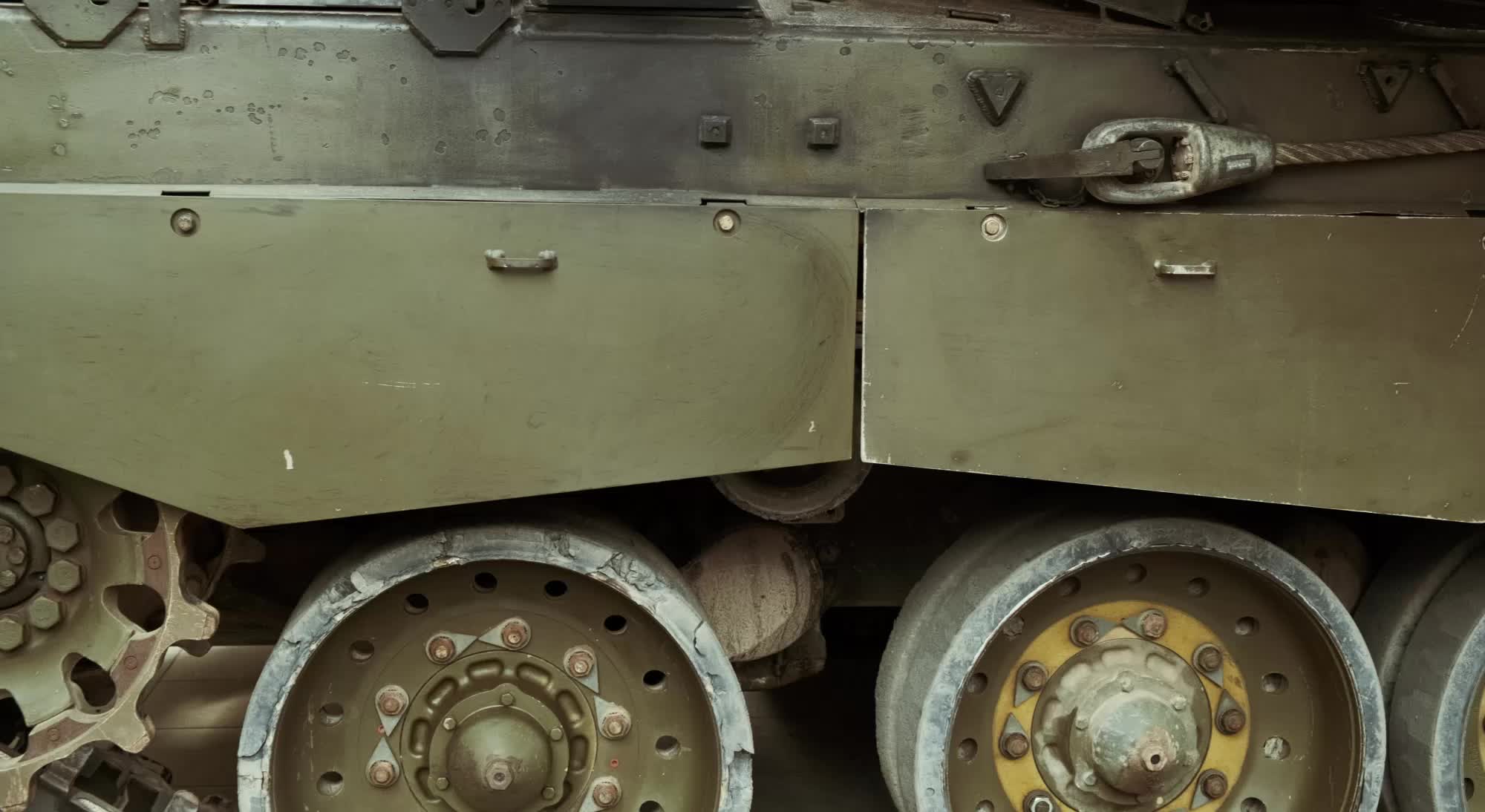
Close-up of the caterpillar track of stationary war tank in an undisclosed location. Main video supplied by fsamora/Creatas Video+ / Getty Images Plus via Getty Images
The current geopolitical context and the scenario in Ukraine have served as an important wake-up call for the defence sector and reshaped military doctrine. Conventional defence, which had long been considered outdated, has returned to the forefront.
At the centre of the conventional defence universe are tanks.
Estimates suggest that the global main battle tank (MBT) market will total nearly $6.96bn by the end of 2026. Europe generated approximately 31% of the total 2025 revenue, driven by both Germany's commitment to spending 3.5% of GDP by 2029, and large-scale Leopard 2A8 procurements.
European military tank manufacturing is now shifting towards massive multinational collaborations and the expansion of domestic production to meet rising demand. The 'Eurotank' concept is being realised through these next-generation projects:
- Main Ground Combat System: This Franco-German programme, led by KNDS and Rheinmetall, will replace the Leopard 2 and Leclerc by 2040–2045. Rheinmetall manufactures the Panther KF51 and provides the main guns (120mm and 130mm) for many European tanks. The company recently opened a modern tank factory in Hungary and is expanding into Italy and Ukraine. KNDS is Europe’s leading ‘heavyweight’ in tank manufacturing, formed by the merger of Germany's Krauss-Maffei Wegmann and France's Nexter Systems.
- Project MARTE (Main ARmoured Tank of Europe): A broad EU initiative launched in 2025, involving 51 legal entities from 12 countries, including Saab (Sweden) and Indra (Spain).
- Enhanced MBT: A technology demonstrator to develop technologies for future 5th-generation battle tanks. KNDS ‘mates’ a Leopard 2 chassis with a Leclerc turret, often referred to as the original Eurotank prototype. While primarily focused on electronics and systems, Thales leads EMBT.
To increase capacity, numerous European manufacturers are now busy converting civilian infrastructure. For example, KNDS is taking over a historic German rail plant to produce parts for the Leopard 2, while Volkswagen has expressed interest in re-opening military production lines at some of its factories.
Collaboration is key
To strengthen its key role in Europe, the Italian-based Leonardo pushed its’ JV with Rheinmetall (LRMV – Leonardo Rheinmetall Military Vehicles) to acquire 100% of Iveco’s defence business, including the brands Iveco Defence Vehicles and ASTRA – a big step towards consolidating the industrial base.
Speaking on behalf of the company, Rosa Berlingieri says “this agreement enabled us to strengthen our role as an integrated OEM and its ability to provide complete vehicles—both tracked and wheeled—covering everything from electronics (where, as highlighted, Leonardo acts as both supplier and full integrator) to the vehicle platform itself.”
The acquisition expands Leonardo’s product portfolio, with more than 10 new vehicles, including UGVs. Berlingieri said they’ve now “strengthened the national industrial base and positioned Italy as a solid partner capable of making a substantial contribution to the technological development of the sector by leveraging its know-how.”
Berlingieri added that LRMV represents “the first building block in the creation of a European defence framework”. Leonardo is focused on the production and integration of electronics; Rheinmetall on the supply of platforms.
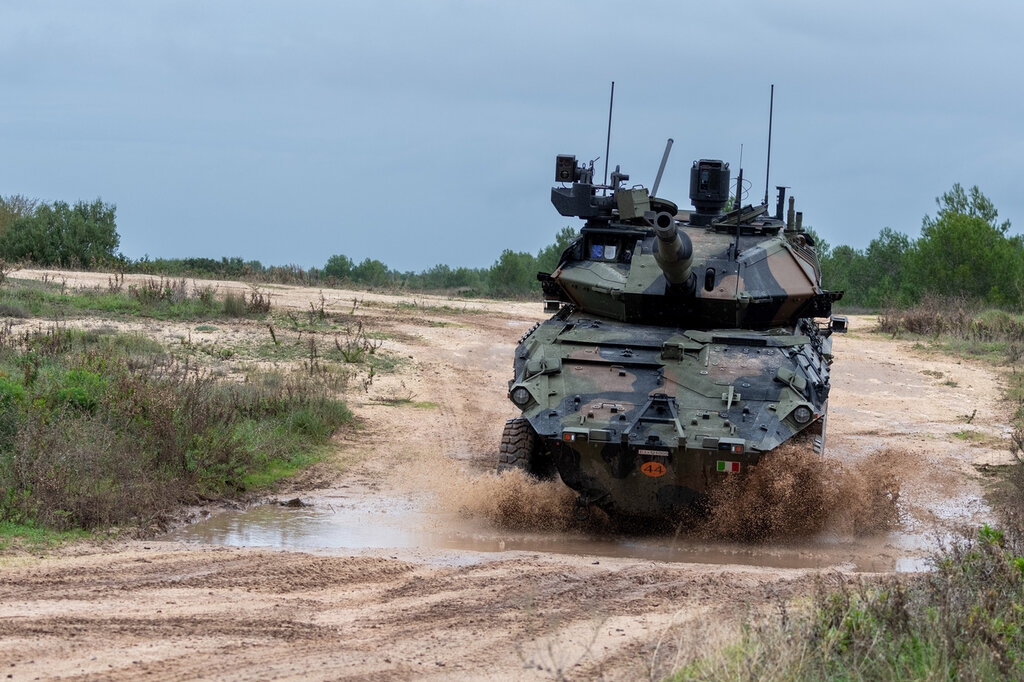
Leonardo is expanding its armoured portfolio. Credit: Leonardo
The JV originated out of the Italian Army’s need to renew its fleet of heavy vehicles fleet, with a mandate for over 1,000 infantry fighting vehicles in 16 variants (A2CS – Army Armoured Combat System programme), plus approximately 270 MBTs.
Berlingieri explained that “it started from existing baseline technologies to develop complete, digitalised, and interoperable land platforms. The programme – and its increasingly stringent requirements – have acted as key catalysts for several R&D initiatives, leading to cutting-edge technologies that will have significant impacts across all of the company’s business areas”.
Leonardo also plays a leading role in several European Defence Fund programmes – such as the ArmoURed Infantry Ground Assault (AURIGA) programme. Because of the company’s system integrator expertise, it is leading AURIGA.
Berlingieri points out that “Leonardo embraced these new challenges” and that AI and cloud technologies are, for Leonardo, “key cross-cutting enablers to enhance data analysis, automation, and autonomous decision-making capabilities”.
Integrating these cutting-edge technology catalysts into Leonardo’s systems “creates a multi-domain ecosystem in which platforms are interoperable and interconnected”. Leonardo points to its Michelangelo Dome.
In partnership with Thales and Airbus, Leonardo is building an alliance dedicated to strengthening Europe’s space ecosystem. If it succeeds, these three firms could provide uncrewed ground vehicles (UGVs) with the required satellite connectivity.
Leonardo sees the growing centrality of European partnerships: “The emerging model is increasingly collaborative: complex programmes such as next-generation tanks require a level of technological and industrial critical mass that no single player can develop independently.”
Further to that aim, Leonardo’s industrial plan aims at “strengthening our role as a system integrator in advanced land programmes, including next-generation MBTs. Tanks are no longer standalone platforms, but nodes within an integrated digital system”—while moving “from platforms to systems.”
Scaling and digitalisation
Global Defence Technology asked Indra’s communications executive, Elsa Jiménez Blanco, about Indra Land Vehicles, which was created in 2025 to execute Indra’s 2026–2030 Strategic Plan focus in land domain requirements.
Blanco said they "view the next stage of growth as shaped by three converging priorities”: faster deliveries; readiness, sustainability and affordability including modernisation and maintenance of existing vehicles; and interoperability/communality and national sovereignty.
Europe is boosting defence spending. Credit: Anelo/Shutterstock.com
European MoDs increasingly require systems that can be deployed and upgraded quickly, remain highly available throughout their lifecycle, and operate within a digital, multi‑domain “system‑of‑systems” combat cloud.
Blanco was quick to point out that “this demand surge aligns with Europe’s broader rearmament drive under initiatives such as Readiness 2030 and ReArm Europe”, which aim to mobilise up to €800bn ($930bn) in defence spending and reinforce European industrial capacity.

This demand surge aligns with Europe’s broader rearmament drive.
Elsa Jiménez Blanco, Indra
Blanco said that Indra’s response is to support customers “across the full value chain—from platforms to mission systems and lifecycle support—using a modular approach, high‑availability engineering, and strong national‑sovereignty positioning”, including via global alliances, like the ones which Indra has with Rheinmetall, and other with the Korean-based Hanwha Group.
Regarding the importance of maintaining effective continental supply chains, Blanco noted Europe is moving toward deeper cross‑border industrial cooperation, shared capability development, and harmonised military requirements. She offered what she called “a clear example”: the MARTE project, which unites industry and MoDs from 11 nations to shape the next‑generation European MBT “and strengthen Europe’s technological autonomy, where Indra is present”.
Demand signals
At the same time, European manufacturers face growing pressure to expand capacity: current order books include over 1,700 new MBTs across Europe, reflecting strong demand and ageing fleets.
Indra thinks tank manufacturers increasingly need to do several things much better, and to do so quickly, including the integration of sensor‑rich and digital architectures, industrialise at greater scale through more resilient supply chains, and collaborate across borders with companies of all sizes, including start‑ups and R&D centres, to accelerate development cycles.
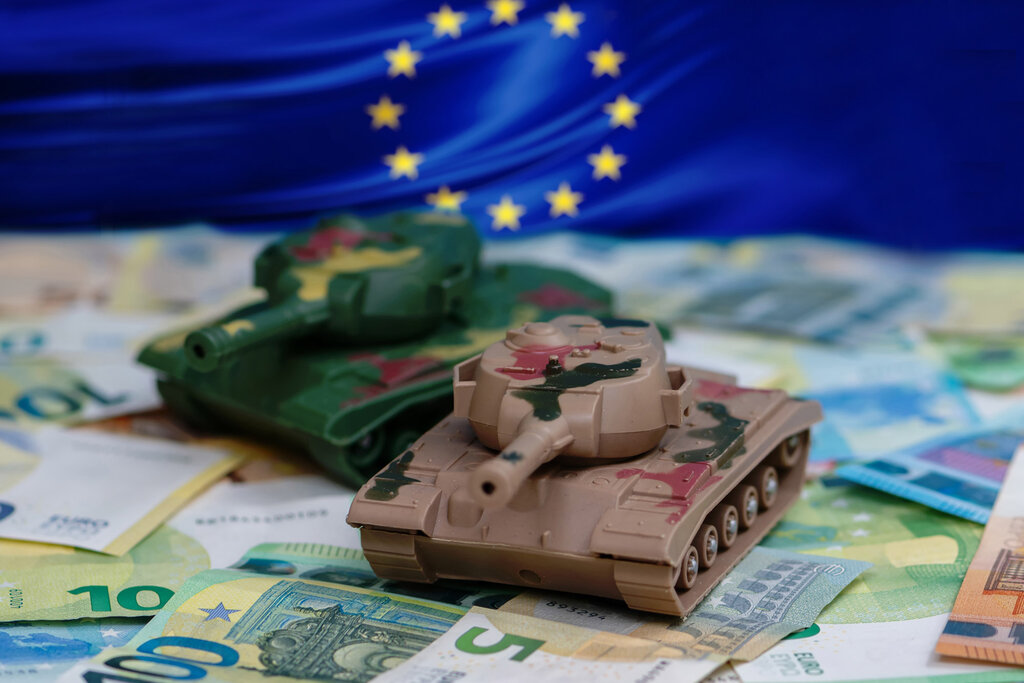
The KF51 is a German-led tank concept. Credit: Karolis Kavolelis/Shutterstock.com
For technology providers, the next stage of growth is driven by a list which Blanco provided: “Advanced sensing, digitisation, AI‑enabled architectures, improved protection systems, and the need to validate tech readiness for integration into future platforms”.
Indra will be pleased that EU investment reinforces this trajectory: the European Defence Fund allocated €150m in 2026 to next‑generation MBT technologies and ground‑combat capabilities.
The MARTE programme, where Indra is part of the core team, integrates leading European companies, Blanco points out surveys which show that MARTE leads where the assessment have measured technology availability, readiness levels, and performance across Europe.
Indra is one of the European defence majors involved in Rheinmetall’s Panther KF51 MBT and other armoured vehicles. The KF51 is envisaged to be the next generation of European tank, requiring just three crew and featuring a host of new technologies.
‘Demand is also leading to increased pressure for consolidation’ – Patrick Rohmann, Rheinmetall
Alice Wu, Federation of American Science
Global Defence Technology asked Rheinmetall spokesperson Patrick Rohmann about the current shift in security policy – the so-called 'Zeitenwende' – which is seeing Germany rearm at a rate not seen for generations amid an increasing threat risk in Europe’s security environment.
Rohmann said that it “ensures a continued high demand” from European governments for modern vehicle platforms.
“This demand is also leading to increased pressure for consolidation and closer cooperation among European manufacturers of armoured vehicles, enabling them to produce large quantities efficiently,” Rohmann explained.
Rheinmetall is leading the way in this respect by actively promoting European sovereignty through strategic partnerships, in countries such as Italy, Spain, Romania, and Croatia. In the short term, the focus was in responding to market dynamics through expanding capacity and establishing new plants in partner countries.
“Our focus is on industrial scaling to rapidly close existing capability gaps within Germany and Nato,” Rohmann outlined.

Dr. David W. Bates, Chief of General Internal Medicine at Brigham and Women’s Hospital


Caption. Credit:
Total annual production
Australia could be one of the main beneficiaries of this dramatic increase in demand, where private companies and local governments alike are eager to expand the country’s nascent rare earths production. In 2021, Australia produced the fourth-most rare earths in the world. It’s total annual production of 19,958 tonnes remains significantly less than the mammoth 152,407 tonnes produced by China, but a dramatic improvement over the 1,995 tonnes produced domestically in 2011.
The dominance of China in the rare earths space has also encouraged other countries, notably the US, to look further afield for rare earth deposits to diversify their supply of the increasingly vital minerals. With the US eager to ringfence rare earth production within its allies as part of the Inflation Reduction Act, including potentially allowing the Department of Defense to invest in Australian rare earths, there could be an unexpected windfall for Australian rare earths producers.
