Cover Story
Fidelity vs Scale: synthetic training trade-off
Quantity competes with quality in the military training systems market. John Hill reports.
Powered by


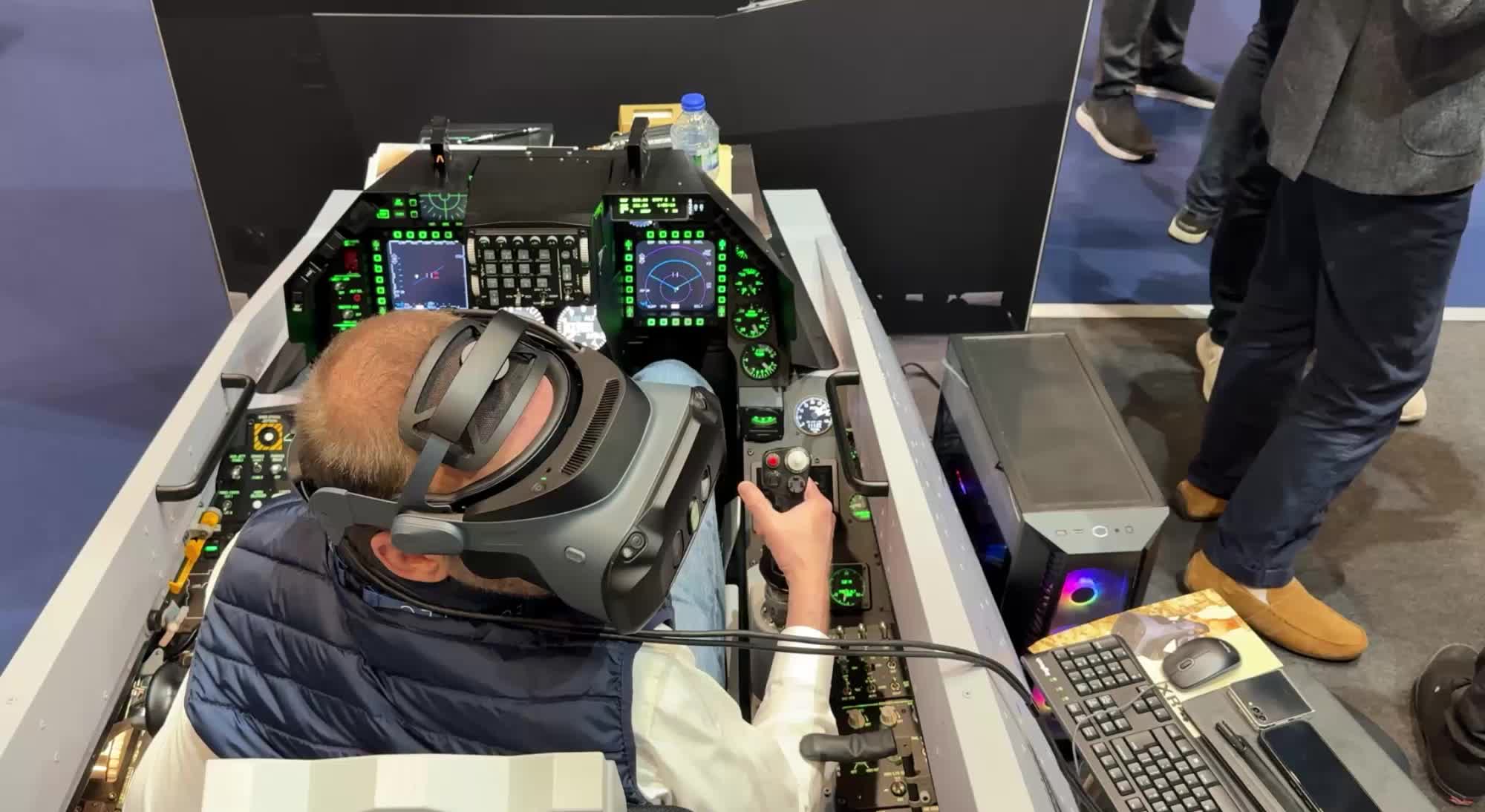
A visitor wearing a VR headset sits in the DFB training flight simulator at ITEC. Main video supplied by John Keeble/Getty Images News Video via Getty Images
Aflood of new perception and processing technologies – augmented reality (AR) to artificial intelligence (AI) – have opened the door to simpler and more accessible training methods.
The UK Armed Forces is leaning increasingly on training technologies with little consideration for live training beyond multinational exercises. UK Minister for Veterans Al Carns captured this sentiment in a parliamentary written response in November 2025, detailing plans to “maximise” the use of technology enhanced learning, such as simulators and synthetics as well as digital analysis.
While these solutions save time and resources on what matters, others question the quality of training delivered when it comes to an inability to recreate minute battle conditions that can impact human performance.
Thus, a fundamental and underlying debate emerges in the sector, which pits fidelity against scale in preparing personnel for contemporary conflict.
Multi-sensory engagement
At the time of writing, the UK Royal Navy has around five to seven combatants available out of a fleet of 11 frigates and destroyers. This is an all-time low for a country whose strategic outlook depends on credible seapower.
As conflicts break out around the world, and with UK capabilities stretched, there are too few ships to train on, which creates a need to replicate an authentic training environment.
While the Ministry of Defence (MoD) praise the arrival of synthetic technologies, almost to a fault, digital simulation cannot replicate the sensory nuances in the battlespace which factor into the performance of personnel.

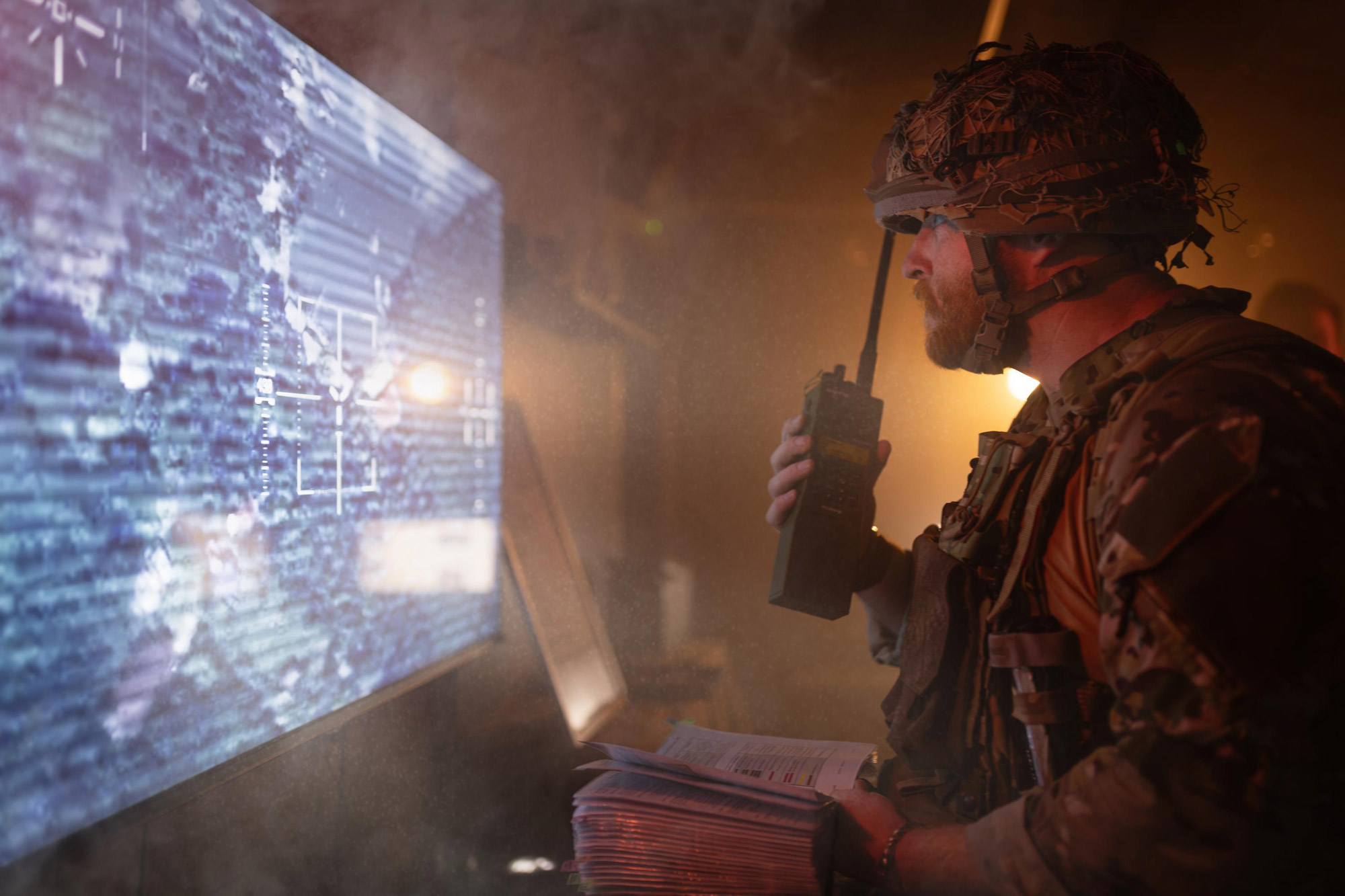
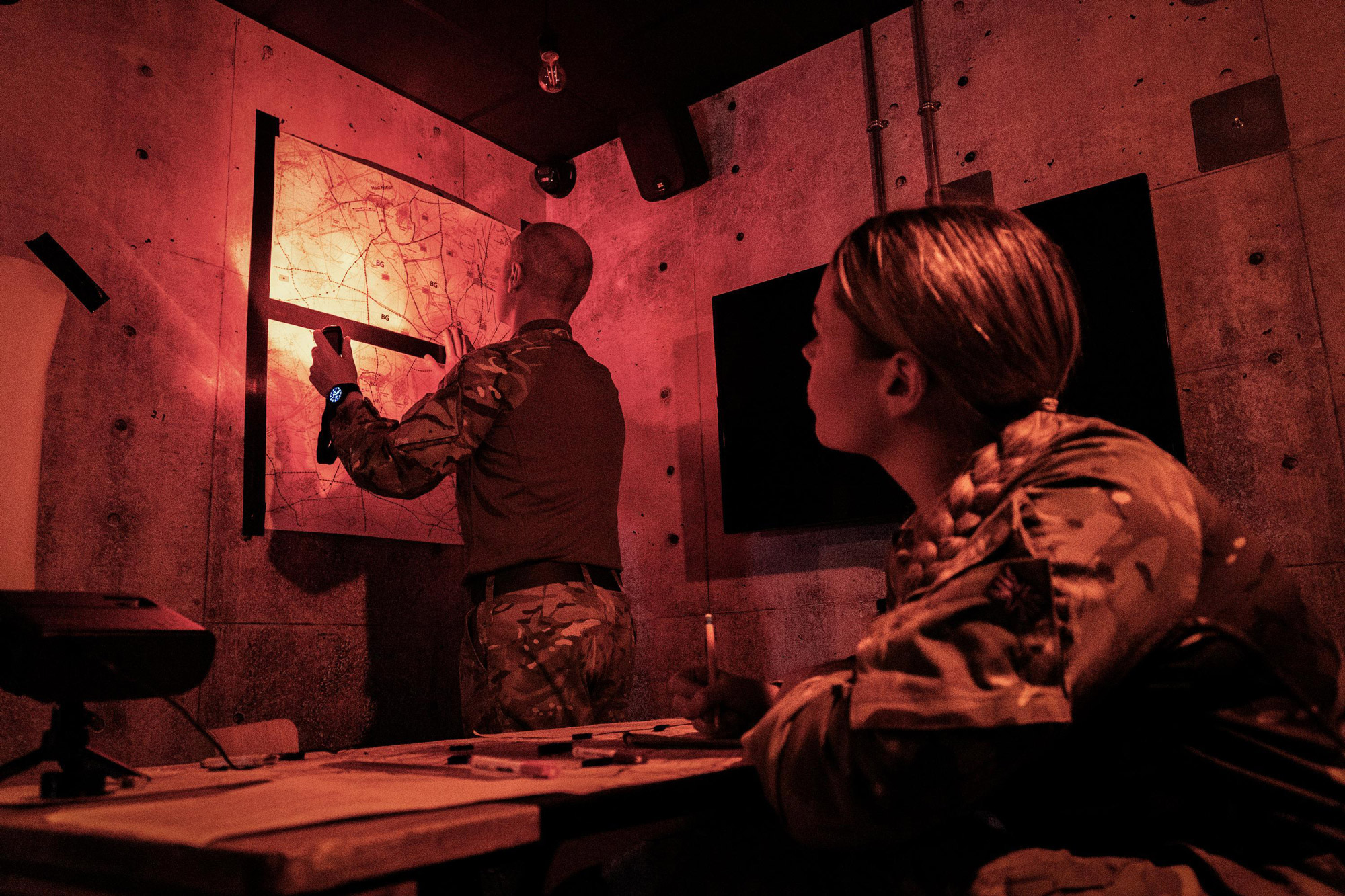
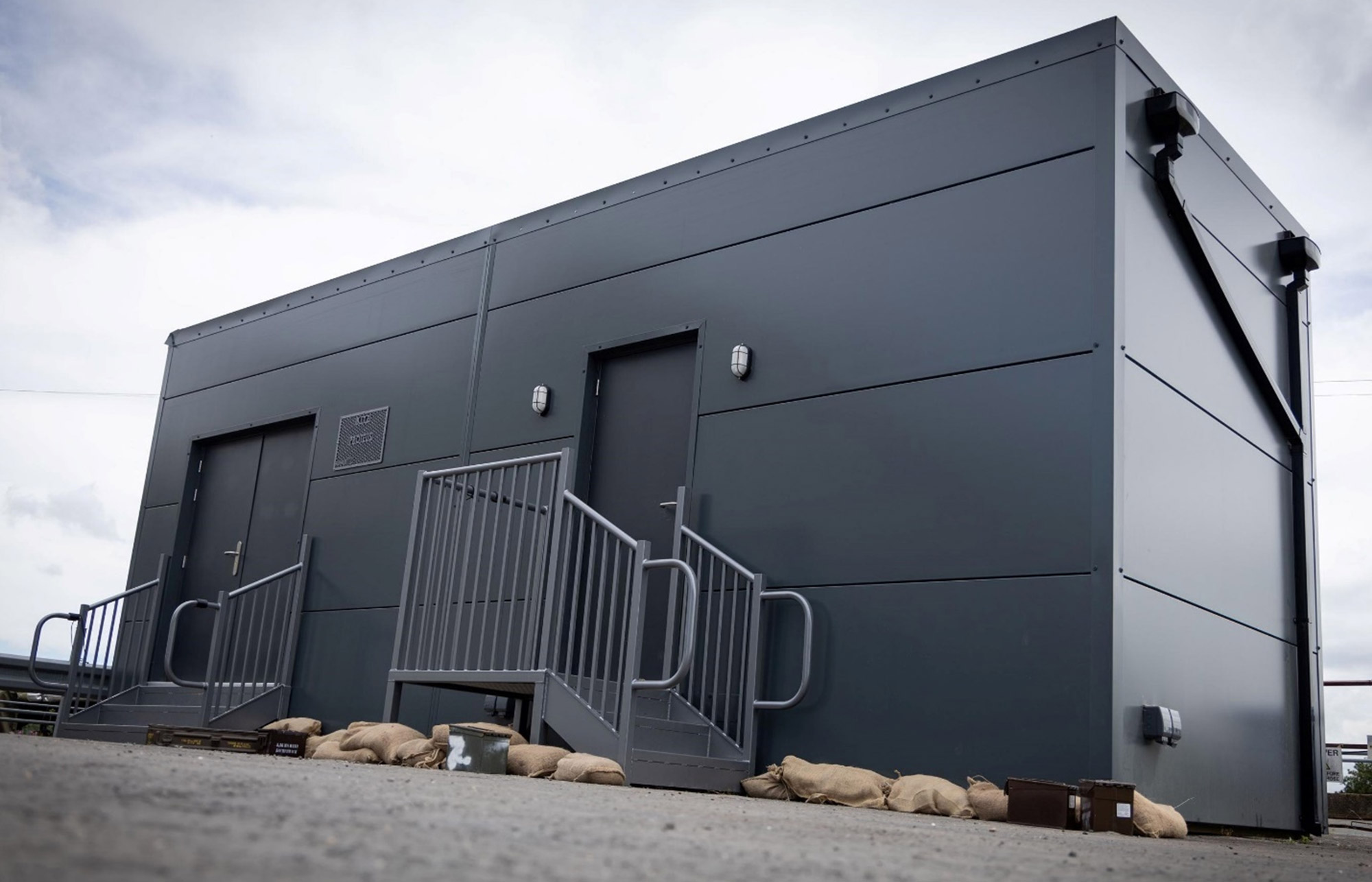
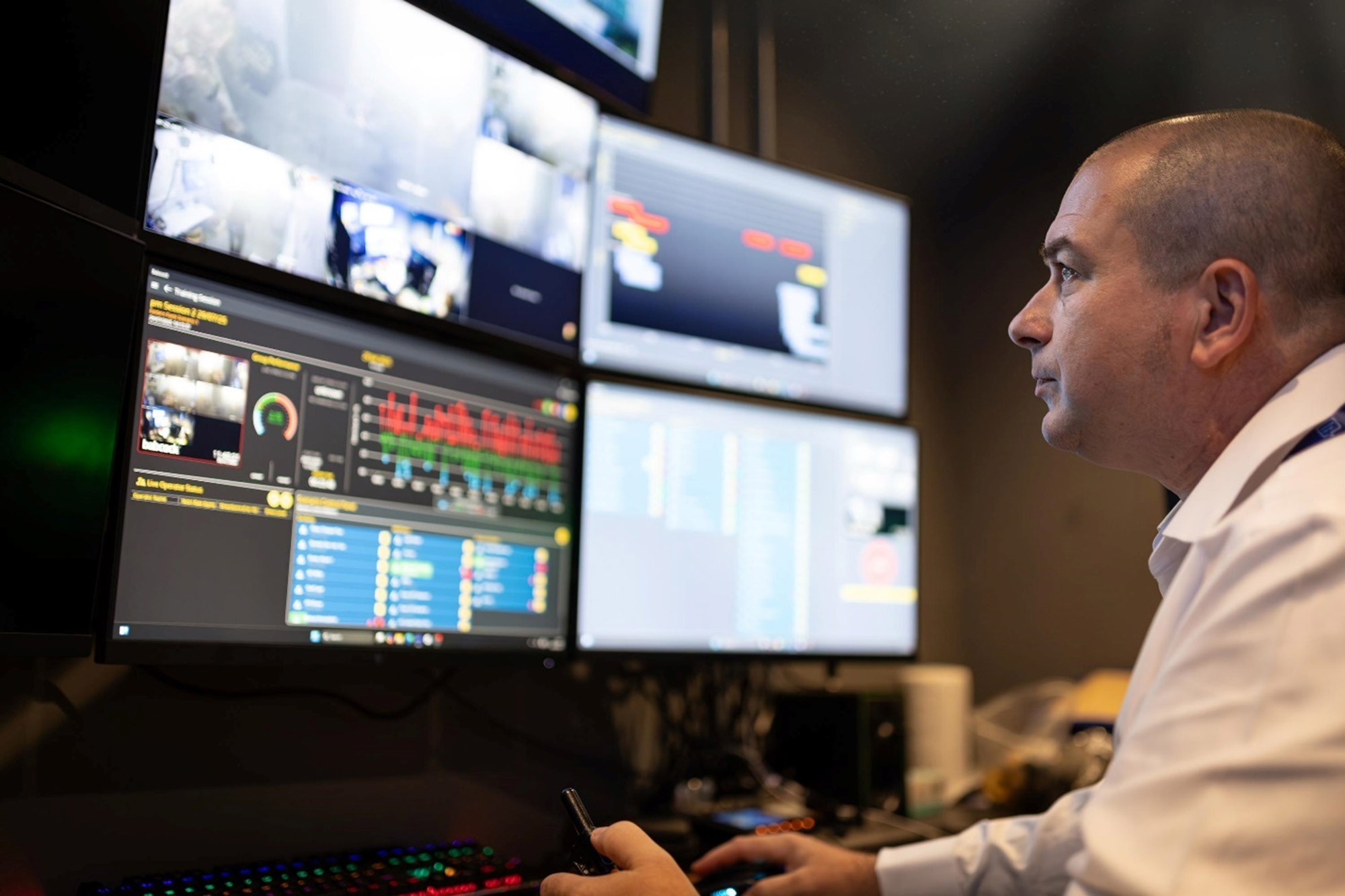
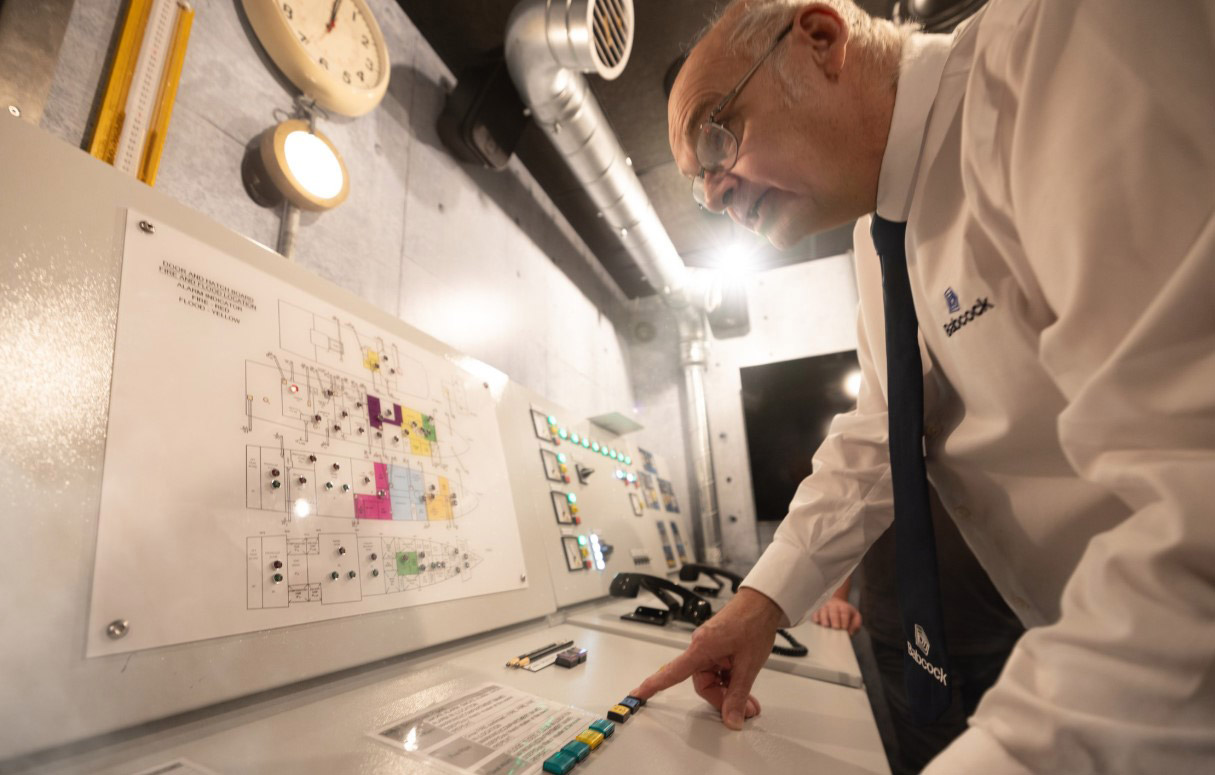
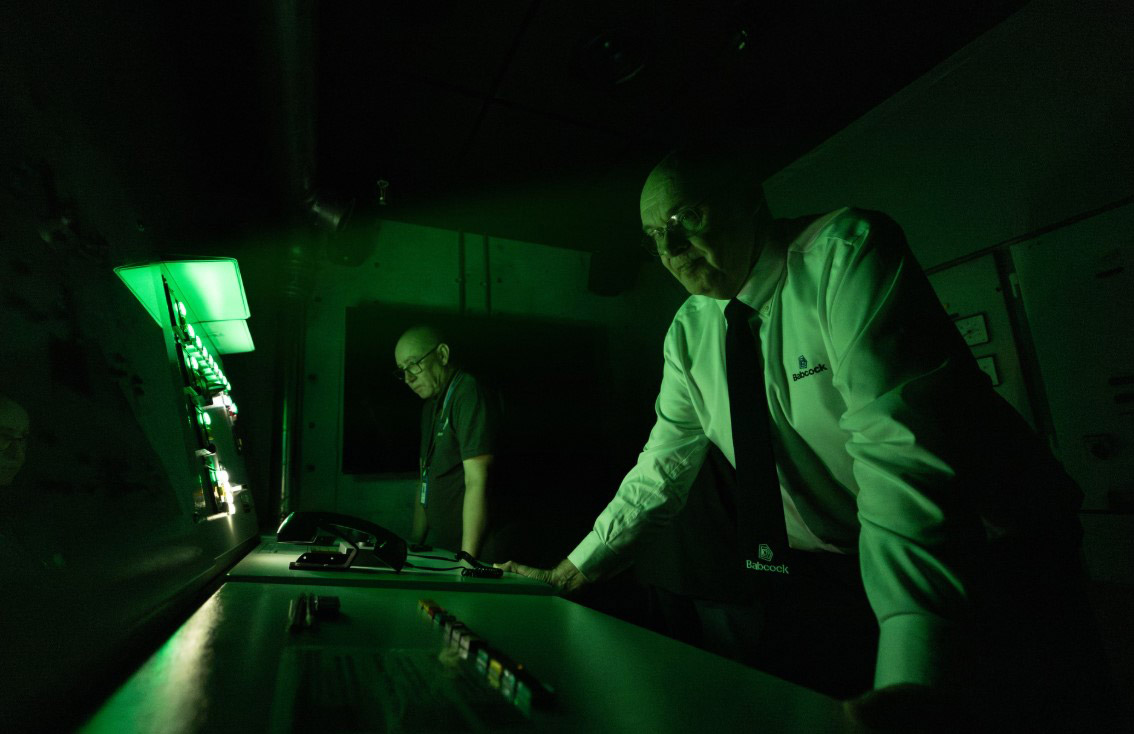
British defence engineering prime Babcock is exploring this gap between digital and live training in its namesake Immersive Training Environment (BITE). The concept utilises a standard sized, transportable container hosting a configurable mock environment for a desired training scenario in any domain.
BITE is split into two components: the first is a control room where the scenario is orchestrated and performance data is captured while the second, larger space is where the simulation plays out.
Assessing BITE in Rosyth at the end of February 2026, this reporter experienced a representation of the bridge of a Sandown-class minehunter under attack.
“If you’re unable to utilise a ship to deliver your training, we can bring this to you,” said one Babcock technician, speaking to Global Defence Technology.
“We can provide you [with] that immersive experience: the sounds, the smells, the lights – everything you would experience on board a ship during operational sea training.”
Meanwhile, in the control room, commanders sweep through the performance data collected from the sensors and, as with any trainer system, explore what went well and what could be improved.
Babcock is demonstrating the product to a few areas within the MoD but there are no firm plans to procure BITE at this stage.
What kind of training does the UK want?
UK Government reluctance can be interpreted in the Strategic Defence Review published in June 2025. The authors did not consider multi-sensory engagement at all in the document. Instead, they encouraged supplementing live training with virtual environments, with no insight into striking the right balance between real and synthetic training.
Moreover, it is unlikely a cash-strapped UK Government will be inclined to allocate what little funds it has toward siloed systems like BITE when it could lean on its own Gladiator joint forces system integrator at RAF Waddington. In tandem, British personnel can also take advantage of alliance initiatives such as Nato Flight Training Europe, decentralised across campuses in Czechia, Greece, Hungary and North Macedonia.
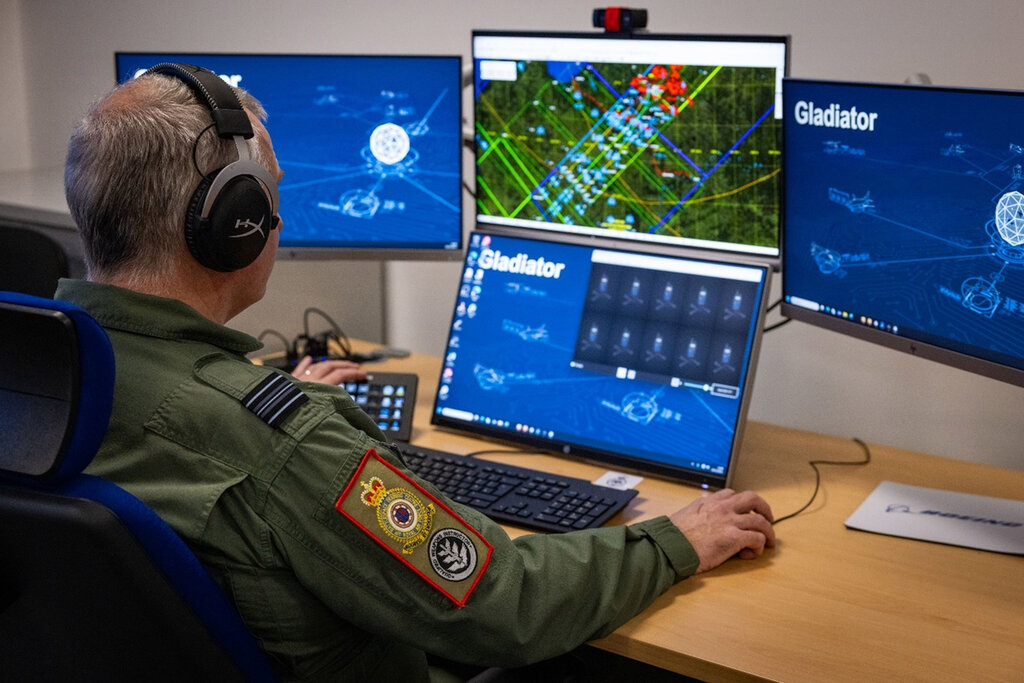
UK Gladiator trainer system integrator. Credit: Crown copyright/UK Ministry of Defence
Multi-sensory environments are hardly new. While BITE is a multi-domain and transportable training silo, sailors in the Royal Navy have practiced sinking ship drills in Damage Repair Units for decades. These shore-based modules, located in Cornwall and Portsmouth, similarly provide a mockup of ship compartments that can be flooded, smoked and altered in many ways.
Nevertheless, sensory immersion allows trainees to work repeatedly.
“We aren’t reducing real assets, we aren’t taking up operational platforms – this is always there,” the technician emphasised.
New dangers, new methods
Synthetic training companies are guided by recent conflict trends rather than trying to capture minute sensory details.
One major disruptor in the simulation training market, which now accounts for about 80% of casualties in the Russia-Ukraine war, are uncrewed aerial systems (UAS). A number of companies are beginning to insert UAS and the means to counter them (C-UAS) into their virtual training environments during the ITEC exhibition in April.
Varjo, a Finnish company that builds virtual and alternate reality (VR and AR) headsets, demonstrated its C-UAS trainer.
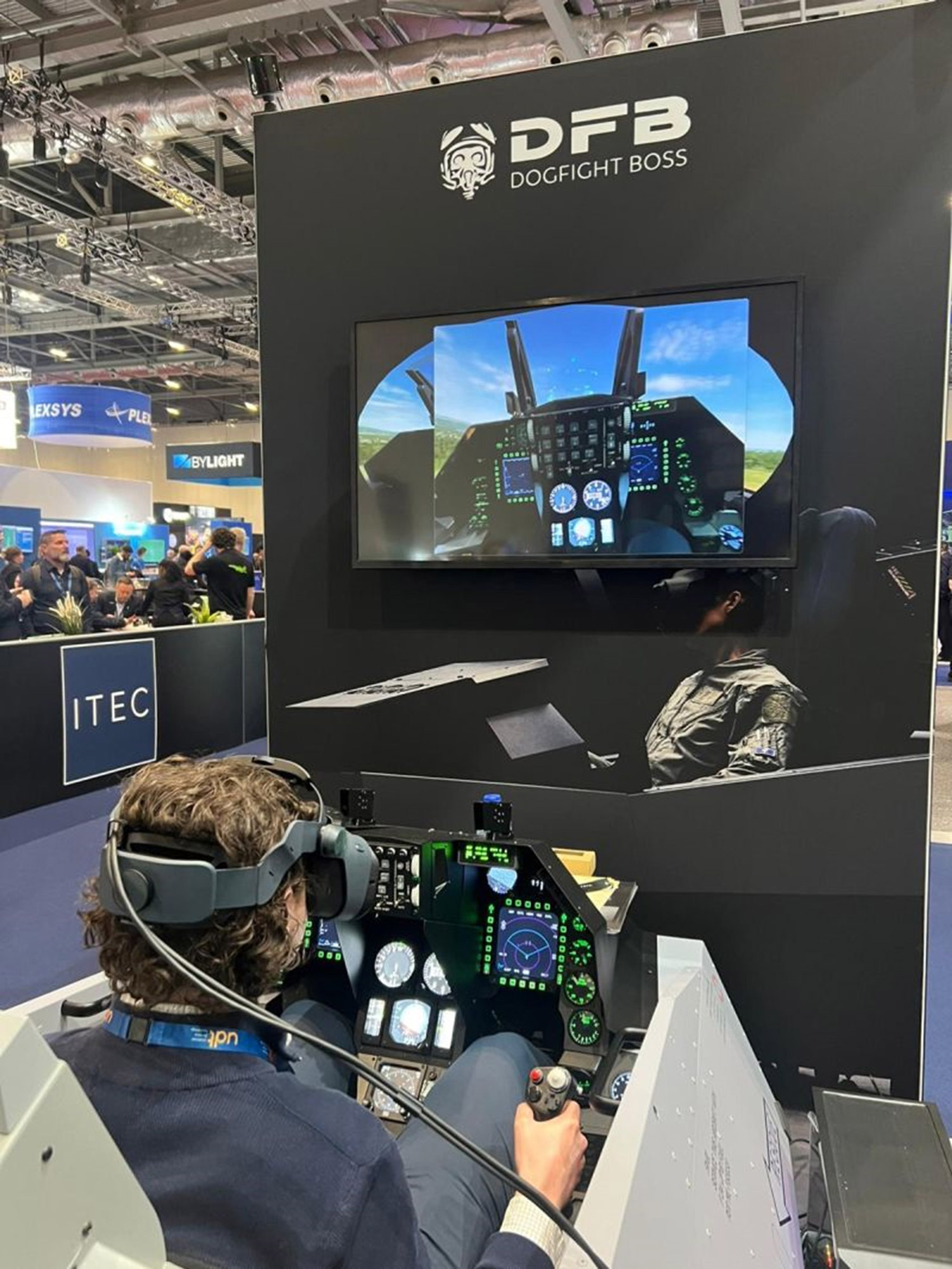
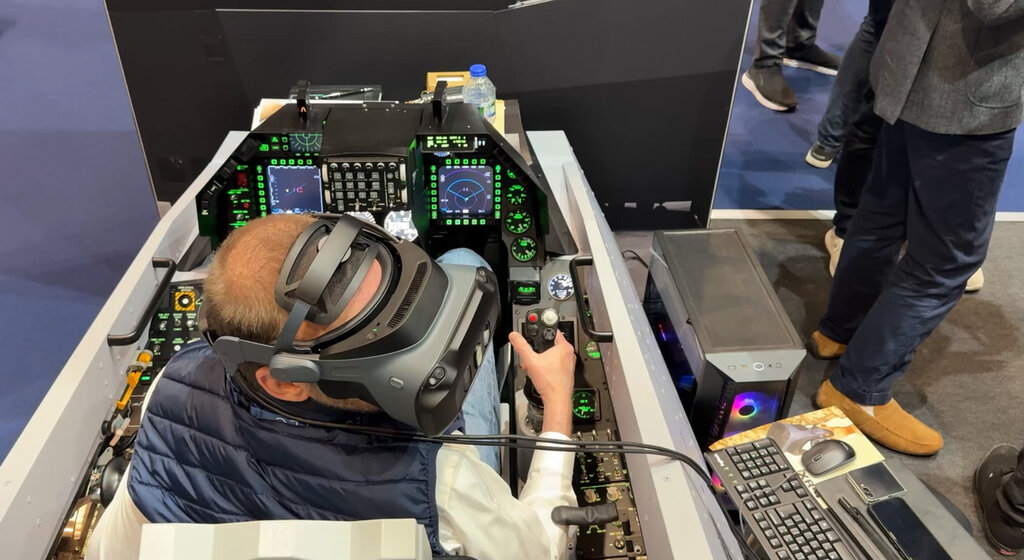
Author flying an F-16 in an AR simulation at ITEC 2026. Credit: CMS Strategic
The concept simply requires a trainee to wear a pair of goggles and carry a model shotgun to shoot down loitering munitions as troops learn to protect themselves in the last and often overlooked individual air defence layer.
“We’re learning a lot from modern warfare, and I think C-UAS is a perfect example of that, where priorities have shifted in militaries worldwide based on those experiences,” said Mikko Luhtava, chief marketing officer at Varjo.
Due to its focus on specific albeit pervasive tactical scenarios, Varjo can deliver handheld simulated training equipment en masse. This mode of operating can be seen in Ukraine, where commanders are pressured to instill basic and novel skills across a diverse and ill-equipped society in as little time as possible.
Scale is key. In Brussels in April, Lithuania’s Minister of National Defence Robertas Kaunas offered a sense of perspective among Nato allies: that defence innovation must stem from real needs of the member states and lessons learned on the battlefield in Ukraine.

We’re learning a lot from modern warfare.
Mikko Luhtava, CMO at Varjo
Notably, GlobalData intelligence indicates that simulation training is dominated by the land domain, which makes up 77% of the market. But versatile and portable equipment can offer a wider scope, thus enabling the smaller albeit growing air simulation segment.
Varjo headsets can also be used to simulate combat air training on the F-16 Fighting Falcon, a common fourth generation fighter jet used in numerous Nato fleets, but also in Ukraine’s Air Force.
But Varjo headsets may be used with other trainer systems. In the case of an F-16, a headset may be integrated with a model cockpit provided by Dogfight Boss.
“It’s all about training people with resources that are scalable and more cost-effective. To have them prepared when they actually then start using that equipment,” Luhtava reiterated.
Everything, everywhere, all at once
Larger primes such as BAE Systems, through its new training arm OneArc, advocate an approach that embraces everything, everywhere, all at once.
OneArc unveiled its own first-person view drone trainer at ITEC called Flowstate. However, an executive was quick to point out that there is more to siloed trainers.
“Learning to fly a drone is muscle memory,” explained Oliver Arup, chief technology and product officer for OneArc. “Where our [unique selling point] comes in is the rest of the complexity of the environment.”
Arup refers to the construction of an integrated battlefield picture. There is more than just one system in the battlespace; everything works together.
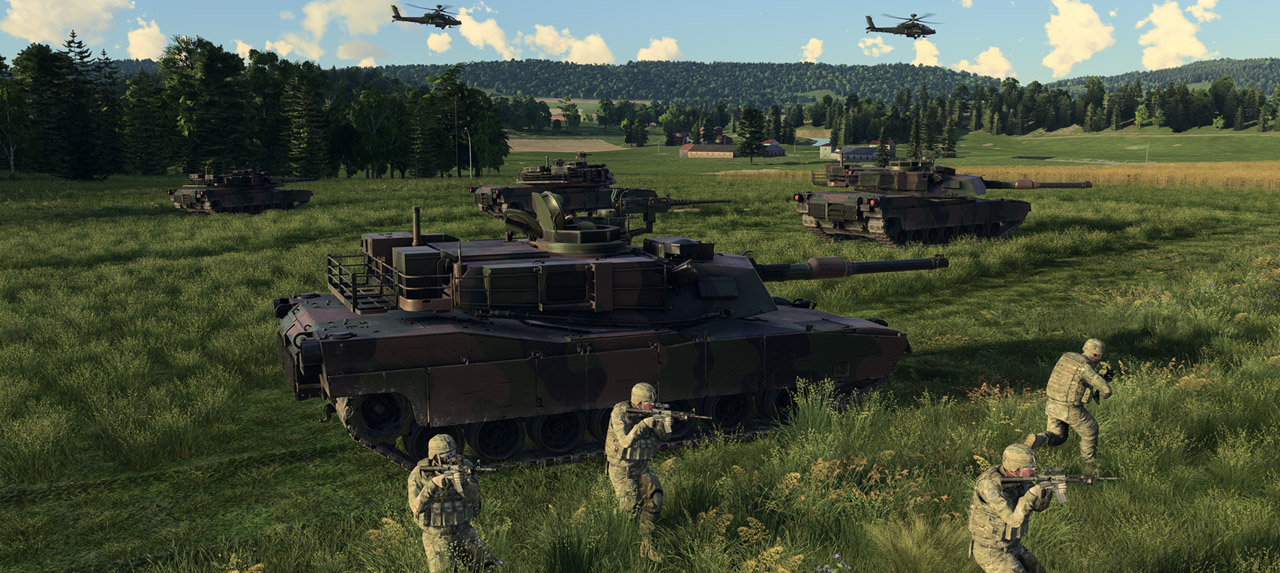
OneArc provides synthetic training environments to a range of Nato countries. Credit: OneArc
An operator can insert Flowstate into the VBS4 whole earth simulator. A trainer could set up an entire battalion exercise with 200 real-life trainees running around as dismounted soldiers or operating tanks and then inject a Flowstate FPV drone into that environment.
Saab, likewise, prioritised the creation of a full picture of the battlefield. With land warfare once the focus for simulation training, Saab is now looking to integrate the air and maritime domains.
“We can combine virtual trainers, where we can have attack helicopters, we can have missile simulators, [this is] where we start combining the same battle picture,” said one spokesperson.
This then offers one of the most interesting developments in synthetic training, where entities operating platforms across different domains – from infantry drone operator to armoured vehicle formations, combat air to littoral support – can share the same environment to better replicate the reality of real-world combat operations.
While there might be the – mistaken – impression that synthetic training simply offers cost savings to hard-pressed military finances, it is the adaptability of digital environments that provide tangible benefits, particularly when they can incorporate multiple users.

Dr. David W. Bates, Chief of General Internal Medicine at Brigham and Women’s Hospital
China maintains a near monopoly over rare earth metal extraction. Credit: Pla2na/Shutterstock.com

Caption. Credit:
Total annual production
Australia could be one of the main beneficiaries of this dramatic increase in demand, where private companies and local governments alike are eager to expand the country’s nascent rare earths production. In 2021, Australia produced the fourth-most rare earths in the world. It’s total annual production of 19,958 tonnes remains significantly less than the mammoth 152,407 tonnes produced by China, but a dramatic improvement over the 1,995 tonnes produced domestically in 2011.
The dominance of China in the rare earths space has also encouraged other countries, notably the US, to look further afield for rare earth deposits to diversify their supply of the increasingly vital minerals. With the US eager to ringfence rare earth production within its allies as part of the Inflation Reduction Act, including potentially allowing the Department of Defense to invest in Australian rare earths, there could be an unexpected windfall for Australian rare earths producers.
