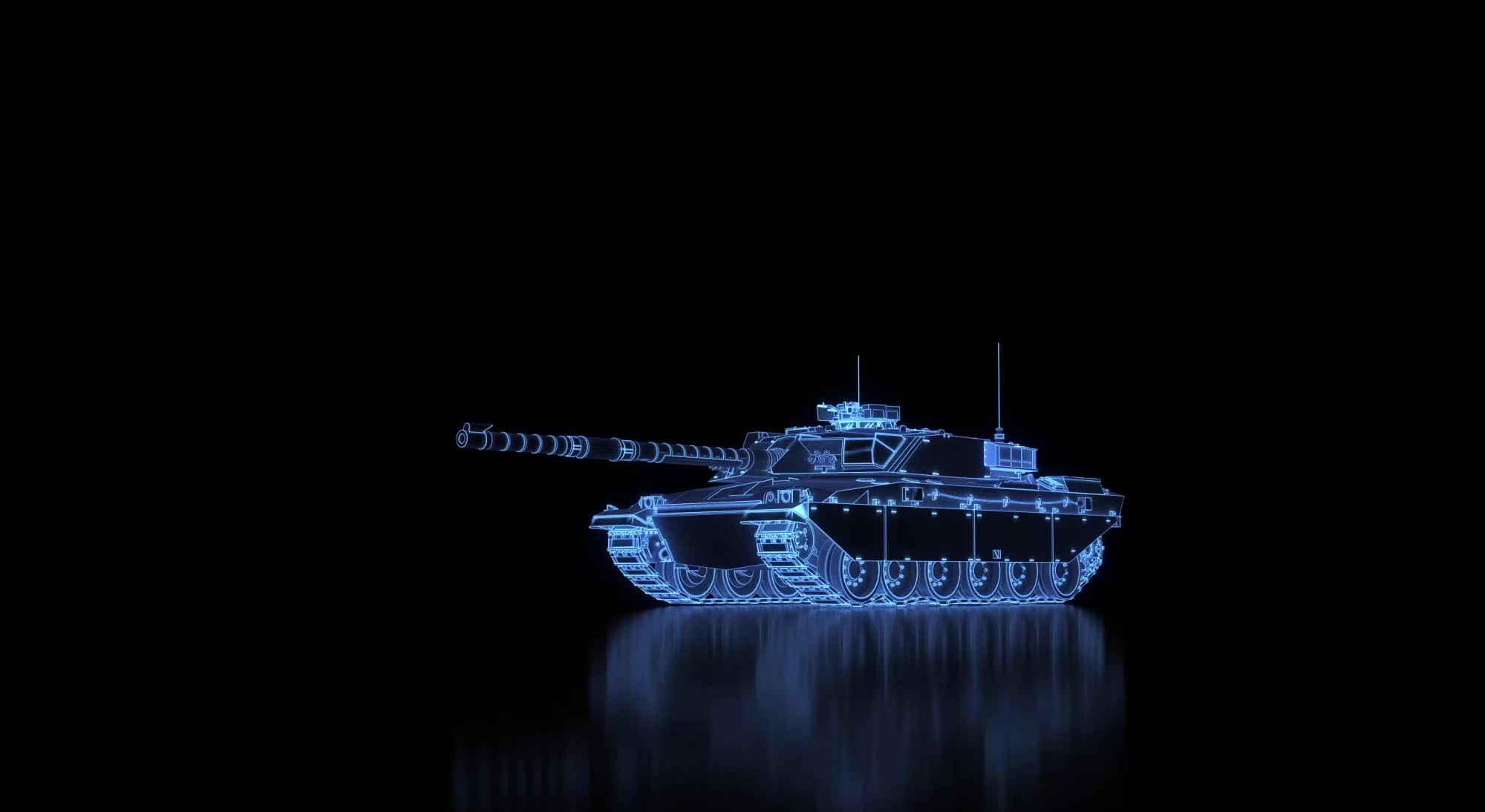
Feature
Beyond steel: armour vs mobility
The US Army has new means to confront the age‑old question in their armoured formations. John Hill reports.
Powered by

Main video credit: Muroddzhon Toshboev/Shutterstock.com
The age-old dilemma between mobility and armour has not gone away; opt solely for speed and become unsurvivable, opt just for protection, and lose tactical utility.
While there are new threat forms that disrupt traditional land warfare, like cheap loitering munitions, which can pick off an armoured vehicle with a signature on the ground, the two factors continue to conflict in the minds of commanders.
In May 2025, the US Army cancelled development of the M10 Booker light infantry tank. The builder increased vehicle weight to meet numerous user requirements (air-transportable, manoeuvrable, protection and a lot of firepower) in one unassailable combat vehicle.
In the end, US Army Secretary Dan Driscoll wrote the programme off as a prime example of “sunk cost fallacy.”
But the lesson is not to go all-in on mobility over protection. A crewed vehicle stripped of armour is completely vulnerable to one-way effector munitions.
In Ukraine, Russian forces are not constrained by a desire to preserve troops, allowing them to take greater risk, for example using motorcycles and all-terrain vehicles to evade UAVs along areas of the frontline.
But the US and its allies must think smarter and more effectively to marry the opposing forces of mobility and armour. There is no right answer; in the end, the user must equip armoured vehicles according to mission requirements.
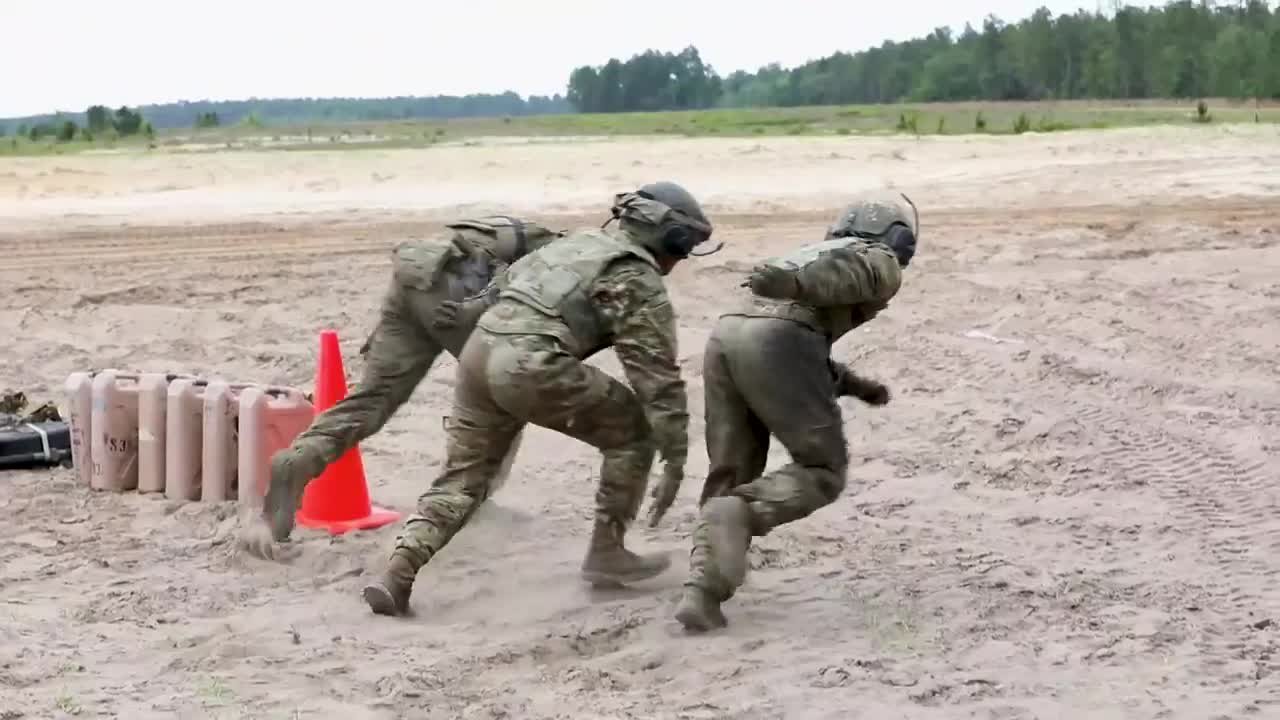
The US Army is opting to replace the ageing Bradley IFV with another armoured platform. Credit: US Army
US Army Colonel Timothy Ferguson, director, maneuver future capabilities directorate told Global Defence Technology:
“Sometimes bigger (heavier and protected) is not always better, especially when this condition creates areas that armour cannot operate. If that becomes the case, we’ve ceded the ground without a fight,” he surmised.
“Through the use of Soldier Touchpoints [live tests where soldiers operate new equipment and provide feedback] and other experimentation, we continue to determine which technologies we can leverage today to find the optimal balance.”
The technology landscape can allow for new forms of protection while maintaining mobility.
Instead of simply absorbing an incoming projectile, the user can use lighter materials, prevent their vehicles from being detected, disrupt an attack, intercept it or avoid putting a crew in the line of fire altogether.
Explore the vehicle’s technology
Pre-empting the threat
One answer may be to stop thinking that protection is synonymous with armour. The US Army has already begun to redefine protection using new sensor technologies that make up an Active Protection System (APS).
In January 2026, General Dynamics subcontracted Israel’s Elbit Systems to supply the Iron Fist APS for legacy M2 Bradley Infantry Fighting Vehicles.
More than that, the Army has been testing Iron Fist for years, making software improvements going back to 2018, to create a more “consistent and stable” pre-emptive capability, according to an Army release.
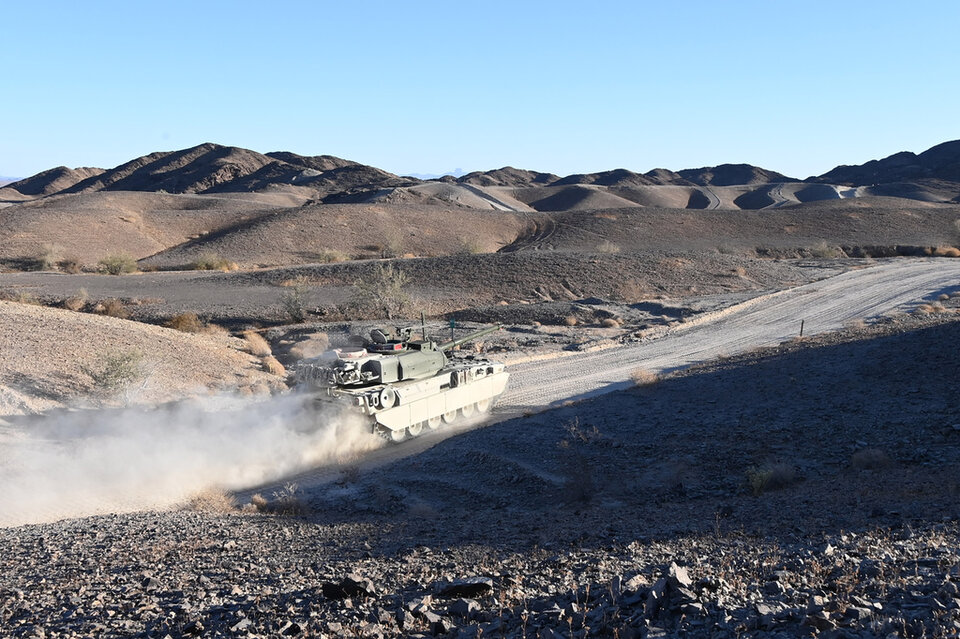
The M10 Booker was cancelled after its entry weight ballooned. Credit: US Army
Iron Fist includes optical sensors, radar and lightweight explosive projectile interceptors that counter-launch toward an incoming airborne threat, such as a missile. The projectile explodes near the threat and away from the vehicle, deterring or defeating the threat.
One drawback relates to threat detection and sensor vulnerability. When hull-mounted sensors identify a threat, the processing unit remains vulnerable to electronic warfare which has become an increasing phenomenon in the battlespace.
Additionally, muddy or dusty environments can obscure or blind the system’s optical sensors. In close-quarter urban combat – like Taipei – the interception of threats by an APS might create localised blast fragmentation, risking severe collateral damage to nearby friendly infantry and civilians as well as the hull.
Protection is not limited to steel
An APS is just one layer of survivability; it must be used in conjunction with some form of armour.
“Much like the balance of armour to mobility, this is a convergence of requirements, where we examine the threat and tailor our protection holistically to optimally protect our crews and platforms,” affirmed Ferguson.
“We still need an enduring ability for our armor platforms to be able to take a ‘hit’.”
Col Timothy Ferguson, US Army
Composite materials offer an alternative to steel in this case. Integris, a tier one supplier of armour solutions, was chosen to support American Rheinmetall’s XM30 prototype in October 2025. This optionally crewed combat system will replace the ageing Bradley with Rheinmetall’s Lynx competing with General Dynamics’ Wolf prototype for the contract.
On 1 September 2026, American Rheinmetall delivered the first of eight Lynx prototypes to the Army, which will immediately enter government-led developmental and performance testing.
Integris uses lightweight and high-hardness ceramic matrices engineered to shatter kinetic energy penetrators and absorb extreme blast dynamics upon impact. The modular kit will allow the user to swap out for damage replacement or upgrades.

The XM30 will serve as the US Army’s future IFV. Credit: US Army
When asked whether the Army is abandoning attempts to ‘absorb a hit’ for hiding platforms with a discernible signature, Ferguson denied this assessment:
“No, we still need an enduring ability for our armor platforms to be able to take a ‘hit’ and protect their crewmembers and continue to fight.” Although, hiding more effectively, through camouflage or other methods, remains a “critical aspect” of any formation’s efforts.
Efficient design from the start
Contemporary conflict trends are not enough to inform commanders about future vehicle design. For example, Russia’s defence trade body, Rosoboronexport, has updated vehicles in response to trends amid the war in Ukraine.
Army Technology scrutinised the use of slat armour to mitigate top-attack in its export-oriented T-90MS main battle tank (MBT), displayed last year during the IDEX exhibition in Abu Dhabi.
Other advanced armies are trialling these so-called cope cages, including the British Army, which tested a much lighter fibreglass system on a Challenger 2 MBT, but the service still found the concept to be restricting.
Playing catch-up is not enough. The US has reached a critical juncture where future vehicle design must allow for change before an understanding of future conflict emerges. For this reason, a modular open systems approach is being implemented from the outset – enshrined in the Pentagon’s procurement reforms from November 2025.
One solution for a more efficient and future-proof design may be the use of a hybrid-electric powertrain, which combines an internal combustion engine with an electric motor and battery pack. Both the XM30 and the future M1E3 Abrams MBT will likely incorporate this feature.
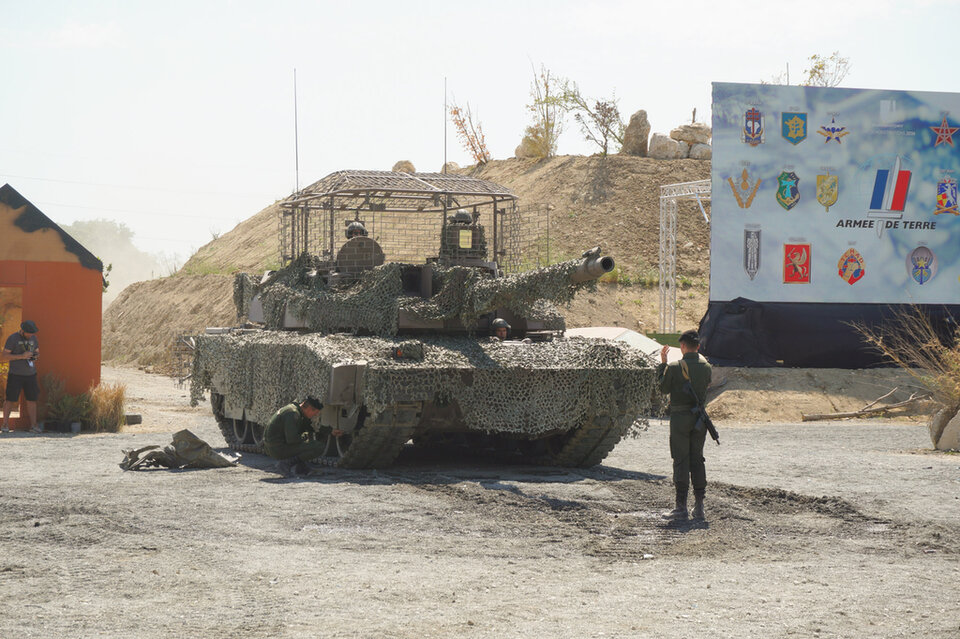
Western militaries are testing the efficacy of cope cages. Credit: Spech/Shutterstock.com
Lessons could be learned from the UK, where the Warwickshire-based Power Size Technologies found that the British Army could integrate a laser weapon system onto its Foxhound and Boxer vehicles with few modifications.
The additional mass needed to support weapons on a hybrid system can be significantly lower than on a conventional combustion vehicle, where you may need to add a separate electrical power system purely for the weapon.
Commanders are all too aware of the growing requirement for electrical power generation. In October 2025, the US Army contracted Leonardo DRS to develop prototype Vehicle Integrated Power Kits to support the growing need for easy-access, on-demand electrical power in the field.
The capability will generate up to 120kW directly from the vehicle’s drivetrain to power systems such as communications, electronic warfare and counter-uncrewed aerial system technologies.
Distribute capabilities
Armoured vehicles will confront high-intensity conflict, but Colonel Ferguson maintained that platforms do not function in isolation:
“This is not simply a single platform solution. The Army fights [in] formations, so we continue to look at how the formation is protected holistically from a layered approach.”
“This is not simply a single platform solution.”
Col Timothy Ferguson, US Army
But formations are changing as the US Army introduces autonomous uncrewed systems (UxS) at scale. During the Eurosatory arms fair in June 2026, AM General announced it will repurpose its longstanding Humvee supply chain to produce an uncrewed ground vehicle (UGV).
Doubtless a strategic decision to pivot away from a crewed vehicle that the US Department of War arbitrarily deemed obsolete – having branded the Humvee an “excess” platform in a Letter to the Force last year – but UGVs still remain a genuine requirement.
President and chief executive of AM General, John Chadbourne, envisaged UGVs playing a significant role on the mobility end of the spectrum:
“I think the fast [and] light [weight] missions [are] where the UGV is going to come into play. But at some point, you’re going to have to have soldiers on the ground holding land and they’re going to need protected mobility.”
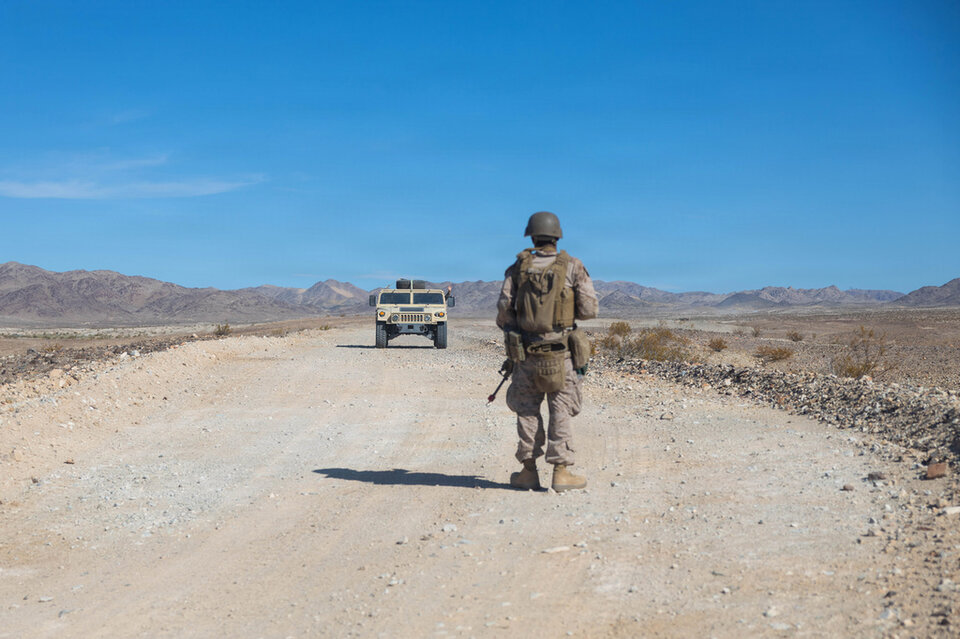
The US Humvee could be repurposed as a UGV. Credit: US Marine Corps
This picture of the future formation distributes some capabilities to UxS creating a nimbler force structure. This could soon extend to combat responsibilities as Chadbourne suggests. For example, AM General’s UGV was displayed carrying John Cockerill’s Hornet Air Guard C-UAS system at Eurosatory.
But for now, Ukraine’s forces use UGVs in an auxiliary capacity for logistics and casualty evacuation; the military has carried out 112,000 UGV missions of this kind in 2026.
Nevertheless, the business intelligence firm GlobalData expects combat systems to dominate the Global Military UGV Market with a share as high as 54.5% over the next ten years.



Pre-empting the threat
One answer may be to stop thinking that protection is synonymous with armour. The US Army has already begun to redefine protection using new sensor technologies that make up an Active Protection System (APS).
In January 2026, General Dynamics subcontracted Israel’s Elbit Systems to supply the Iron Fist APS for legacy M2 Bradley Infantry Fighting Vehicles.
More than that, the Army has been testing Iron Fist for years, making software improvements going back to 2018, to create a more “consistent and stable” pre-emptive capability, according to an Army release.
The M10 Booker was cancelled after its entry weight ballooned. Credit: US Army
Iron Fist includes optical sensors, radar and lightweight explosive projectile interceptors that counter-launch toward an incoming airborne threat, such as a missile. The projectile explodes near the threat and away from the vehicle, deterring or defeating the threat.
One drawback relates to threat detection and sensor vulnerability. When hull-mounted sensors identify a threat, the processing unit remains vulnerable to electronic warfare which has become an increasing phenomenon in the battlespace.
Additionally, muddy or dusty environments can obscure or blind the system’s optical sensors. In close-quarter urban combat – like Taipei – the interception of threats by an APS might create localised blast fragmentation, risking severe collateral damage to nearby friendly infantry and civilians as well as the hull.
Protection is not limited to steel
An APS is just one layer of survivability; it must be used in conjunction with some form of armour.
“Much like the balance of armour to mobility, this is a convergence of requirements, where we examine the threat and tailor our protection holistically to optimally protect our crews and platforms,” affirmed Ferguson.
“We still need an enduring ability for our armor platforms to be able to take a ‘hit’.”
Col Timothy Ferguson, US Army
Composite materials offer an alternative to steel in this case. Integris, a tier one supplier of armour solutions, was chosen to support American Rheinmetall’s XM30 prototype in October 2025. This optionally crewed combat system will replace the ageing Bradley with Rheinmetall’s Lynx competing with General Dynamics’ Wolf prototype for the contract.
On 1 September 2026, American Rheinmetall delivered the first of eight Lynx prototypes to the Army, which will immediately enter government-led developmental and performance testing.
Integris uses lightweight and high-hardness ceramic matrices engineered to shatter kinetic energy penetrators and absorb extreme blast dynamics upon impact. The modular kit will allow the user to swap out for damage replacement or upgrades.
The XM30 will serve as the US Army’s future IFV. Credit: US Army
When asked whether the Army is abandoning attempts to ‘absorb a hit’ for hiding platforms with a discernible signature, Ferguson denied this assessment:
“No, we still need an enduring ability for our armor platforms to be able to take a ‘hit’ and protect their crewmembers and continue to fight.” Although, hiding more effectively, through camouflage or other methods, remains a “critical aspect” of any formation’s efforts.
Efficient design from the start
Contemporary conflict trends are not enough to inform commanders about future vehicle design. For example, Russia’s defence trade body, Rosoboronexport, has updated vehicles in response to trends amid the war in Ukraine.
Army Technology scrutinised the use of slat armour to mitigate top-attack in its export-oriented T-90MS main battle tank (MBT), displayed last year during the IDEX exhibition in Abu Dhabi.
Other advanced armies are trialling these so-called cope cages, including the British Army, which tested a much lighter fibreglass system on a Challenger 2 MBT, but the service still found the concept to be restricting.
Playing catch-up is not enough. The US has reached a critical juncture where future vehicle design must allow for change before an understanding of future conflict emerges. For this reason, a modular open systems approach is being implemented from the outset – enshrined in the Pentagon’s procurement reforms from November 2025.
One solution for a more efficient and future-proof design may be the use of a hybrid-electric powertrain, which combines an internal combustion engine with an electric motor and battery pack. Both the XM30 and the future M1E3 Abrams MBT will likely incorporate this feature.
Western militaries are testing the efficacy of cope cages. Credit: Spech/Shutterstock.com
Lessons could be learned from the UK, where the Warwickshire-based Power Size Technologies found that the British Army could integrate a laser weapon system onto its Foxhound and Boxer vehicles with few modifications.
The additional mass needed to support weapons on a hybrid system can be significantly lower than on a conventional combustion vehicle, where you may need to add a separate electrical power system purely for the weapon.
Commanders are all too aware of the growing requirement for electrical power generation. In October 2025, the US Army contracted Leonardo DRS to develop prototype Vehicle Integrated Power Kits to support the growing need for easy-access, on-demand electrical power in the field.
The capability will generate up to 120kW directly from the vehicle’s drivetrain to power systems such as communications, electronic warfare and counter-uncrewed aerial system technologies.
Distribute capabilities
Armoured vehicles will confront high-intensity conflict, but Colonel Ferguson maintained that platforms do not function in isolation:
“This is not simply a single platform solution. The Army fights [in] formations, so we continue to look at how the formation is protected holistically from a layered approach.”
“This is not simply a single platform solution.”
Col Timothy Ferguson, US Army
But formations are changing as the US Army introduces autonomous uncrewed systems (UxS) at scale. During the Eurosatory arms fair in June 2026, AM General announced it will repurpose its longstanding Humvee supply chain to produce an uncrewed ground vehicle (UGV).
Doubtless a strategic decision to pivot away from a crewed vehicle that the US Department of War arbitrarily deemed obsolete – having branded the Humvee an “excess” platform in a Letter to the Force last year – but UGVs still remain a genuine requirement.
President and chief executive of AM General, John Chadbourne, envisaged UGVs playing a significant role on the mobility end of the spectrum:
“I think the fast [and] light [weight] missions [are] where the UGV is going to come into play. But at some point, you’re going to have to have soldiers on the ground holding land and they’re going to need protected mobility.”
This picture of the future formation distributes some capabilities to UxS creating a nimbler force structure. This could soon extend to combat responsibilities as Chadbourne suggests. For example, AM General’s UGV was displayed carrying John Cockerill’s Hornet Air Guard C-UAS system at Eurosatory.
The US Humvee could be repurposed as a UGV. Credit: US Marine Corps
But for now, Ukraine’s forces use UGVs in an auxiliary capacity for logistics and casualty evacuation; the military has carried out 112,000 UGV missions of this kind in 2026.
Nevertheless, the business intelligence firm GlobalData expects combat systems to dominate the Global Military UGV Market with a share as high as 54.5% over the next ten years.