Feature
Pacific power: Asia leading the way
Asia-Pacific leads the way as frigate and destroyer demand in global dead-heat. Richard Thomas reports.
Powered by


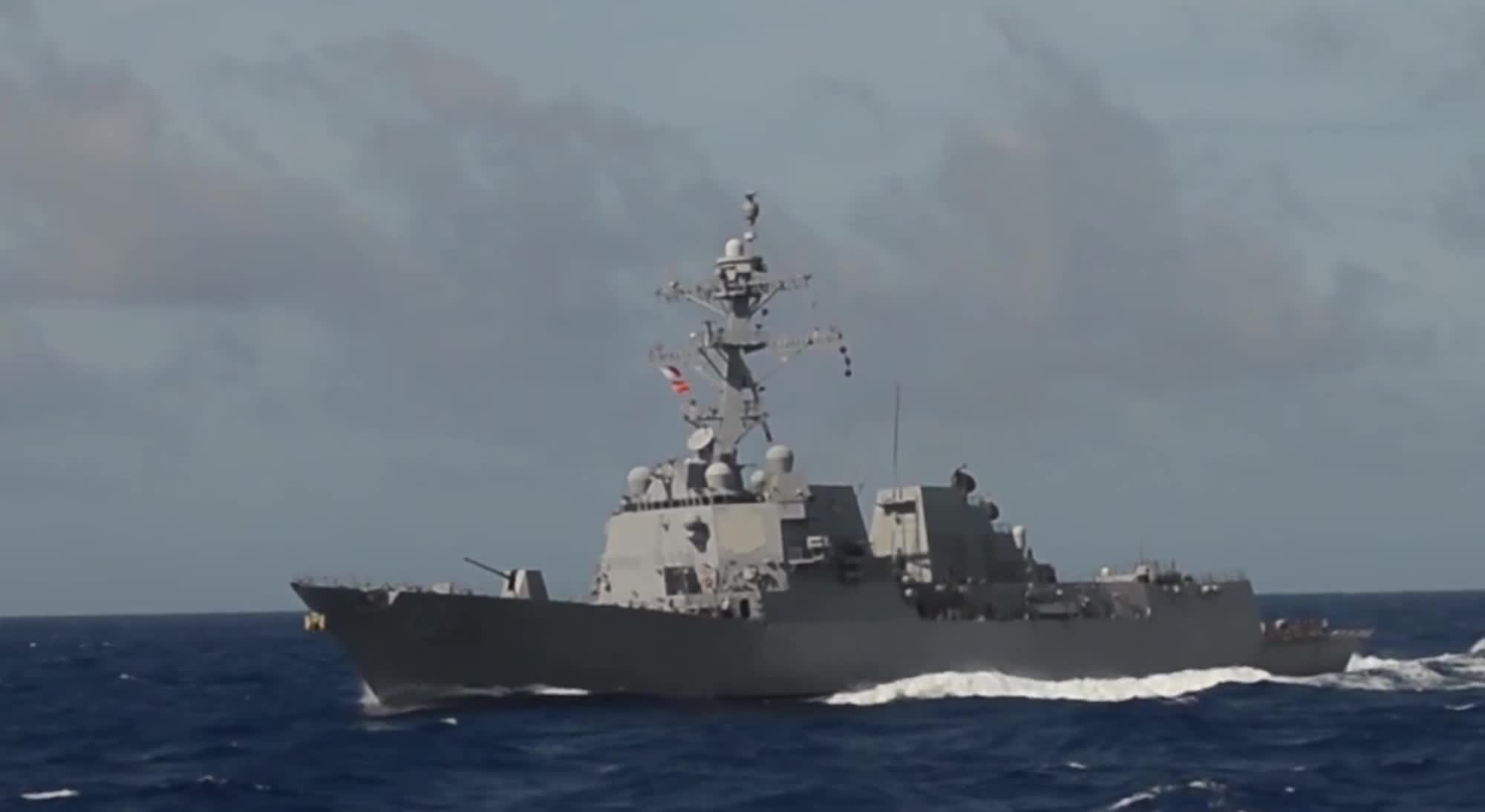
Main video: The US Navy’s Arleigh Burke DDGs are the backbone of the fleet. Credit: US Navy
The naval vessels and surface combatant market is projected to grow at a compound annual growth rate (CAGR) of 5.2% over the next decade, reaching $90.3bn by 2036 and a cumulative expenditure of $772.5bn over the forecast period.
Currently valued at $54.6bn in 2026, the market consists of seven categories: aircraft carrier, amphibious ship, frigate, destroyer, corvette, light combat vessel, and auxiliary vessel.
The market is expected to be led, just, by the frigate segment, which accounts for 24.7% of the market, followed by destroyer segment with 24.4% share.
Among geographic segments, Asia-Pacific is projected to lead the sector with a share of 32.7%, followed by North America and Europe with shares of 31.8% and 28.5% respectively.
All intelligence in this article has been sourced from GlobalData’s business intelligence unit. For more information, click here.
The global forecast masks significant differences in regional demand. Asia-Pacific, North America, and Europe together account for more than 90% of cumulative surface combatant expenditure between 2026 and 2036, but their procurement priorities are not interchangeable.
Asia-Pacific is expanding and modernising a broad mix of frigates and destroyers, North America is centred on large-displacement combatants, and Europe is prioritising air-defence and anti-submarine warfare capabilities.
Smaller markets contribute less to total spending, but remain important sources of demand for corvettes, multi-mission vessels, and littoral platforms.

Asia-Pacific (32.7% share)
The Asia-Pacific region combines massive volume (China’s PLAN expansion) with high-end qualitative modernisation in Japan, South Korea, and Australia.
∼$252.6bn
Cumulative spend over the decade approaches ∼$252.6bn over the 2026–2036 forecast period.
Key ongoing and future procurement to note includes Japan’s Mogami-class frigate programme, which will see the Japan Maritime Self-Defense Force (JMSDF) building out a 22-ship fleet of multi-mission stealth frigates (12 baseline Mogami, followed by 10 enlarged, heavily armed Next-Generation Mogamis from Mitsubishi Heavy Industries.
Australia will also acquire the upgraded Mogami-class frigate design, intending to build an 11-ship fleet as part of a wider force recapitalisation. In addition, a reduced number of the highly advanced UK Type 26 class frigates, dubbed the Hunter class in Australian service, will also be acquired.
Meanwhile South Korea’s launch of its third KDX-III Batch-II destroyer marks a critical step toward sustaining continuous sea-based ballistic missile defence, according to analysis by intelligence firm GlobalData.
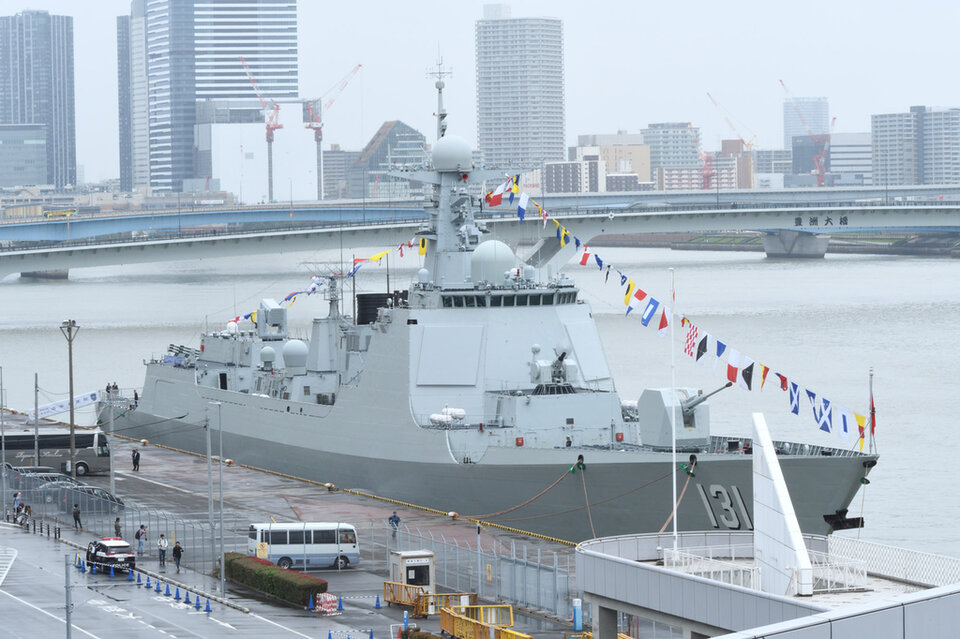
A Chinese PLAN Type 052D destroyer in 2019. Credit: viper-zero/Shutterstock.com
China’s PLAN remains the dictating factor in regional procurement as it rapidly increases its capabilities at sea, introducing platforms like the Type 052D and Type 055 warships that are nearing qualitative parity with the US Navy in terms of surface combatants. The PLAN has far surpassed the US as the largest navy in the world.

North America (31.8% share)
Despite shifts in small surface combatant strategies, North American procurement remains heavily anchored by large-displacement guided-missile combatants. However, the US Navy is also planning to introduce a series of smaller frigates and uncrewed platforms to help close the quantitative gap that has emerged with its geopolitical naval rival, China’s PLAN.
∼$245.7bn
Cumulative expenditure reaches ∼$245.7bn over the 2026–2036 forecast period.
For the United States, key procurement programmes include the Flight III Arleigh Burke-class guided-missile destroyers, FF(X) light frigate, the future DDG(X), and Trump-class large surface combatants.
Notable has been the decision to invest in a relatively simple FF(X) light frigate, following the expensive failures of the Littoral Combat Ship and Constellation-class frigate programmes.
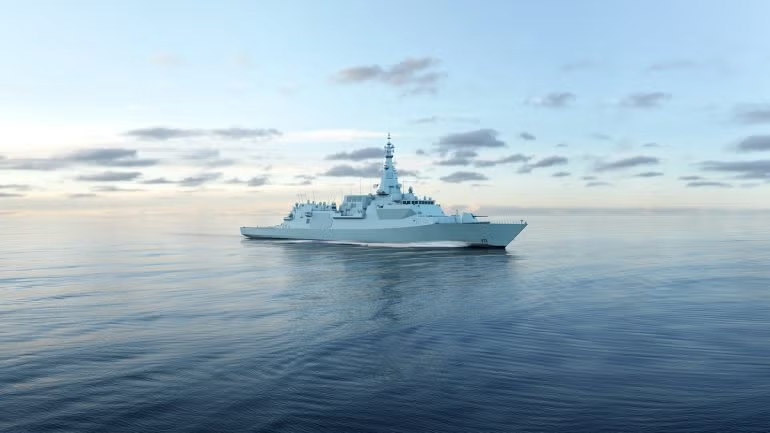
Canada is planning to build 15 new River-class destroyers. Credit: BAE Systems
Meanwhile, Canada is investing ~ C$60bn ($42.9bn) for the intended acquisition of 15 River-class guided missile destroyers, a platform based heavily on the UK’s Type 26 frigates.
Europe
(28.5% share)
Europe is replete with new frigate procurement programmes, with ongoing acquisitions in the UK (Type 31 and Type 26), France (FDI), Sweden (FDI), Norway (Type 26), Germany (MEKO A-200), the Netherlands (ASWF), Belgium (ASWF), Italy (Evolved-FREMM), Poland (Type 31/ Miecznik), Denmark (competition ongoing), and Greece (FDI).
$220bn
Approximate $220bn in cumulative spend across the decade, propelled by high-intensity anti-submarine warfare and air-defence recapitalisation.
Collectively, European countries are set to acquire approximately 50 frigate-sized/classification vessels over the course of the next decade.
Naval Group’s FDI design has been highly successful, selling domestically to the French Navy but also seeing overseas sales in Sweden (Luleå-class surface combatants) and Greece (Kimon-class frigates).
UK designs have also proven popular, with the Type 26 design selling to Norway, Australia, and Canada, while the Type 31 is in the running for Denmark and in build for Poland.
Previously one of Europe’s leading navies, the UK Royal Navy has been on a downward trajectory for a number of years amid a shrinking surface fleet and maintenance backlogs.
Notably, the UK has opted to cancel its planned Type 83 air defence destroyer and replace it with a family of uncrewed platforms, dubbed the Type 9X series, intended to increase the number of hulls at sea.
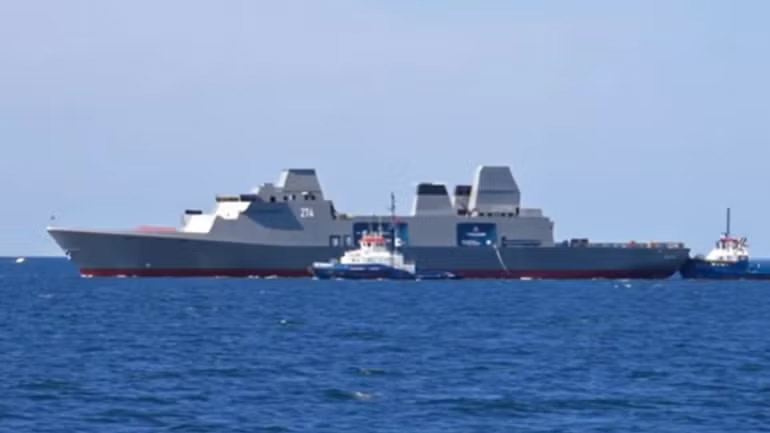
Poland’s first Miecznik frigate pictured at sea following its launch in mid-August. Credit: PGZ
It is uncertain whether this experimental programme will be a pathfinder for future European procurement, or a warning example of technological overreach.
Middle East (∼4.0% share)
Middle East countries are seeing highly concentrated procurement focused on corvettes and multi-mission frigates for critical sea-lane protection, for operations in areas like the Red Sea, Persian Gulf, and Bab-el-Mandeb.
∼$30.9bn
Cumulative spend reaches ∼$30.9bn over the 2026–2036 forecast period
Regional programme highlights include Saudi Arabia’s Al Jubail-class (Avante 2200) corvettes (being manufactured by Navantia), along with follow-on indigenous combatant construction agreements under the SAMI-Navantia joint venture (Tuwaiq project) and the procurement of multi-mission surface combatants (MMSC).
Beyond Saudi Arabia, regional surface combatant investment centres on heavily armed corvettes and multi-mission littoral vessels.
Israel is developing the Reshef-class to replace older Sa’ar 4.5-class missile boats, with deliveries expected to extend through the late 2020s and potentially into the early 2030s.
Elsewhere, the UAE is completing Falaj 3-class vessels and could pursue further domestically designed platforms, while Egypt is completing its MEKO A-200 programme.
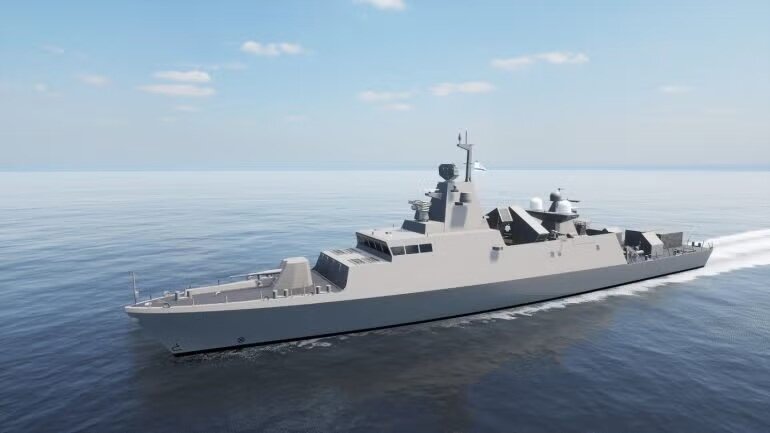
The Reshef corvette is being developed for the Israeli Navy. Credit: Israel Shipyards
Smaller GCC states like Oman and Bahrain may require patrol-fleet recapitalisation, but firm follow-on contracts remain limited or unconfirmed. These programmes point to localised maritime security requirements and fleet renewal across the region.

Latin America (∼1.8% share)
Latin American naval procurement through the next decade is likely to remain focused on fleet renewal, maritime security, and the replacement of ageing surface combatants rather than large-scale expansion.
∼$13.9bn
Cumulative spend reaches ∼$13.9bn over the 2026–2036 forecast period
Brazil’s Tamandaré-class frigate programme is the region’s most significant active acquisition, intended to renew the Brazilian Navy’s surface combatant fleet and create a domestic industrial foundation for future naval construction projects. Brazil is also augmenting its naval capabilities through acquisition of second-hand platforms, such as the former UK Royal Navy amphibious assault ship HMS Bulwark, obtained for a mere $26.3m in 2025.
Colombia could become another important source of demand if its Plataforma Estratégica de Superficie programme advances from planning and design toward a funded construction phase.
The proposed programme is intended to replace older assets with a frigate based on Damen’s SIGMA 10514 design and would represent a substantial increase in Colombia’s surface combatant capability.
Elsewhere, Mexico, Chile, Peru, and Argentina are more likely to generate demand through selective fleet replacement, offshore patrol vessels, and upgrades to existing ships. Their requirements are linked to maritime surveillance, fisheries protection, counter-narcotics operations, and the security of extensive exclusive economic zones (EEZ).
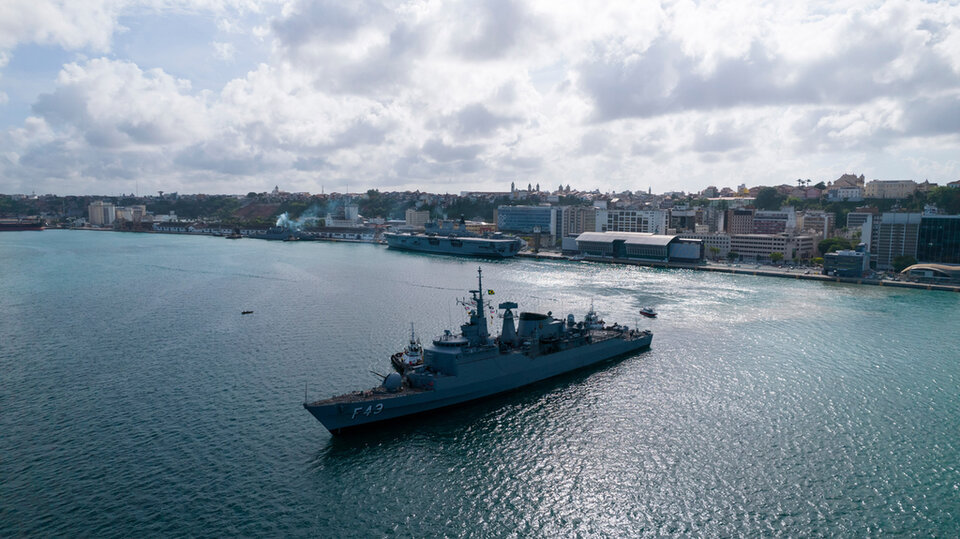
Brazil is replacing its Niterói class with the Tamandaré frigates. Credit: Gabriel S Fernandes/Shutterstock.com
However, budget pressures, competing defence priorities, and limited domestic shipbuilding will constrain the pace of procurement. As a result, Latin America is likely to produce a small number of high-value programmes alongside a broader market for patrol vessels, modernisation packages, and through-life support.
Africa
(∼1.2% share)
The smallest regional market, African naval procurement will be shaped primarily by littoral and EEZ maritime security requirements, with offshore patrol vessels, corvettes, fast patrol craft, and support ships likely to account for most demand.
∼$9.3bn
Cumulative spend reaches ∼$9.3bn over the 2026–2036 forecast period
Anticipated uses for such platforms will be monitoring territorial waters, protecting offshore energy infrastructure, counter piracy, and countering illegal fishing and trafficking.
Nigeria is a key market, with investment directed toward improving surveillance and maritime security capabilities in the Gulf of Guinea. Future demand is likely to include additional patrol vessels, fleet support assets, and upgrades.
In North Africa, Morocco and Algeria represent significant sources of potential demand because of their strategic positions in the Atlantic and Mediterranean and interest in maintaining capable surface fleets. Algeria is acquiring six Chinese-designed Type 056 corvettes, with construction and deliveries ongoing.
Egypt is the continent’s largest surface-combatant market with discussions ongoing to acquire F110 frigates, while the MEKO A-200 EN programme is nearly complete, with three of four light frigates handed over.
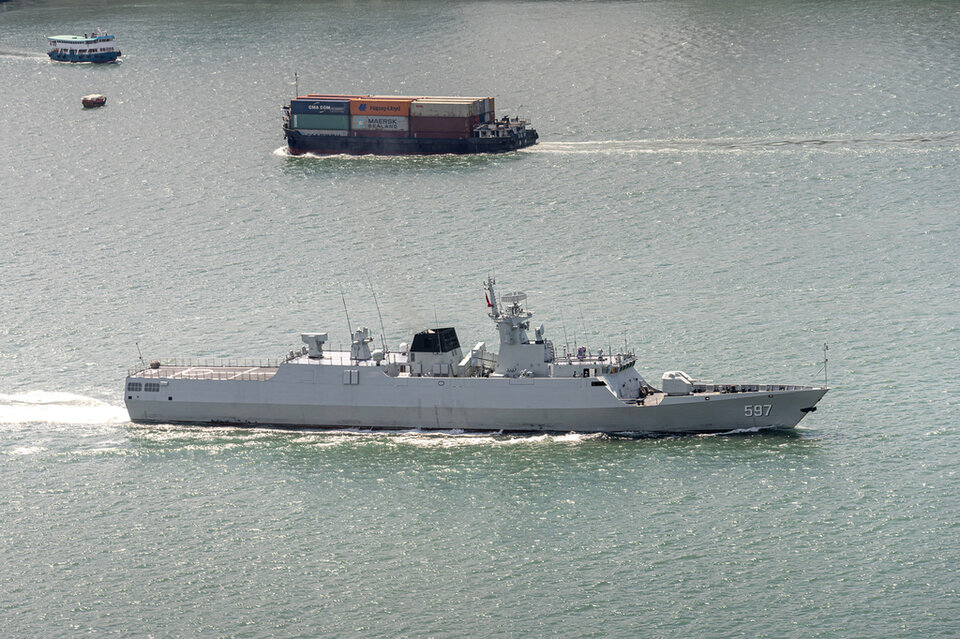
A PLAN Type 056 corvette in Hong Kong’s Victoria Harbour. Credit: Dragon Claws/Shutterstock.com
Overall, African demand will remain uneven, with a small number of relatively well-funded navies accounting for most expenditure and many others prioritising lower-cost patrol and coastal security platforms.



North America (31.8% share)
Despite shifts in small surface combatant strategies, North American procurement remains heavily anchored by large-displacement guided-missile combatants. However, the US Navy is also planning to introduce a series of smaller frigates and uncrewed platforms to help close the quantitative gap that has emerged with its geopolitical naval rival, China’s PLAN.
∼$245.7bn
Cumulative expenditure reaches ∼$245.7bn over the 2026–2036 forecast period.
GlobalData
For the United States, key procurement programmes include the Flight III Arleigh Burke-class guided-missile destroyers, FF(X) light frigate, the future DDG(X), and Trump-class large surface combatants.
Notable has been the decision to invest in a relatively simple FF(X) light frigate, following the expensive failures of the Littoral Combat Ship and Constellation-class frigate programmes.
Canada is planning to build 15 new River-class destroyers. Credit: BAE Systems
Meanwhile, Canada is investing ~ C$60bn ($42.9bn) for the intended acquisition of 15 River-class guided missile destroyers, a platform based heavily on the UK’s Type 26 frigates.
Europe (28.5% share)
Europe is replete with new frigate procurement programmes, with ongoing acquisitions in the UK (Type 31 and Type 26), France (FDI), Sweden (FDI), Norway (Type 26), Germany (MEKO A-200), the Netherlands (ASWF), Belgium (ASWF), Italy (Evolved-FREMM), Poland (Type 31/ Miecznik), Denmark (competition ongoing), and Greece (FDI).
$220bn
Approximate $220bn in cumulative spend across the decade, propelled by high-intensity anti-submarine warfare and air-defence recapitalisation.
GlobalData
Collectively, European countries are set to acquire approximately 50 frigate-sized/classification vessels over the course of the next decade.
Naval Group’s FDI design has been highly successful, selling domestically to the French Navy but also seeing overseas sales in Sweden (Luleå-class surface combatants) and Greece (Kimon-class frigates).
UK designs have also proven popular, with the Type 26 design selling to Norway, Australia, and Canada, while the Type 31 is in the running for Denmark and in build for Poland.
Previously one of Europe’s leading navies, the UK Royal Navy has been on a downward trajectory for a number of years amid a shrinking surface fleet and maintenance backlogs.
Notably, the UK has opted to cancel its planned Type 83 air defence destroyer and replace it with a family of uncrewed platforms, dubbed the Type 9X series, intended to increase the number of hulls at sea.
Poland’s first Miecznik frigate pictured at sea following its launch in mid-August. Credit: PGZ
It is uncertain whether this experimental programme will be a pathfinder for future European procurement, or a warning example of technological overreach.
Middle East (∼4.0% share)
Middle East countries are seeing highly concentrated procurement focused on corvettes and multi-mission frigates for critical sea-lane protection, for operations in areas like the Red Sea, Persian Gulf, and Bab-el-Mandeb.
∼$30.9bn
Cumulative spend reaches ∼$30.9bn over the 2026–2036 forecast period
GlobalData
Regional programme highlights include Saudi Arabia’s Al Jubail-class (Avante 2200) corvettes (being manufactured by Navantia), along with follow-on indigenous combatant construction agreements under the SAMI-Navantia joint venture (Tuwaiq project) and the procurement of multi-mission surface combatants (MMSC).
Beyond Saudi Arabia, regional surface combatant investment centres on heavily armed corvettes and multi-mission littoral vessels.
Israel is developing the Reshef-class to replace older Sa’ar 4.5-class missile boats, with deliveries expected to extend through the late 2020s and potentially into the early 2030s.
Elsewhere, the UAE is completing Falaj 3-class vessels and could pursue further domestically designed platforms, while Egypt is completing its MEKO A-200 programme.
The Reshef corvette is being developed for the Israeli Navy. Credit: Israel Shipyards
Smaller GCC states like Oman and Bahrain may require patrol-fleet recapitalisation, but firm follow-on contracts remain limited or unconfirmed. These programmes point to localised maritime security requirements and fleet renewal across the region.
Latin America (∼1.8% share)
Latin American naval procurement through the next decade is likely to remain focused on fleet renewal, maritime security, and the replacement of ageing surface combatants rather than large-scale expansion.
∼$13.9bn
Cumulative spend reaches ∼$13.9bn over the 2026–2036 forecast period
GlobalData
Brazil’s Tamandaré-class frigate programme is the region’s most significant active acquisition, intended to renew the Brazilian Navy’s surface combatant fleet and create a domestic industrial foundation for future naval construction projects. Brazil is also augmenting its naval capabilities through acquisition of second-hand platforms, such as the former UK Royal Navy amphibious assault ship HMS Bulwark, obtained for a mere $26.3m in 2025.
Colombia could become another important source of demand if its Plataforma Estratégica de Superficie programme advances from planning and design toward a funded construction phase.
The proposed programme is intended to replace older assets with a frigate based on Damen’s SIGMA 10514 design and would represent a substantial increase in Colombia’s surface combatant capability.
Elsewhere, Mexico, Chile, Peru, and Argentina are more likely to generate demand through selective fleet replacement, offshore patrol vessels, and upgrades to existing ships. Their requirements are linked to maritime surveillance, fisheries protection, counter-narcotics operations, and the security of extensive exclusive economic zones (EEZ).
Brazil is replacing its Niterói class with the Tamandaré frigates. Credit: Gabriel S Fernandes / Shutterstock.com
However, budget pressures, competing defence priorities, and limited domestic shipbuilding will constrain the pace of procurement. As a result, Latin America is likely to produce a small number of high-value programmes alongside a broader market for patrol vessels, modernisation packages, and through-life support.
Africa (∼1.2% share)
The smallest regional market, African naval procurement will be shaped primarily by littoral and EEZ maritime security requirements, with offshore patrol vessels, corvettes, fast patrol craft, and support ships likely to account for most demand.
∼$9.3bn
Cumulative spend reaches ∼$9.3bn over the 2026–2036 forecast period
GlobalData
Anticipated uses for such platforms will be monitoring territorial waters, protecting offshore energy infrastructure, counter piracy, and countering illegal fishing and trafficking.
Nigeria is a key market, with investment directed toward improving surveillance and maritime security capabilities in the Gulf of Guinea. Future demand is likely to include additional patrol vessels, fleet support assets, and upgrades.
In North Africa, Morocco and Algeria represent significant sources of potential demand because of their strategic positions in the Atlantic and Mediterranean and interest in maintaining capable surface fleets. Algeria is acquiring six Chinese-designed Type 056 corvettes, with construction and deliveries ongoing.
Egypt is the continent’s largest surface-combatant market with discussions ongoing to acquire F110 frigates, while the MEKO A-200 EN programme is nearly complete, with three of four light frigates handed over.
A PLAN Type 056 corvette in Hong Kong’s Victoria Harbour. Credit: Dragon Claws/Shutterstock.com
Overall, African demand will remain uneven, with a small number of relatively well-funded navies accounting for most expenditure and many others prioritising lower-cost patrol and coastal security platforms.
Asia-Pacific (32.7% share)
The Asia-Pacific region combines massive volume (China’s PLAN expansion) with high-end qualitative modernisation in Japan, South Korea, and Australia.
∼$252.6bn
Cumulative spend over the decade approaches ∼$252.6bn over the 2026–2036 forecast period.
GlobalData
Key ongoing and future procurement to note includes Japan’s Mogami-class frigate programme, which will see the Japan Maritime Self-Defense Force (JMSDF) building out a 22-ship fleet of multi-mission stealth frigates (12 baseline Mogami, followed by 10 enlarged, heavily armed Next-Generation Mogamis from Mitsubishi Heavy Industries.
Australia will also acquire the upgraded Mogami-class frigate design, intending to build an 11-ship fleet as part of a wider force recapitalisation. In addition, a reduced number of the highly advanced UK Type 26 class frigates, dubbed the Hunter class in Australian service, will also be acquired.
Meanwhile South Korea’s launch of its third KDX-III Batch-II destroyer marks a critical step toward sustaining continuous sea-based ballistic missile defence, according to analysis by intelligence firm GlobalData.
A Chinese PLAN Type 052D destroyer in 2019. Credit: viper-zero/Shutterstock.com
China’s PLAN remains the dictating factor in regional procurement as it rapidly increases its capabilities at sea, introducing platforms like the Type 052D and Type 055 warships that are nearing qualitative parity with the US Navy in terms of surface combatants. The PLAN has far surpassed the US as the largest navy in the world.