

Interview
Human-guided autonomy
As drones become disposable at‑scale systems, readiness is no longer counted in airframes alone. Richard Thomas reports.
Powered by

Main video Aviv Shapira, CEO of AI-driven robotics company XTEND.
It is widely accepted that the most disruptive technology to have emerged in the defence sector in the last several years is the widespread adoption of drones and uncrewed systems, with countries like the UK committing significant resources to this area.
Europe’s drone market is undergoing a rapid, security-driven reset, as governments tighten rules on where systems are built and which components they rely on.
However, in a world where autonomy, software, and production scale increasingly determine battlefield advantage, where exactly should the investment go?
Aviv Shapira, CEO of AI-driven robotics company XTEND, outlines what modern drone warfare demands, and how procurement is shifting from human-operated platform-specific capability to scalable autonomous technologies.
Richard Thomas (RT): How are drones moving from high-value assets to consumables, and what does that change in readiness planning?
Aviv Shapira (AS): On today’s battlefields small drones are deployed in large quantities as disposable munitions, tailored to specific missions rather than preserved as scarce assets. That shift means readiness planning must focus on the ability to produce, configure, and field large volumes of mission-ready drones quickly, not just maintain a small inventory of exquisite systems.
XTEND’s approach is built around software-defined autonomy rather than fixed platforms. By separating the operating system and mission software from the airframe itself, forces can integrate new hardware as requirements evolve, without rebuilding capabilities from scratch. For the UK, that means greater flexibility to adapt to emerging threats and scale production across multiple suppliers as technology cycles accelerate.
“Where zero-emission options aren’t yet practical, efficient combustion engines – running on renewable fuels and hybrids – help customers reduce emissions while the transition progresses.”
Paul Franklin, EMEA TMT market sector leader, HDR
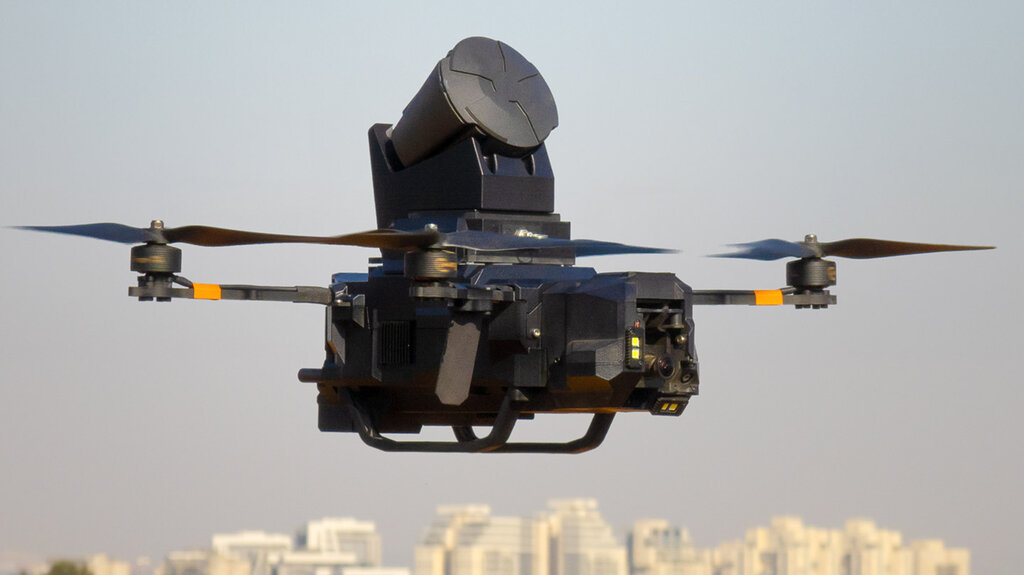
Drones and autonomy are becoming intertwined on the battlespace. Credit: XTEND
The same economics apply in reverse. Adversaries are fielding cheap drones at scale, which turns C-UAS into a volume problem rather than a niche one. Defences built around a handful of high-end interceptors fall into the same cost-exchange trap as forces built around exquisite aircraft. The answer is layered, affordable interception that can be produced and updated as quickly as the threat itself.

Mark Pestridge, executive VP and GM, Telehouse Europe
RT: Where is the biggest readiness payoff today, and what's not mature enough to rely on?
(AS): The biggest readiness payoff today comes from human-guided autonomy that handles stabilisation, navigation, obstacle avoidance, and task execution while keeping humans in command. This supervised model allows a single operator to manage multiple drones across air, ground, and maritime missions. It also reduces training time and improves safety in complex environments such as urban construction sites and GNSS-denied areas.
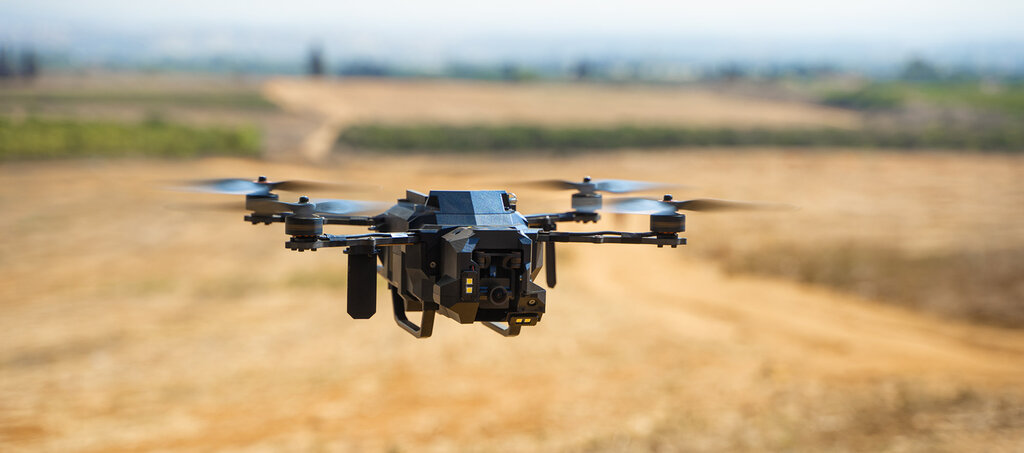
Credit: XTEND
What is not yet mature enough to rely on is fully autonomous mission execution involving lethal decisions without meaningful human oversight. While AI can support targeting and navigation, militaries continue to require human judgment for engagement decisions and mission-critical actions. XTEND is deliberately focused on human machine teaming, using AI pilots as cognitive copilots, which is essential for defence operations.
RT: Battlefields run weekly and monthly iteration cycles. Does military procurement allow this?
(AS): Modern conflict shows that frontline units iterate hardware and software on weekly and monthly cycles, moving from prototypes to combat-proven designs rapidly. That reality challenges traditional procurement models built around long, linear programmes and fixed specifications that struggle to absorb fast-paced, software-driven change.

Credit: XTEND
XTEND works with defence customers through modular, open architectures and regional manufacturing hubs that support faster integration and deployment of updates while maintaining sovereign compliance. To fully support battlefield iteration cycles, procurement needs to value open ecosystems and continuous software delivery, so forces can adopt improvements without waiting for a new platform programme each time the threat evolves.
RT: What does it take to go from dozens to thousands of drones in terms of production and operation?
(AS): Scaling from dozens to thousands of drones requires industrialised production, interoperable software, and realistic doctrine for everyday users. Hardware must be designed for efficient manufacturing and compliant sourcing, supported by facilities like XTEND’s distributed XFAB network in the UK and allied regions.
At the same time, software must allow mixed fleets from different suppliers to be controlled through common interfaces instead of as isolated systems.
XTEND’s XOS is built for multi-robot coordination, collaborative sensing, shared mapping, and task allocation across fleets. Governments and primes can embed classified payloads and national command integrations inside XOS while keeping interoperability intact. This is central to scaling from pilot deployments to large, sustained operations that protect defence assets and high-risk construction sites.
RT: Where is the UK aligned, and what would you change in the next 12 to 24 months?
(AS): Over the next 12 to 24 months, UK defence and infrastructure programmes should move toward more agile acquisition paths that prioritise open autonomy backbones, multi-vendor interoperability and faster software certification.
Embedding platforms like XOS as a common layer across defence, security and construction would give the UK a coherent, scalable way to connect drones at the edge with national command and safety systems. We're encouraged by the signs we're already seeing on this front, and there is real opportunity for us to build on that momentum together with UK institutions.