
Company Insight
Sponsored by FlySight
OPENSIGHT Mission Suite: Connecting the mission from sensor to decision
As airborne operations become increasingly connected and data-driven, FlySight is extending OPENSIGHT beyond situational awareness to create an interoperable mission ecosystem that connects sensors, systems, operators and data across the complete mission lifecycle.
Main image credit: FlySight
The airborne missions are no longer defined by a single platform or sensor. They depend on the coordinated interaction of increasingly heterogeneous technologies: electro-optical and infrared payloads, radar, communications systems, mission computers, external data sources and applications supporting operators both onboard and on the ground.

The challenge is therefore no longer simply to acquire data. It is to make the entire mission system work together.
This is the rationale behind OPENSIGHT Mission Suite, FlySight’s evolving mission ecosystem designed to connect the different elements of a complex operation within a common, interoperable environment.
Building on the capabilities of the OPENSIGHT Mission Console, the Mission Suite extends the concept from an operational display to a broader framework for integration, mission execution, validation, data management and post-mission analysis.
At the heart of OPENSIGHT is the ability to bring heterogeneous information together and turn it into a structured mission picture.
Mission data can include live and recorded video, sensor metadata, platform telemetry, mission objects, external tracks, AIS data, ADS-B information, tactical data, geospatial information, target detections and classifications, as well as operator-generated events.
Rather than treating these as isolated data streams, OPENSIGHT provides a framework in which they can be correlated, visualised, exchanged and retained throughout the mission lifecycle.
This creates a common operational environment in which information generated by different systems can contribute to the same mission.
Interoperability is central to this approach. OPENSIGHT supports an expanding set of standard and specific interfaces, including STANAG 4586 for sensor control and unmanned-system integration, STANAG 4609 for live video, STANAG 4607 for GMTI radar data, STANAG 7023 for NITF radar imagery, Cursor-on-Target for tactical and tracking information, and AIS for maritime traffic information.
The architecture is modular, allowing additional capabilities to be integrated according to mission and customer requirements.
Interoperability is therefore not an add-on to the system; it is part of its architecture.
Connecting the mission chain
OPENSIGHT Mission Suite is designed to address a fundamental challenge in modern mission integration: a system may be capable of exchanging data without necessarily delivering the expected operational capability.
Data must be correctly interpreted. Metadata must remain consistent. Tracks must be correlated. Commands must reach the intended system. Sensor information must be available to the operator at the right time and in the right context.
Most importantly, the complete operational workflow must work as intended.
OPENSIGHT therefore connects integration with operational validation. The objective is to move beyond testing individual interfaces and verify the complete mission chain — from systems and data, through integration, to the operator and the final operational outcome.
This approach supports a lifecycle in which missions can be integrated and configured, validated before deployment, executed through a common operational environment and subsequently analysed and replayed.
A data center under construction at Waltham Cross, England. Credit: Hugo Kirk/Getty Images
The OPENSIGHT Mission Suite brings together a growing family of capabilities.
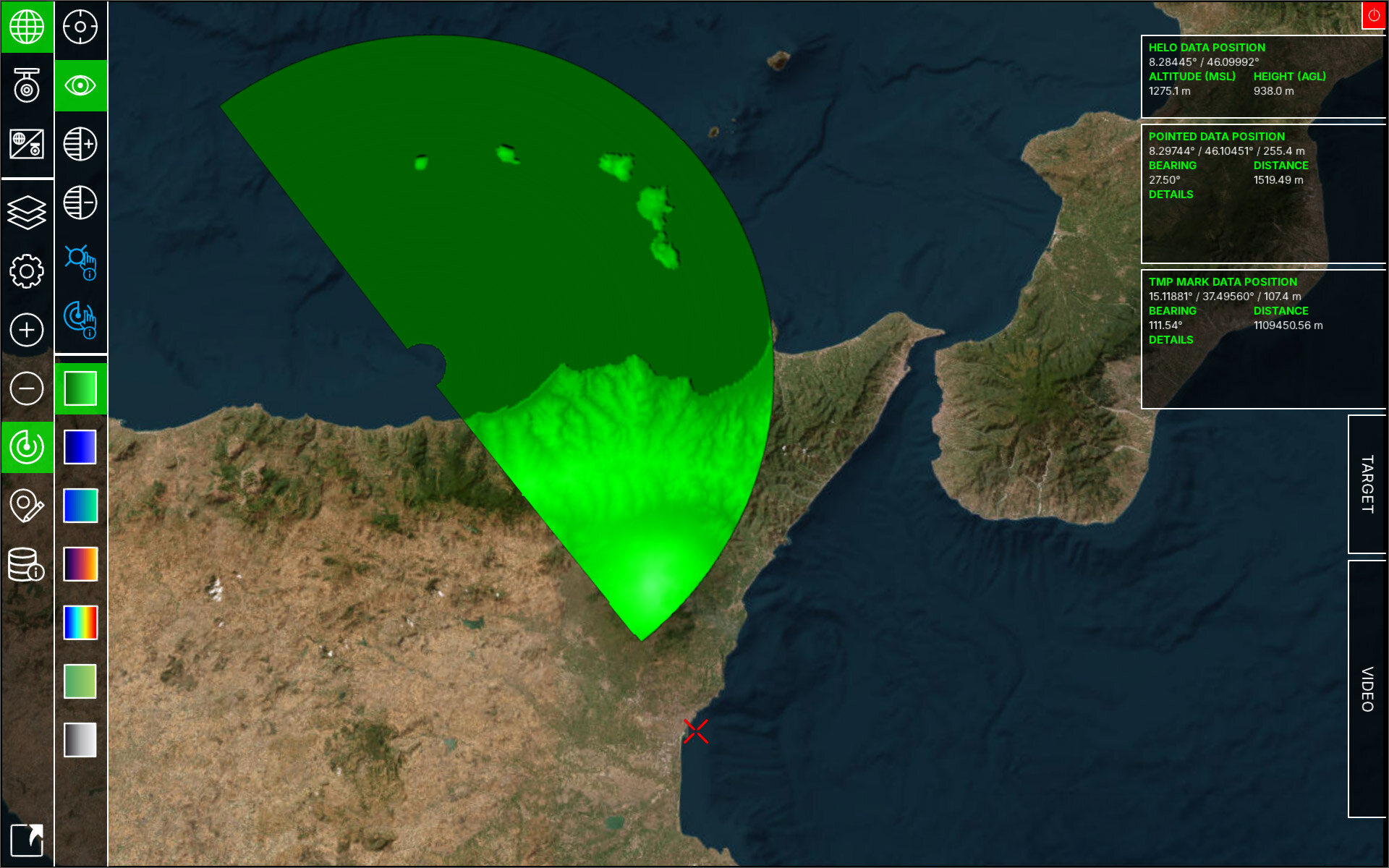
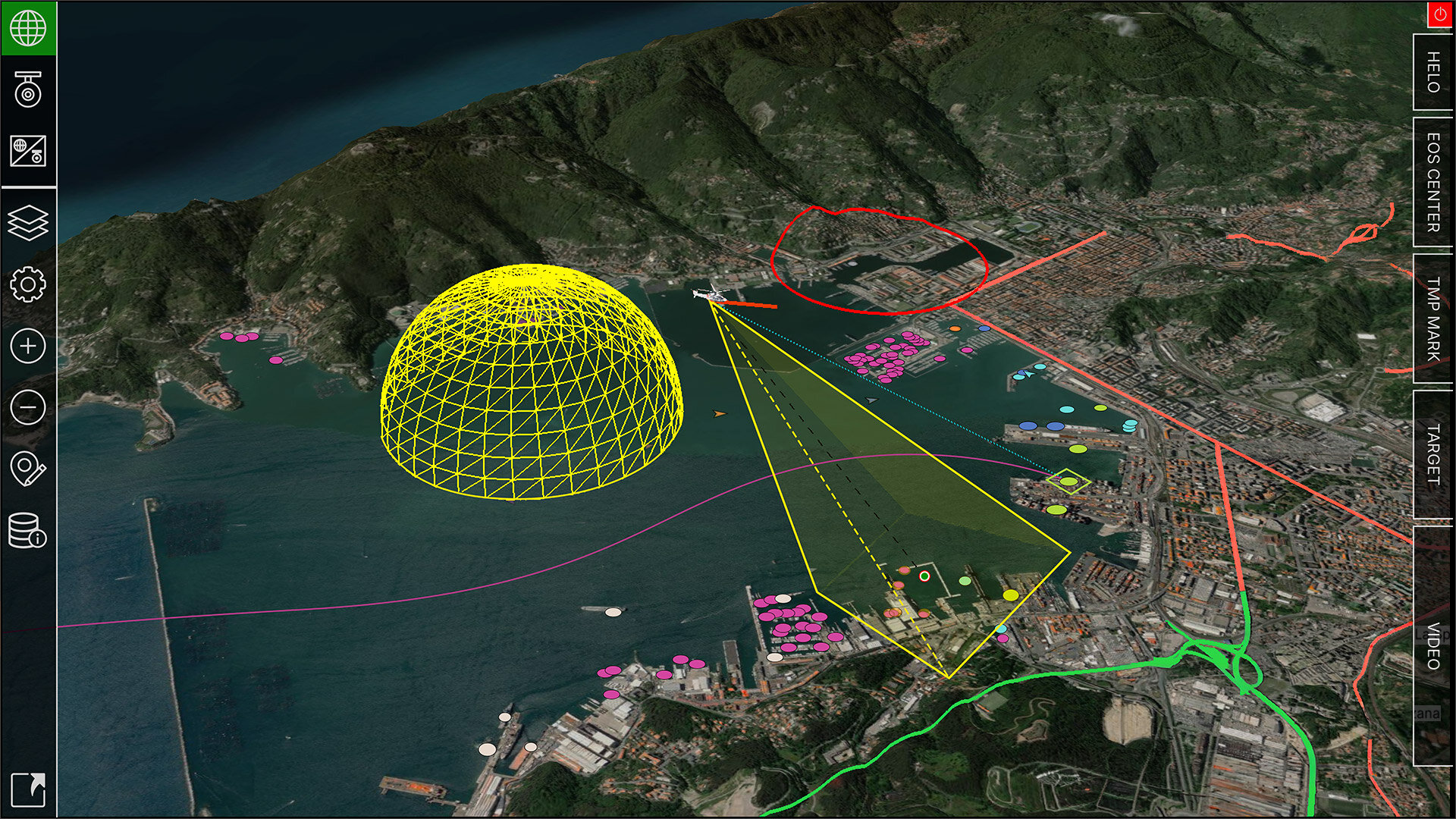
The OPENSIGHT Mission Console provides the operational foundation, combining geospatial information, live sensor video, mission data and sensor control within a single environment.
Radar integration allows radar-derived information to become part of the wider operational picture, while Automatic Target Recognition (ATR) can transform live sensor video into georeferenced target detections and classifications.
The architecture could also extend across manned and unmanned assets through Manned-Unmanned Teaming (MUM-T) capabilities, supporting a broader mission environment in which information and assets are no longer constrained to a single platform.
Mission data management provides another critical layer. External tracks and mission objects — including AIS, ADS-B, Cursor-on-Target and remotely generated information — can be managed alongside operator-generated mission data, creating a common information layer across the operation.
One ecosystem across the mission lifecycle
The result is an approach that treats mission capability as a continuous process rather than a collection of disconnected systems.
Integration connects sensors, protocols, systems and data sources.
Configuration adapts capabilities and workflows to operational requirements.
Validation verifies interfaces, data flows and end-to-end behaviour.
Operation provides the common environment in which the mission is executed.
Data management structures and retains the information generated during the mission.
And post-mission analysis enables replay, debriefing, reporting and the continuous improvement of operational processes.
A data center under construction at Waltham Cross, England. Credit: Hugo Kirk/Getty Images
This lifecycle approach is particularly relevant as defence organisations increasingly need to integrate new capabilities without replacing the systems already in service. OPENSIGHT’s modular architecture provides a framework in which new sensors, data sources and mission applications can become part of an existing operational ecosystem.
The vision is unique: one ecosystem, one mission, multiple platforms and capabilities.
For FlySight, OPENSIGHT Mission Suite represents the next evolution of mission software — moving from the presentation of information towards the integration, validation and management of the complete operational chain.
In increasingly complex ISR environment, the advantage will not come simply from having more sensors or more data. It will come from ensuring that the right information can move across systems, remain meaningful throughout the mission and reach the people and applications that need it.
That is where an interoperable mission ecosystem can make the difference: connecting the sensor to the operator, the platform to the wider mission, and the data generated today to the decisions that shape tomorrow.
Contact information
FlySight S.r.l.
Via A. Lampredi 45
57121, Livorno (LI) Italy
Phone: (+39) 0586 505016
Email: marketing@flysight.it
Website: www.flysight.it