Cover Story
Racing to Replenish: US war stocks depleted
US munitions supplies have been reduced by Ukraine provision and war in the Middle East. Jen Kirby reports.
Main video credit: Pavel Chagochkin/Shutterstock.com
Powered by

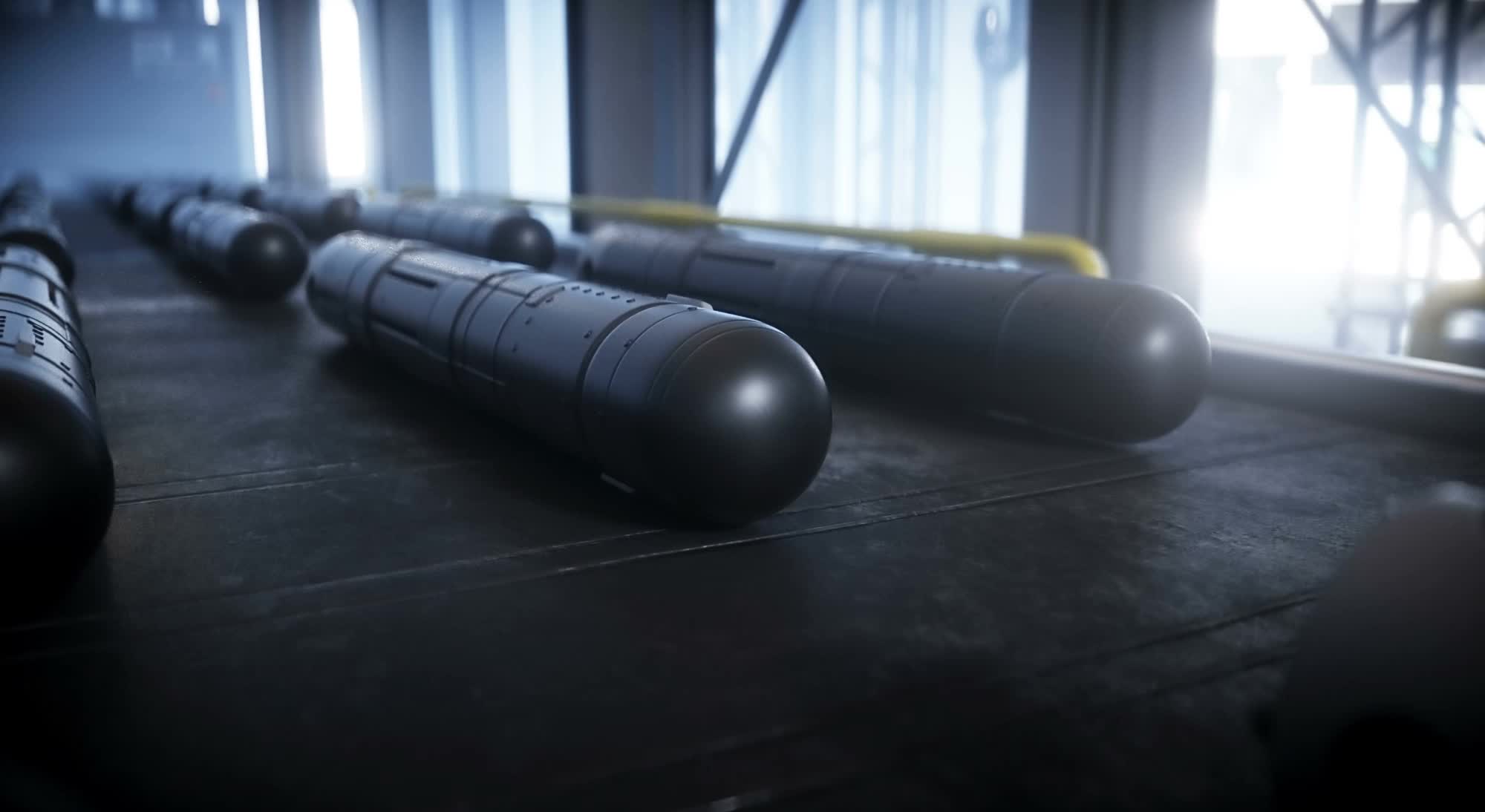
Tomahawks are US deep-strike precision cruise missiles that can be fired from ships, submarines, or ground launchers. The most recent iterations can loiter in air, or switch direction mid-flight if a target changes, according to Raytheon, an RTX company, which produces the weapon system.
For all those reasons, Tomahawks have been central to the US arsenal since they debuted in 1991, during Operation Desert Storm. Allies use them – most notably, the United Kingdom – and others want or were planning to acquire Tomahawks. Japan signed a deal for 400 in 2024. Germany is reportedly willing to purchase billions worth of Tomahawks and the Typhon ground systems that can launch them.
The problem for Germany, and for Japan, is that the United States also needs many, many more Tomahawks for its own use.
The US has fired more than 1,000 Tomahawks in Operation Epic Fury against Iran, using about a third of an estimated 3,000 pre-war stockpile, according to Center for Strategic and International Studies (CSIS). It is not just Tomahawks: the US has expended roughly $22.3bn in offensive and defensive munitions against Iran through the end of June, according to a report made public in September from the US Department of Defense Office of Inspector General (OIG).
This has, said the OIG, “resulted in strategic inventory shortfalls and revealed industrial base bottlenecks for munitions resupply.” (The US Pentagon did not respond to requests for comment. RTX deferred inquiries on Tomahawks to the US Navy.)
“The math is really tough for the United States and for its allies, and I think it's going to get tougher when it comes to munitions and other systems that are important,” said Tressa Guenov, a senior fellow at the Scowcroft Center for Strategy and Security at the Atlantic Council, who served as the principal deputy assistant secretary of defense for international security affairs from 2022 to 2024.
Now, the US is racing to replenish its arsenal. In August, the Pentagon awarded Raytheon a seven-year $22.9bn deal to ramp up Tomahawk production to 1,000 a year – multiple times the roughly 60 it produced in fiscal year 2026. Similar investment and production expansion efforts are underway for other munitions, including Patriot and Terminal High-Altitude Area Defense (THAAD) interceptors, as both US and partners’ supplies have been strained by conflict in the Middle East.
Even if these industrial base investments succeed, replacement Tomahawks won’t arrive in US stockpiles until about 2030 –and similar timelines exist for other critical munitions.
And that is just the United States. There is a long list of allies who may already be awaiting munitions who now face uncertain delays and backlogs, and even as the demand for these weapons skyrockets amid two hot wars and geopolitical tensions – and the United States’s own efforts to shift security burdens to its allies. Instead, now burdens of the US own shortfalls are spread around the globe.
“Fundamentally, our [US] industrial base was not performing at a scale that could sustain increased conflict and combat that would require these munitions at this volume that we're now seeing them expended in the fight with Iran,” said Virginia Burger, senior defense policy analyst for the Center for Defense Information at the Project on Government Oversight (POGO).
The munitions hole
Long before Operation Epic Fury, analysts and US defence officials were warning US stockpiles of certain conventional and precision munitions were insufficient.
"To increase production capacity, factory plant floors, training workers – all that stuff literally takes years."
Cara Abercrombie, former US defence official
Russia’s invasion of Ukraine strained the US and its European arsenals. But it was the reaction to Russia’s full-scale invasion, and, starting in 2023, escalating conflict in the Middle East, that truly surged demand from allies and partners, especially for precision systems like Patriot interceptors that can intercept cruise and ballistic missiles.
These global threats also made it clear that if the US were to fight a peer or near-peer adversary, the intensity of such a war would require a lot more ammo. Even against non-peer adversaries, the US was seeing how quickly it could burn through its stocks. In 2024, in joint operations with the UK against the Iran-backed Houthi rebels in the Red Sea, the US Navy reportedly fired 80 Tomahawks in two days.
The Biden administration initiated efforts to expand the industrial base and ramp up production, including a deal with Lockheed Martin, the prime manufacturer of Patriot interceptors, to increase interceptor delivery from 500 to 650 per year. Lockheed Martin declined to comment for this article.
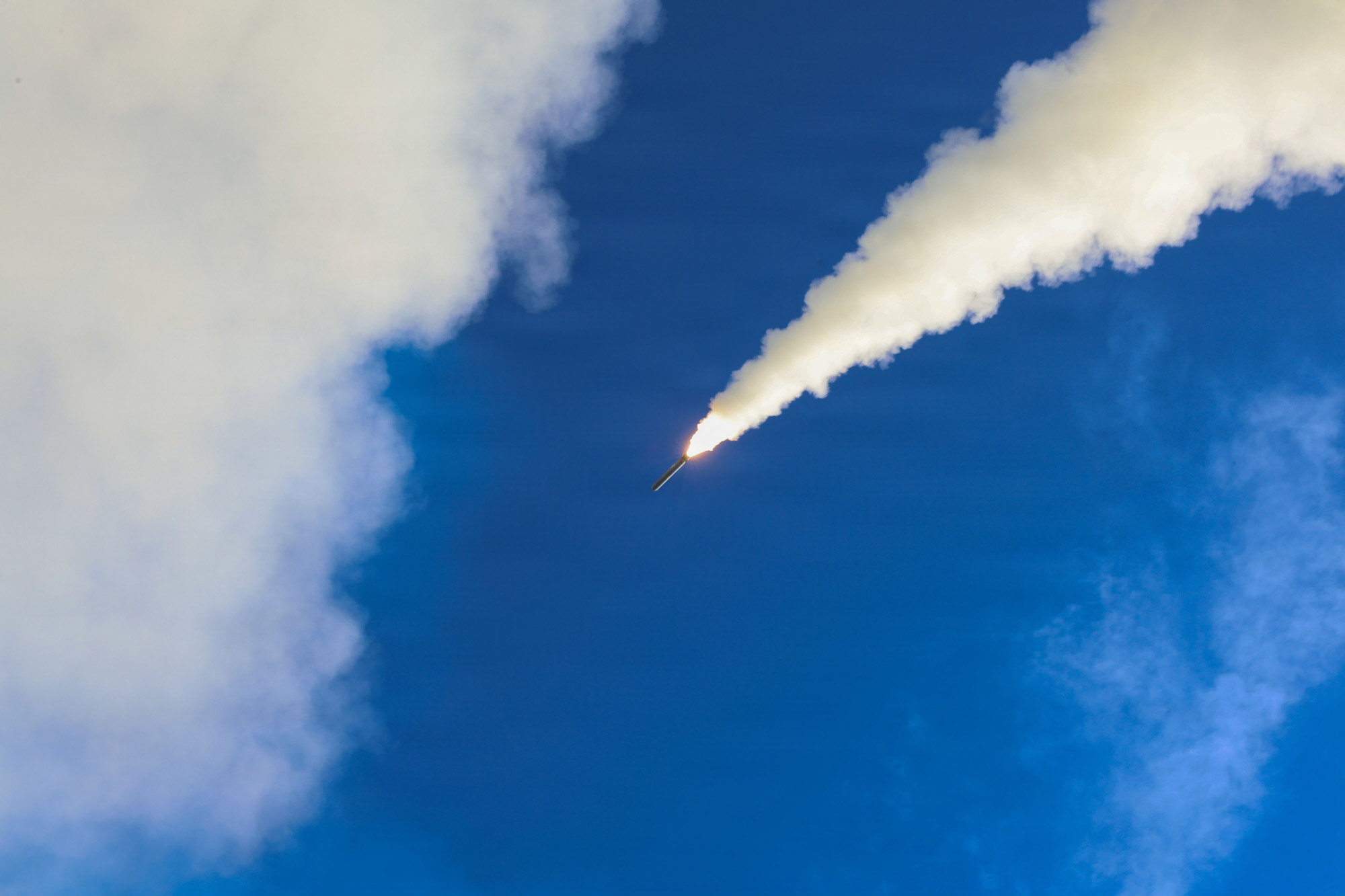
The US has used a significant proportion of its Tomahawk stocks. Credit: US Navy
Output increased, but experts and former defence officials said production still struggled to meet demand from the US and its partners. “To increase production capacity, factory plant floors, training workers – all that stuff literally takes years,” said Cara Abercrombie, a senior advisor to The Cohen Group and former US assistant secretary of defense for acquisition from 2024 to 2025.
Missiles like Tomahawks, or the PAC-3 interceptor missiles used in Patriots require advanced components like solid rocket motors and sensors that must be sourced from multiple suppliers, and one supply chain bottleneck can derail an entire missile. It can take about two years to manufacture a Tomahawk, and PAC-3 or less advanced PAC-2 missiles can take a similar 20-to-24-month timeline.
“It's one thing for the prime company to say, ‘Sure, I'm happy to expedite or accelerate building a new factory or a new line because I've got so many contracts it’s warranted.’ But there might be five tiers down a supplier who makes one widget that cannot ramp that,” Abercrombie said.
The hole gets bigger
Then came Operation Epic Fury.
While the Pentagon and the White House have publicly downplayed munitions stockpile concerns, independent analysis of Pentagon data and the administration’s own actions offer a starkly different picture: the US has burned through ammunition in the Middle East faster than it can replace it.
As of 27 July 2026, CSIS estimated that the US had a stockpile of less than 830 Patriot interceptors available, down from a pre-war estimate of 2,300, and less than 280 THAAD interceptors, down from a pre-war 450.

The Patriot air defence system is widely operated by US allies. Credit: US Army
Iran has also exploited the US’s exquisite weapons by launching comparatively inexpensive drones to overwhelm the systems, forcing the US to burn through its pricey interceptors to deter these attacks. One PAC-3 interceptor costs roughly $4m; Iranian Shahed drones cost about $35,000.
“We're not getting the bang for our buck,” said Ben Hazen, CEO of Henos Institute, a defence workforce training nonprofit, and supply chain experts and adjunct professor at the Air Force Institute of Technology. “You’ve probably heard quotes before: We send a million-dollar missile to shoot down a $10,000 drone, and at some point, that's unsustainable.”
The US is exploring alternatives, such as a low-cost hypersonic missile and cheaper interceptors, but these are seen as supplements rather than replacements to the exquisite, high-end systems which the US relies on, and so now needs to replace. But that all-of-the-above approach just requires more: more research and development, more workforce expansion, more industrial base capacity, more time, and more money.
"We're not getting the bang for our buck."
Ben Hazen, CEO of Henos Institute
The administration has struck multi-year framework deals to increase production across its ammunition portfolio, including the $22.9bn for Tomahawks and a $4.7bn contract with Lockheed Martin to bring Patriot interceptor production from 600 to 2,000 per year. In June, the White House invoked the Cold War-era Defense Production Act to force industry to address “systemic constraints in the munitions industrial base.”
The administration has also asked Congress for $67.1bn supplemental defence funding, which includes $21bn for munitions procurement. But Congress has not approved the supplemental request, or next year’s defence budget request, which seeks $90.5bn in munitions procurement and research and development.
As experts said, these framework deals require sustained financial assurances, even with the skyrocketing global demand.
Plus, none of this solves the fundamental problem, which is that even if the US stops expending munitions, it will take years to rebuild. Despite these mitigation strategies, the Pentagon OIG said in its report, “the defence industrial base requires ‘significant lead time’ to expand production capacities.” In particular, the report notes, “that most persistent bottlenecks remain in the production of solid rocket motors, the availability of high-grade explosives and propellants, and the recruitment of skilled manufacturing labor.”
As Burger said, Epic Fury is an immediate reference point for how to think about a war at-scale against a peer or near peer adversary.
“It shows where are the gaps in our supply chain, where are the gaps in our industrial base? What are our weaknesses?” Burger said. “And it's very clear that one of the main vulnerabilities of the American military is our inability to field these munitions quickly.”
Allies exposed
It’s also an increasing vulnerability for US allies and partners. The US has repositioned munitions and other hardware to the Middle East from positions in Europe and Asia, which has left some allies feeling exposed to regional threats from Russia and China, respectively. Partners in the Middle East, directly in the line of fire, also burned through defensive munitions at an aggressive clip in the early days of the Operation Epic Fury, leaving their defences vulnerable.
The US has signed billion-dollar deals to replenish the stocks of partners in the region, but it’s not clear when those will arrive. Other allies and partners are also expecting their own orders of US munitions, particularly Patriots, whose interceptors are used by 18 US partners. That includes Ukraine, which has said it needs at least 300 Patriot interceptors to survive Russian attacks this winter.
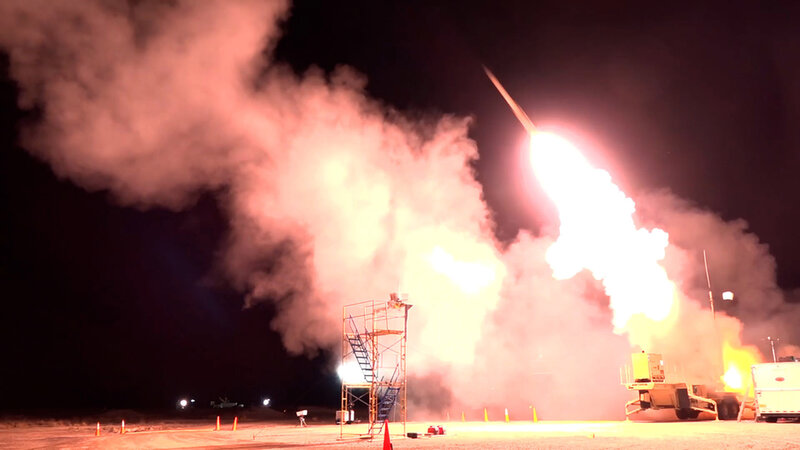
The THAAD is a highly-advanced air defence missile. Credit: US Army
Because Patriots and Tomahawks involve sensitive technology, countries can’t buy these independently. Instead, governments must negotiate with the US, and the American government essentially procures that order on an allies’ behalf.
Typically, these buys are fulfilled as they’re received, although the United States reserves the right to resequence orders and jump the line. There were signals early in the war that this might happen, and those alarms have intensified. Bloomberg News reported in September that US officials have warned partners that deliveries could be delayed for up to five years as the US seeks to rebuild its own supplies. (The Pentagon did not return a request on possible resequencing.)
Allies in places like the Gulf and Europe are seeking out alternatives amid US supply crunches, but experts and analysts said it will still take time to find and procure and train on alternatives. Partners may have no choice but to diversify, but at least in the short-term, they are unlikely to fully abandon US systems. That might mean trying to strike deals, as the US and Germany did to increase co-production of the slightly lesser PAC-2 interceptors in Germany. Or they’ll get in line like everyone else.
"The US is going to prioritise its own strategic interest first."
Charles W. Mahoney, California State University
“There's just really high demand for these interceptors right now,” said Charles W. Mahoney, a professor at California State University, Long Beach who specialises in international security. “Certainly, the US is going to prioritise its own strategic interest first, but I still don't think that that means that other countries aren't going to buy them.”
“It just means that they're going to be put later down the queue,” Mahoney added. “The deliveries are going to be delayed, and it may take longer for other countries to get the weapons – but they'll still buy them.”
Mahoney, who closely researches Taiwan, said past Democratic and Republican presidents have encouraged US arms sales as a matter of policy because it helps sustain the American defence industrial base. It also comes with strategic perks, from increased interoperability among allies to old-fashioned influence over how foreign partners equip their militaries.
This was also a pretty good deal for treaty allies, who would make these US arms purchases with the expectation that if they needed to use them, the US would be there with them, likely with an even bigger arsenal. That calculus is changing as the US has made clear it wants to shift defence responsibilities to partners, even as its encouraged partners in Europe and elsewhere to buy American arms as they reinvest in their national security.
Add to that the apparent depletion of the US stockpiles, and it raises even more uncertainty about the US commitments, and whether they even have the capacity to keep them.
Getting in line might be the only option right now for many US allies and partners, but it is likely to give them pause. “It is a very challenging message to say you should buy American,” said Abecrombie. “Even as it's just obvious that it's going to take a couple of years to get the lines up and running to a point where they can produce the volume that's needed.”